⏱️ Estimated Reading Time: 7 min read
Why Christians Should Think Biblically About Exercise
A Review of A Little Theology of Exercise by David Mathis
Written by Joshua Mills
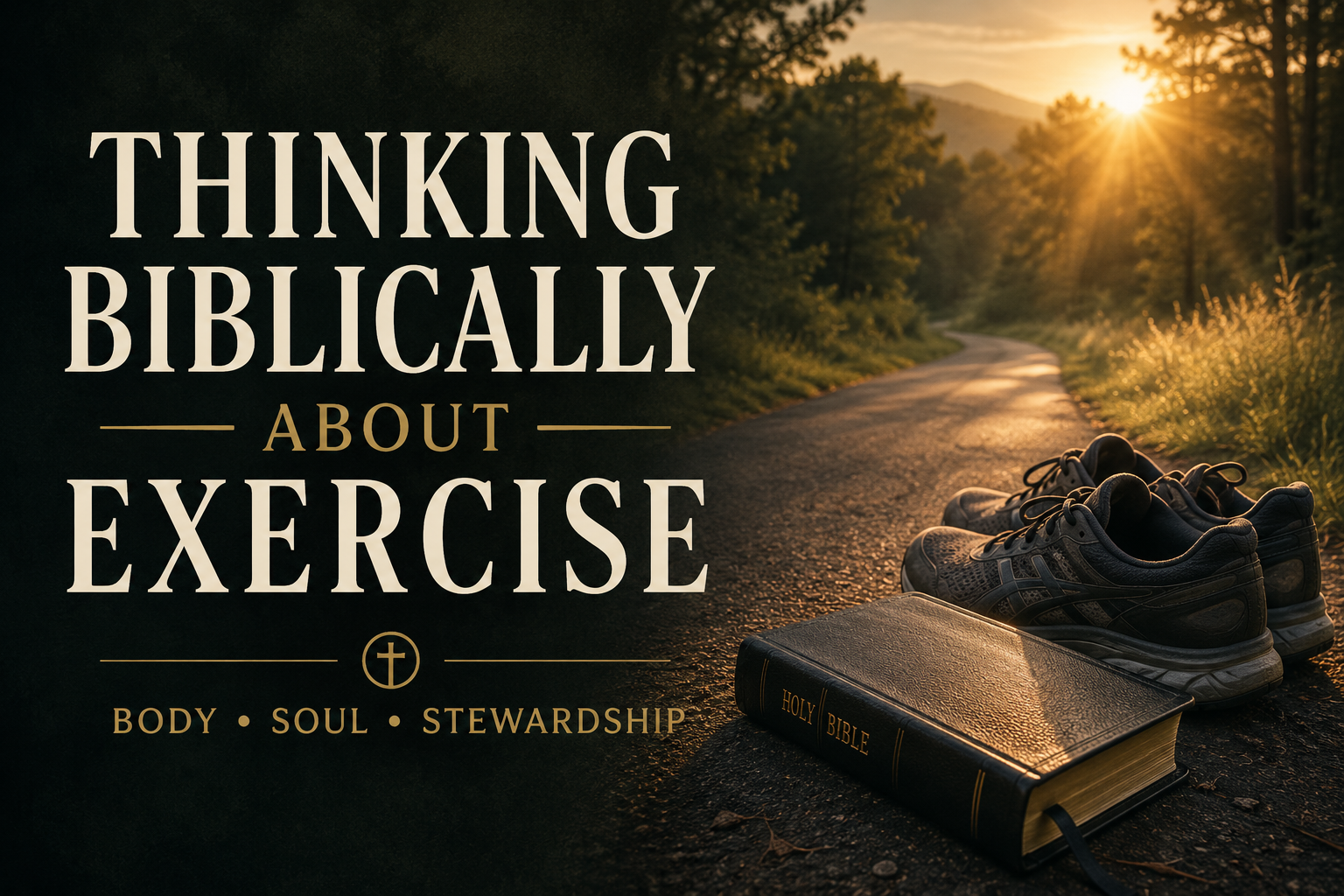
Are you someone who enjoys finding new hobbies that challenge you physically and refresh you spiritually? May I suggest that you try running? Over the last few years, I have entered into the joy of running. At first, it was brutal. My legs burned. My lungs felt weak. Every part of my body hurt. Week after week, I began to see improvement. What was hard at first became easier later on. I saw myself longing to find something challenging, press into it, and then see the outcome later. Not only has running helped me physically, but it has also helped me spiritually. Through “natural theology,” I have learned much about the Christian life. It is fascinating to look at all the examples of running in the Bible. Each reference teaches us something about the Christian life. It is for that reason that I have thoroughly enjoyed David Mathis’ book, A Little Theology of Exercise: Enjoying Christ in Body and Soul.
This little book, at 100 pages, puts into words what I have experienced in my Christian walk. The thesis of this book is simple: “The physical body has a vital part to play in our spiritual and holistic health and God-honoring joy” (1). We see this reality in the opening pages of Scripture: “the Lord God formed the man of dust from the ground and breathed into his nostrils the breath of life, and the man became a living creature” (Gen. 2:7). Adam was made in the image of God with both a body and soul. Much has been written on the soul, but not a lot has been written on the body. There is a mystery to how each aspect impacts the other. Though we may not be able to describe it fully, we can all appreciate it greatly.
When I am not physically fit, I find it hard to read the Bible and pray. But when I am involved in regular physical activities, I find myself more ready to read and pray. Of course, spiritual growth is ultimately the work of God’s grace and not physical fitness. Still, many believers experience how caring for the body can support attentiveness, endurance, and faithfulness in daily life. On the other side of the coin, when my soul is cast down, a good run in God’s beautiful creation will lift the clouds.
In the lecture, “The Minister’s Fainting Fits,” Charles Haddon Spurgeon spoke of this connection between body and soul. Spurgeon wrote:
“He who forgets the humming of the bees among the heather, the cooing of the wood-pigeons in the forest, the song of birds in the woods, the rippling of rills among the rushes, and the sighing of the wind among the pines, needs not wonder if his heart forgets to sing and his soul grows heavy. A day’s breathing of fresh air upon the hills, or a few hours’ ramble in the beech woods’ umbrageous calm, would sweep the cobwebs out of the brain of scores of our toiling ministers who are now but half alive. A mouthful of sea air, or a stiff walk in the wind’s face, would not give grace to the soul, but it would yield oxygen to the body, which is next best.”
In A Little Theology of Exercise, Mathis helpfully describes God’s design in creating us with a body and a soul, and how each part functions together. Let me set before you a brief summary. Once this is done, I will leave you with a few considerations.
Moving the Body for the Glory of God
In part one of the book, Mathis focuses on the need to move the body. In it, he persuasively establishes his argument that we ought to make exercise Christian. We can indeed glorify God in our bodies (1 Cor. 6:19–20). We ought to turn every part of exercise into an act of worship.
For example, when I go on a run, I could begin with a distracted mind and run without thinking. Or, I could begin by lifting my mind and heart up to the Lord. I can thank Him for the gift of exercise. I could ask Him to uphold me and sustain me as I work. I can pray that He would lift any burdens and help me enjoy His creation. Then, throughout the exercise, when I meet a challenge, I can pray to Him for help: “Help this body push through this hill!” After I finish the run, I can stop and thank God for it.
Training the Body to Serve God and Others
Once the body has been moved, in part two, Mathis focuses on the condition of the soul. In it, he goes to the heart of why we exercise. Primarily, we do it for the Lord. He has given us a body, and we are to steward it well for His kingdom. That means we ought to stay in shape so that we can effectively serve Him with mind, heart, and hands.
Have you ever thought of exercise as a way to love God and neighbor? We can glorify Him in physical activities, and we can train our bodies so that we can serve our neighbors well. Mathis gives a convicting example for fathers in the home. When I train my body, I am putting myself in a place where I can come home to serve. Instead of sitting on the couch and eating chips, I am ready to move my body. I am home to serve my wife and to play with my kids.
Aware that physical challenges and disease could hit us at any time, I want to be in a place right now where I can use my body for maximum service. I want to be able to lift heavy things for my wife and run on the field with my kids. We ought to be fit so that we can have many good works.
Why You Should Read This Book
To conclude, I will leave you with a few considerations to persuade you to read this book.
First, in an age of constant consumption, this book serves as a call to be good stewards with our bodies. We have access to so many things at our fingertips. This book reminds us to consider how we are best stewarding our bodies so that we can have a long game of serving the Lord in this world. It also warns us not simply to be consumers, but servants. God has given us a body to serve Him and others. Are we using it for that great aim?
Second, if you are looking for a Christian book that unpacks the scientific benefits of working out, this book is for you. I thoroughly enjoyed reading the section that unpacked how exercise positively helps our brains grow. That chapter alone will give you motivation to exercise.
Third, and finally, Mathis writes in such a way that each page, though talking about our body and soul, is directed Godward. As I consider the books that I have read in 2026, this book has been the most enjoyable read so far. It was instructive and devotional at the same time. You will certainly want to pick up this book. Don’t miss out.
For more great content please also visit Joshua’s page here at Servants of Grace or our YouTube.

Joshua J. Mills is married to his beloved Kyla and they have two children: Isaac and Lydia. Outside of the home, Joshua has the privilege of serving as pastor at Trinity Baptist Church (Burlington, Ontario) and as a guest lecturer through Carey International University of Theology.