⏱️ Estimated Reading Time: 15 min read
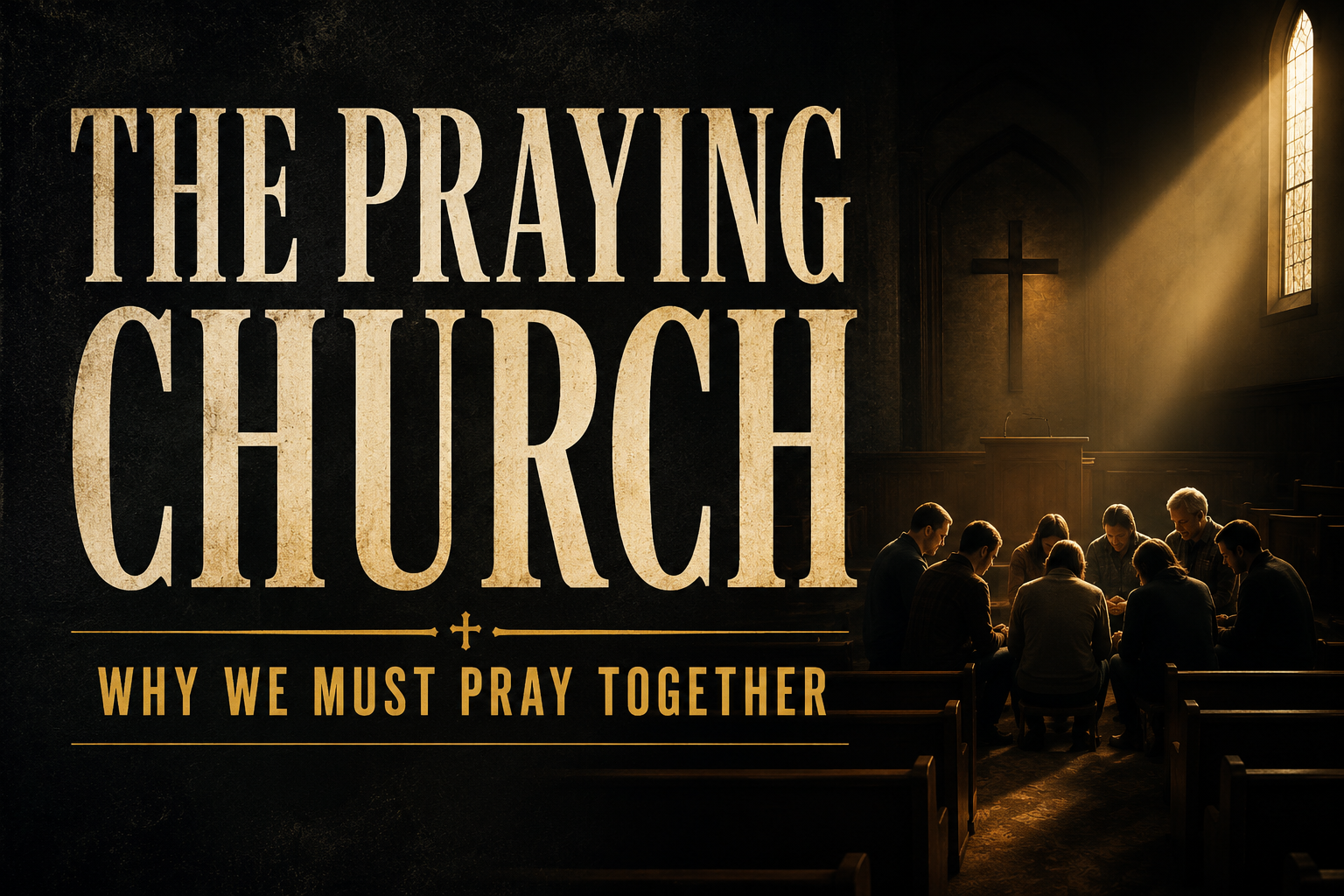
Why the Church Must Pray Together
By Dave Jenkins
Prayer is one of the clearest expressions of Christian dependence upon God.
When Christians pray, they confess that they are not self-sufficient. They acknowledge that wisdom, strength, provision, courage, and spiritual fruit come from the Lord. Prayer is not a religious formality added to the Christian life. It is the response of those who know they need the grace of God in every circumstance.
This dependence is not merely individual. Christ has not only saved isolated believers. He has brought His people into His body, the church. For this reason, prayer is both a private discipline and a corporate practice.
The New Testament repeatedly presents the church as a praying people. Believers prayed together while waiting for the promised Holy Spirit. They devoted themselves to prayer after Pentecost. They prayed during persecution. They prayed for imprisoned Christians. They prayed before sending missionaries. They prayed when appointing elders. They prayed in seasons of suffering, uncertainty, and gospel opportunity.
Corporate prayer was not an occasional activity in the early church. It was woven into the ordinary life of God’s people.
The church today needs to recover this biblical vision. Corporate prayer is not merely private prayer performed in the same room. It is the gathered people of God seeking the Lord together, submitting themselves to His Word, bearing one another’s burdens, and asking for grace to fulfill Christ’s mission.
The Early Church Was Devoted to Prayer
Before Jesus ascended into heaven, He commanded His disciples to wait in Jerusalem for the promised Holy Spirit. Luke tells us that the disciples “with one accord were devoting themselves to prayer” (Acts 1:14).
They did not begin the mission of the church by developing strategies, organizing programs, or promoting themselves. They waited upon the Lord in prayer.
After the Holy Spirit was poured out at Pentecost, the newly formed church continued in the same pattern. Acts 2:42 says that the believers “devoted themselves to the apostles’ teaching and the fellowship, to the breaking of bread and the prayers.”
Prayer stood alongside the preaching of the Word, fellowship, and the Lord’s Supper as one of the defining commitments of the early church.
This pattern continues throughout Acts.
When Peter was imprisoned, “earnest prayer for him was made to God by the church” (Acts 12:5). When the church at Antioch prepared to send Barnabas and Saul into missionary service, the believers worshiped, fasted, and prayed (Acts 13:1–3). When Paul and Barnabas appointed elders in the churches, they did so “with prayer and fasting” (Acts 14:23).
The church prayed because it understood that the work of God could not be accomplished by human strength.
The early Christians did not treat prayer as preparation for the real work. Prayer was part of the real work. They knew that preaching, missions, leadership, perseverance, and spiritual growth depended upon the grace and power of God.
A church can possess sound doctrine, gifted teachers, organized ministries, and thoughtful strategies. Yet if it does not pray, it will gradually begin trusting its own abilities.
A praying church remembers that Christ alone builds His church.
Corporate Prayer Confesses Our Shared Dependence
One of the clearest examples of corporate prayer appears in Acts 4.
Peter and John had been arrested after healing a man and preaching the resurrection of Jesus Christ. The religious authorities commanded them not to speak or teach in the name of Jesus. After being released, they returned to the other believers and reported what had happened.
The church immediately responded in prayer.
Acts 4:24 says, “When they heard it, they lifted their voices together to God.”
That phrase matters. They lifted their voices together.
The threat was not viewed merely as Peter and John’s personal problem. The whole church recognized that the opposition concerned the mission Christ had entrusted to all of them. They shared the danger, the responsibility, and the dependence.
Corporate prayer teaches the church to say “we” instead of only “me.”
In private prayer, believers bring their personal sins, needs, fears, and desires before the Lord. In corporate prayer, they learn to carry the concerns of the whole body. They pray for suffering members, struggling families, church leaders, missionaries, unbelieving neighbors, persecuted Christians, and the advance of the gospel.
This shared prayer reminds believers that they do not stand alone.
The Christian life was never intended to be lived in isolation. God gives His people pastors, elders, brothers, and sisters who can encourage them, correct them, support them, and intercede for them.
When the church prays together, the weak are reminded that others are carrying their burdens. The suffering hear their names and circumstances brought before the throne of grace. The discouraged hear other believers plead the promises of God on their behalf.
Corporate prayer gives visible expression to the unity Christ has created among His people.
Corporate Prayer Must Be Shaped by Scripture
The prayer of Acts 4 does not begin with the power of Rome, the threats of the authorities, or the fear of the disciples.
It begins with God.
The believers prayed, “Sovereign Lord, who made the heaven and the earth and the sea and everything in them” (Acts 4:24).
Before they spoke about their enemies, they spoke about their Creator. Before they described the threat, they confessed the sovereignty of God.
They then quoted Psalm 2:
“Why did the Gentiles rage,
and the peoples plot in vain?
The kings of the earth set themselves,
and the rulers were gathered together,
against the Lord and against his Anointed”Acts 4:25–26
The church understood its circumstances through Scripture.
The believers did not allow fear to interpret reality for them. They allowed the Word of God to interpret reality. The opposition they faced was serious, but it was not unexpected. Scripture had already revealed that the nations would rage against the Lord and His Anointed.
Their prayer was therefore grounded in biblical truth.
They confessed God as Creator. They recognized Jesus as the promised Christ. They affirmed God’s sovereignty even over the wicked actions of Herod, Pontius Pilate, the Gentiles, and the peoples of Israel. They understood that nothing had occurred outside God’s sovereign purpose.
This is one of the great benefits of corporate prayer. It trains the church to pray biblically.
Believers should certainly bring their honest emotions before the Lord. Scripture never teaches Christians to hide their sorrow, confusion, or fear. Yet prayer must not be governed by emotion alone. Our requests, expectations, and understanding of God must be shaped by His revealed Word.
Corporate prayer allows believers to hear one another rehearse biblical truth. They hear God praised for His attributes. They hear His promises remembered. They hear His commands taken seriously. They hear His works celebrated. They hear the needs of the church placed within the larger purposes of God.
A church that prays Scripture is less likely to be controlled by panic, sentimentality, or worldly priorities.
The Word of God teaches the church what to desire, what to fear, what to confess, and what to seek.
Corporate Prayer Bears the Burdens of God’s People
Paul told the Galatians, “Bear one another’s burdens, and so fulfill the law of Christ” (Galatians 6:2).
One way Christians bear burdens is through prayer.
James instructed believers, “Pray for one another, that you may be healed” (James 5:16). Paul frequently asked churches to pray for him, his ministry, and the spread of the gospel. He also assured believers that he regularly prayed for them.
Christian prayer is deeply relational.
In corporate prayer, the joys and sorrows of the church become shared concerns. Believers rejoice over answered prayer, mourn with those who mourn, and plead for those walking through suffering.
This kind of prayer requires more than vague requests.
It requires Christians to know one another.
A church cannot meaningfully pray for its members if its members remain strangers. Corporate prayer encourages believers to listen carefully, speak honestly, and enter one another’s lives with compassion.
The grieving widow needs more than a passing greeting. The anxious father needs more than general encouragement. The exhausted caregiver needs more than a quick assurance that everything will work out. The Christian fighting temptation needs brothers and sisters who will take that struggle seriously and pray with perseverance.
Prayer does not replace practical care. It strengthens and accompanies it.
The church should pray for the hungry and also provide food. It should pray for the lonely and also offer companionship. It should pray for the suffering and also remain present. It should pray for those trapped in sin and also speak the truth in love.
Corporate prayer reminds the church that ministry is not merely solving problems. It is bringing people before the Lord while walking beside them in faithfulness.
Corporate Prayer Fuels Gospel Boldness
The request in Acts 4 is striking.
The believers had been threatened. Their leaders had been arrested. The authorities had ordered them to stop speaking in the name of Jesus.
Yet the church did not primarily pray for safety.
They prayed, “Lord, look upon their threats and grant to your servants to continue to speak your word with all boldness” (Acts 4:29).
They did not ask the Lord to remove every difficulty. They asked Him to make them faithful in the middle of it.
This does not mean it is wrong to pray for protection, deliverance, or relief. Scripture contains many such prayers. It does mean, however, that the deepest concern of the church must be faithfulness to Christ.
The early believers wanted courage to keep speaking the Word.
They understood that opposition could tempt them toward silence. Fear could weaken their witness. Suffering could make comfort seem more important than obedience.
So they prayed for boldness.
The Lord answered. Acts 4:31 says, “When they had prayed, the place in which they were gathered together was shaken, and they were all filled with the Holy Spirit and continued to speak the word of God with boldness.”
God did not immediately remove the opposition. He strengthened His people to remain faithful.
The church still needs this kind of prayer.
Christians face pressure to soften biblical truth, avoid difficult doctrines, remain silent about sin, and redefine love according to the standards of the age. Churches may be tempted to pursue acceptance, influence, comfort, or numerical growth at the expense of faithfulness.
Corporate prayer reorients the church toward its true mission.
The church does not exist to impress the world. It exists to worship Christ, proclaim His gospel, make disciples, and uphold the truth of God’s Word.
A praying church asks God for courage to preach Christ when His message is unpopular. It prays for missionaries entering difficult places. It prays for pastors to preach the whole counsel of God. It prays for ordinary believers to speak of Christ in their homes, workplaces, schools, and communities.
The church needs boldness, but it must be biblical boldness.
Biblical boldness is not harshness, arrogance, or unnecessary confrontation. It is the Spirit-given courage to speak the truth clearly, lovingly, and without shame.
That boldness is cultivated through prayer.
Corporate Prayer Strengthens the Unity of the Church
The believers in Acts 4 “lifted their voices together.”
Corporate prayer unites the church because it directs attention away from personal preferences and toward shared dependence upon God.
Churches can easily become divided over secondary matters, personalities, programs, and expectations. Believers can begin viewing the church primarily through the lens of what they receive from it. Prayer turns their attention upward and outward.
When Christians pray together, they are reminded that they share one Lord, one faith, one baptism, and one hope.
They confess the same sins. They depend upon the same grace. They seek the same kingdom. They proclaim the same gospel. They await the same returning King.
It is difficult to remain cold toward a brother or sister whose burdens you regularly carry in prayer.
Corporate prayer does not erase every disagreement, nor does it remove the need for correction, wisdom, or biblical discipline. It does, however, help believers approach one another with humility.
When Christians stand together before the holiness and mercy of God, pride loses some of its power. They remember that every believer comes to the Father through the same Mediator, Jesus Christ.
The strongest churches are not those in which everyone has identical personalities, backgrounds, or preferences. They are those in which believers are united around Christ, His Word, and His mission.
Prayer nourishes that unity.
Corporate Prayer Must Recover Its Place in the Local Church
Many churches affirm the importance of prayer while giving it very little actual time.
Prayer may be present in worship services, but only briefly. Prayer meetings may be poorly attended or removed from the church calendar. Ministry planning may involve long discussions and only a few hurried moments of prayer.
This reveals a gap between what churches say they believe and what they practice.
If prayer is truly essential, it should be visible in the ordinary life of the church.
Pastors and elders should pray together. Ministry leaders should pray before making plans. Small groups should devote meaningful time to prayer. Families should pray for the church. Congregations should pray for missions, preaching, conversions, holiness, suffering members, and gospel opportunities.
Public prayer in the worship service should also be substantial and thoughtful.
The gathered church should hear prayers of adoration, confession, thanksgiving, lament, intercession, and supplication. These prayers should be shaped by Scripture and should reflect the needs of the congregation, the wider church, and the world.
Pastors must teach their people how to pray not only through sermons, but also through example.
The prayers offered from the pulpit help form the prayer lives of the congregation. Careless, shallow, or repetitive prayers teach people that prayer is incidental. Rich, biblical, God-centered prayers teach them to approach the Lord with reverence, confidence, and hope.
Church members also need to take responsibility.
It is easy to say that a prayer meeting is important while repeatedly choosing not to attend. It is easy to desire a praying church without becoming a praying member.
A culture of corporate prayer develops when ordinary Christians decide that seeking the Lord together is worth their time.
Christ Makes Corporate Prayer Possible
Christians do not pray together because their words are impressive or because their sincerity earns them access to God.
They pray through Jesus Christ.
The Son of God died for the sins of His people and rose from the dead. Through faith in Him, believers are forgiven, reconciled to God, adopted into His family, and welcomed before the throne of grace.
Jesus is not only the reason Christians can pray. He is also their great High Priest who intercedes for them.
The church approaches the Father because Christ has opened the way.
This gives corporate prayer both humility and confidence.
The church prays humbly because every believer depends entirely upon grace. The church prays confidently because Christ’s finished work is sufficient and His intercession never fails.
Corporate prayer is therefore a gospel practice.
It displays the shared access believers have to the Father through the Son and by the Spirit. It reminds the church that no Christian stands before God on the basis of personal merit. All come through Christ.
A Praying Church Knows Where Its Strength Comes From
The church does not need less planning, less preparation, or less careful leadership. It needs all these things to be governed by deeper dependence upon God.
Prayer is not an excuse for laziness. It is the confession that even our most faithful efforts are powerless apart from the Lord’s blessing.
The church can plant and water, but God gives the growth. Pastors can preach, but God opens hearts. Missionaries can go, but God saves sinners. Believers can speak the truth, but the Holy Spirit brings conviction and new life.
Corporate prayer keeps these truths before the people of God.
A church may possess financial resources, skilled leaders, excellent facilities, and influential platforms. None of these can produce spiritual life.
Only God can save. Only God can sanctify. Only God can sustain His people through suffering. Only God can make the preaching of His Word fruitful.
The praying church remembers where its strength comes from.
It gathers not because its members are strong, but because they are needy. It prays not because God is reluctant, but because He is gracious. It asks for boldness because Christ is worthy to be proclaimed. It carries burdens because the church is one body. It prays from Scripture because God’s Word reveals His character and will.
The church must pray together because the church belongs to Christ.
When God’s people seek Him together, they confess before heaven and earth that their hope, strength, mission, and future rest entirely in Him.
Continue Growing in the Discipline and Power of Prayer
Explore more articles in the Servants of Grace series, The Discipline and Power of Prayer, for biblical teaching and pastoral encouragement to help you grow in prayer.
Read The Discipline and Power of Prayer Series
For more biblical teaching, theology, discipleship, and Christian living resources, subscribe to the Servants of Grace YouTube channel.

Dave Jenkins is happily married to his wife, Sarah, and lives in beautiful Southern Oregon. He is a writer, editor, and speaker who loves Christ, His people, the Church, and sound theology.
Dave serves as the Executive Director of Servants of Grace Ministries and the Executive Editor of Theology for Life Magazine. He is the Host and Producer of the Equipping You in Grace Podcast and a contributor to and producer of Contending for the Word.
He is the author of The War of Worldviews: Truth, Lies, and the Battle for the Christian Mind (Theology for Life, 2026), Contentment: The Journey of a Lifetime (Theology for Life, 2024), The Word Matters: Defending Biblical Authority Against the Spirit of the Age and The Word Explored: The Problem of Biblical Illiteracy and What To Do About It (House to House, 2021).
You can connect with Dave on Facebook, X (Twitter), Instagram, YouTube, or subscribe to his newsletter.
When he is not engaged in ministry work, Dave enjoys spending time with his wife, going to movies, sharing a meal at a favorite restaurant, or playing a round of golf with friends. He is also a voracious reader, particularly of Reformed theology and the Puritans, and is often found working through a stack of new books from a wide range of Christian publishers.
Dave earned his M.A.R. and M.Div. from Liberty Baptist Theological Seminary.