How the Church Drifts When Sin Is Redefined

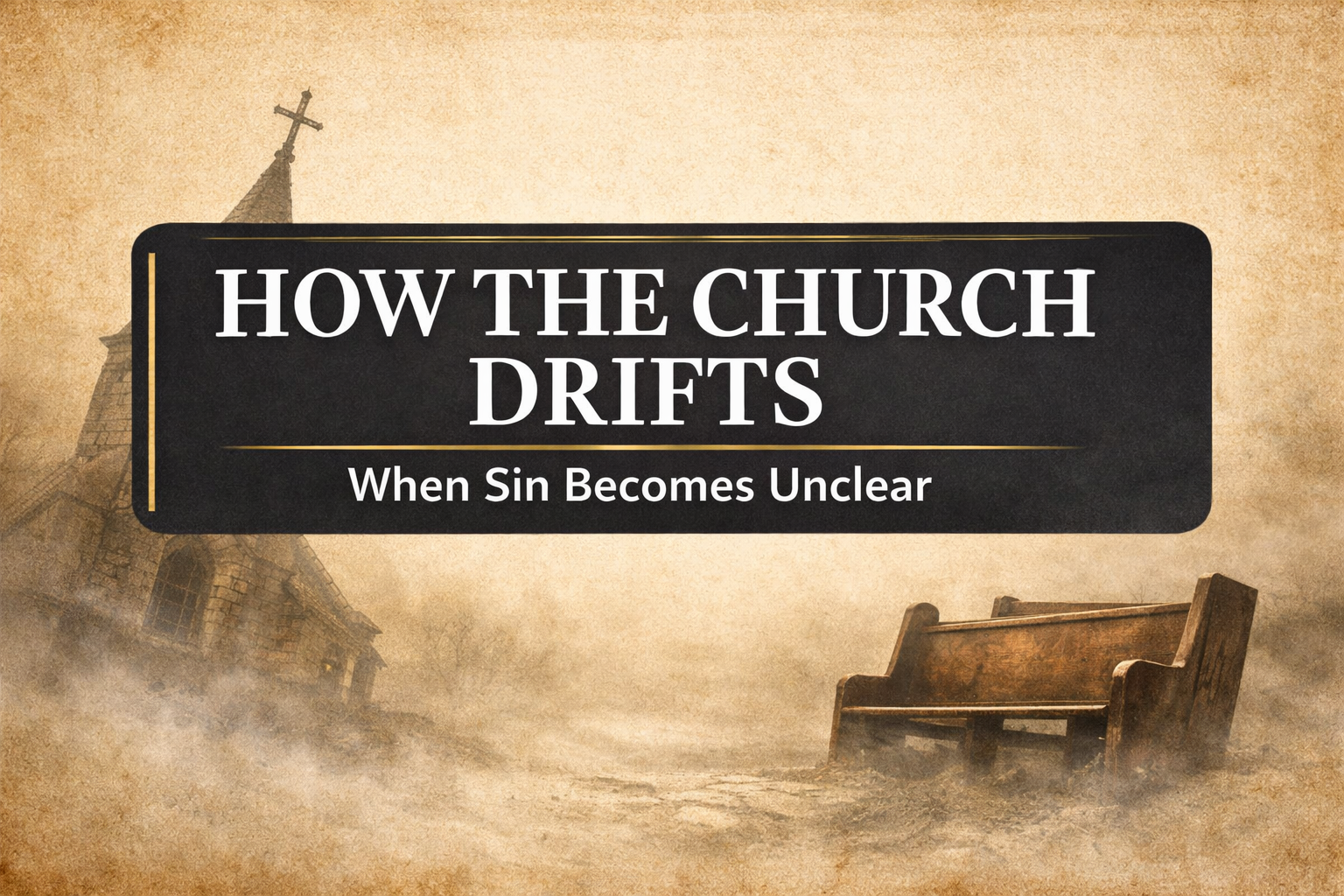
YouTube thumbnail reading “How the Church Drifts — When Sin Becomes Unclear” with bold white text on a dark charcoal banner over a parchment-style background, featuring a leaning church steeple and an empty pew in mist, illustrating doctrinal drift and loss of biblical clarity.

⏱️ Estimated Reading Time: 2 min read

How the Church Drifts: When Sin Becomes Unclear

Series: Clarity in a Confused Age: How the Church Drifts and How Christians Stay Anchored

Show: Contending for the Word with Dave Jenkins


Show Summary

In this episode of Contending for the Word, Dave Jenkins continues the March series,
Clarity in a Confused Age by addressing a critical issue in the modern church: the redefinition of sin.

The church rarely denies sin outright. Instead, biblical language softens, categories shift, and
therapeutic terms replace Scripture’s clarity. But when sin becomes unclear, grace becomes unclear.
Repentance is blurred, assurance collapses, and discipleship becomes disoriented.

This episode is not about moral superiority or targeting cultural flashpoints. It is about spiritual protection.
Because wherever sin becomes unclear, the gospel is inevitably distorted.


Audio Player

Video Player


Episode Notes

Key Idea

Silence about sin is not neutrality—it is formation.

What This Episode Covers

  • Why conversations about sin feel “unsafe” in many churches today
  • How sin is redefined before it is rejected (softened language, blurred categories, shifted meanings)
  • The biblical pattern of deception: reinterpretation before outright denial (Genesis 3)
  • How therapeutic language can replace biblical categories (sin, repentance, conviction, holiness)
  • Three primary pressures driving drift: cultural, institutional, and emotional
  • Why “almost right” teaching is often more dangerous than obvious error
  • How drift harms ordinary believers: anxiety, confusion, exhaustion, and chronic guilt
  • How Christians stay anchored through God’s ordinary means of grace and the sufficiency of Scripture

Key Scriptures

  • Genesis 3:1 — “Did God really say?” (deception through ambiguity)
  • Isaiah 5:20 — Calling evil good and good evil
  • Jeremiah 6:14 — “Peace, peace” when there is no peace
  • Acts 17:11 — The Bereans examined Scripture daily
  • Romans 8:1 — No condemnation for those in Christ
  • Psalm 119:105 — God’s Word as a lamp to our feet
  • 2 Corinthians 7:10 — Godly sorrow leading to repentance

Call to Action

If this episode helped you, please consider sharing it thoughtfully with a friend, your small group, or your church.
Subscribe to Contending for the Word wherever you listen to podcasts, and on YouTube.

For more biblical resources to help you grow in discernment and stay anchored in the Word, visit Contending for the Word’s page at Servants of Grace or our YouTube.


Thank you for listening to this episode of Contending for the Word. If you enjoyed this episode, please subscribe to the show and rate it wherever you listen to podcasts. Be sure to also follow Servants of Grace on Facebook, Instagram, and X.

Continue Growing in Biblical Truth

If this article served you, explore resources by Dave Jenkins and Theology for Life Publishing designed to help you grow in biblical clarity, theological depth, and faithful Christian living. You can view the featured titles below or explore more in the shop.

Explore the Shop
war-of-worldviews-book
Theology for Life Publishing
NEW
not-my-will-the-unearthly-beauty-of-biblical-submission
Theology for Life Publishing
contentment-the-journey-of-a-lifetime
Theology for Life Publishing
Facebook
X
LinkedIn
Pinterest
Email
Print
1

Your Cart