⏱️ Estimated Reading Time: 5 min read
Why Emotionalism Cannot Replace Biblical Truth
Author: Dave JenkinsShow: Contending for the Word Q&AShow Summary
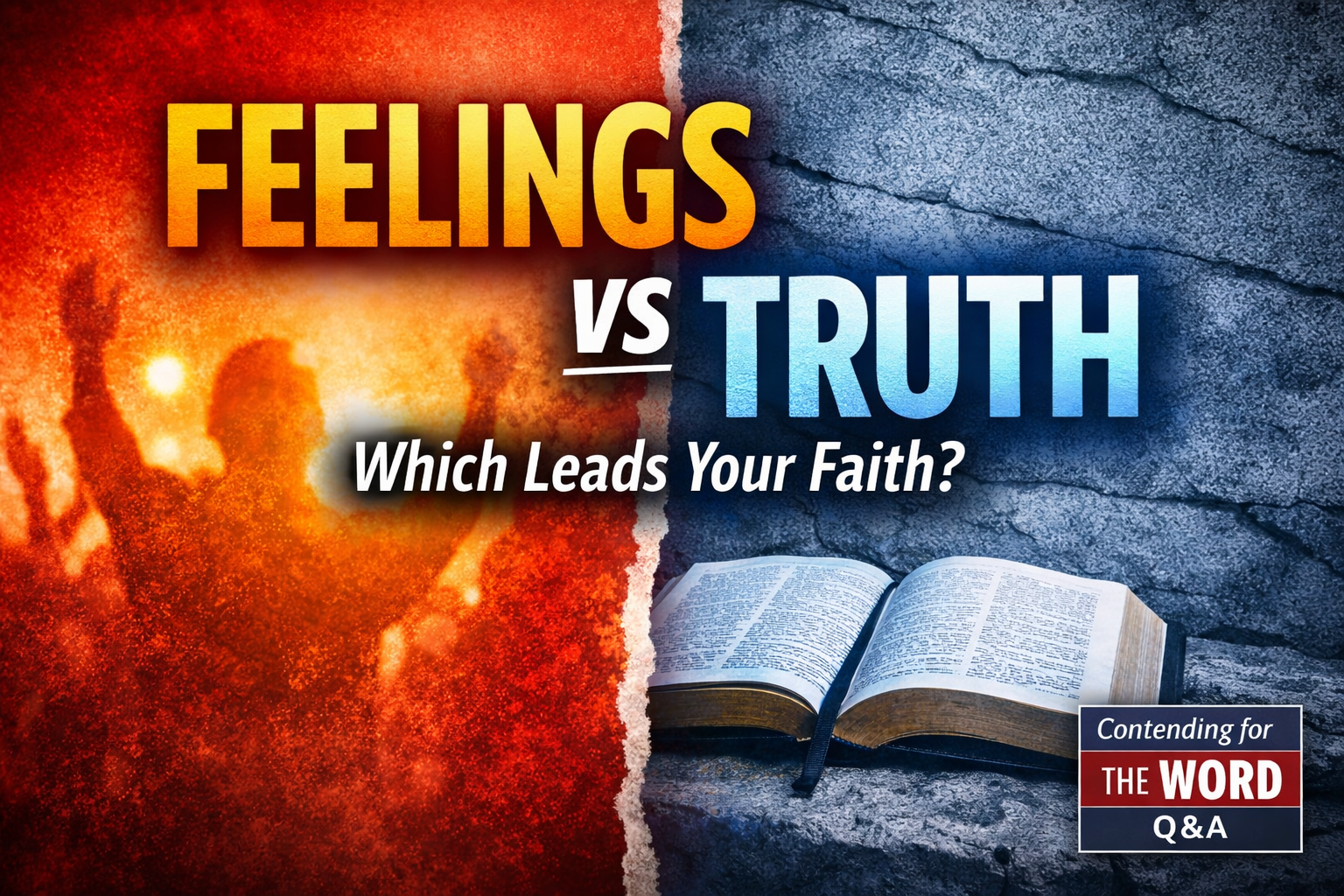
In this episode of Contending for the Word Q&A, Dave Jenkins answers an important question for every Christian: Why can’t emotionalism replace biblical truth? Emotions are gifts from God, but they were never meant to function as our final authority. When feelings become the lens through which we interpret Scripture, doctrine, and the Christian life, discernment weakens and spiritual instability follows.This episode explains why Scripture alone defines truth and reality, how emotionalism makes truth subjective, why it opens the door to manipulation and error, how it confuses God’s presence with emotional experience, and why it erodes obedience and holiness. You’ll be encouraged to honor your emotions without enthroning them, letting God’s Word interpret your feelings rather than allowing feelings to interpret God’s Word.Audio Player
Video Player
Key Scriptures
- Jeremiah 17:9
- Psalm 119:160
- 2 Timothy 4:2
- 2 Peter 2:18
Episode Highlights
- Emotions are valuable gifts from God, but they cannot define truth or guide faith.
- When feelings determine truth, convictions shift with mood, pressure, and circumstances.
- Emotionalism makes believers easier to persuade, manipulate, and spiritually exploit.
- God’s presence is known by faith in His Word, not by the intensity of emotional experience.
- Obedience and holiness are built on truth, not on fluctuating feelings.
Full Article
The Question
Why can’t emotionalism replace biblical truth? What danger arises when feelings become the final authority in the Christian life? What happens when believers allow emotions, not Scripture, to define truth, shape convictions, or direct their spiritual lives?Emotions Are Gifts, But Not Authority
Emotions are good gifts from God. They help us rejoice, grieve, and feel compassion. But emotions were never meant to be our final authority. When emotions become the lens through which we interpret the Word of God, doctrine, and the Christian life, we open the door to confusion and spiritual instability.Scripture Exposes the Unreliability of the Heart
Scripture begins by reminding us that what we feel is real, but not always reliable. Jeremiah 17:9 teaches that the heart is deceitful above all things and desperately sick. This means our emotions, though real, can be confused, reactive, or shaped by sin.Psalm 119:160 anchors us in what does not change: the sum of God’s Word is truth. Truth is not found in shifting feelings. Truth is found in the unchanging Word of God. And 2 Timothy 4:2 instructs pastors to preach the Word in season and out of season, precisely because truth must stand even when emotions and cultural sentiments push back.Central Truth
Emotions are valuable gifts from God, but they cannot guide faith. They cannot define truth or replace Scripture. When emotionalism becomes our authority, discernment collapses.Four Ways Emotionalism Undermines Discernment
1) Emotionalism Makes Truth Subjective and Unstable
When feelings determine truth, truth changes as quickly as our emotions do. What feels right today may feel wrong tomorrow. Convictions shift with mood, pressure, or circumstances. Faith becomes dependent on emotional highs, and discernment becomes\ impossible. God gave us His Word because emotions are changeable, but His truth is not.2) Emotionalism Opens the Door to Manipulation and Error
False teachers love emotionalism because it bypasses the mind and weakens discernment. People led primarily by emotion are easier to persuade, manipulate, deceive, overwhelm, and spiritually exploit. Scripture warns that false teachers entice people through sensuality and emotional appeal (see 2 Peter 2:18). Biblical truth calls for thoughtful, grounded, Spirit-illuminated discernment, not impulse-driven reactions.3) Emotionalism Confuses God’s Presence with Emotional Experience
Many believers assume strong emotions mean God is present, and weak emotions mean God is absent. But God is present when His Word is believed, not when we feel a certain way about it. If assurance depends on emotional experience rather than the promises of Scripture, we will live in instability. Faith rests on Christ’s finished work, not on fluctuating feelings.4) Emotionalism Erodes Obedience and Holiness
Obedience requires conviction, not feelings. When Christians follow emotions instead of God’s Word, obedience becomes optional: “I don’t feel like forgiving. I don’t feel like obeying. I don’t feel convicted.” But holiness is not built on emotion. It is built on truth, empowered by the Holy Spirit. The Christian life requires submitting our emotions to the Word of God, not the other way around.Application
- Honor your emotions, but don’t enthrone them.
- Let Scripture interpret your feelings, not your feelings interpret Scripture.
- Measure spiritual experiences by the Word of God, not emotional intensity.
- Seek stability in Christ, not emotional consistency.
- Ask the Holy Spirit to shape your emotions, not to replace your conviction.
Final Encouragement
Dear Christian, hear this well: emotions are wonderful servants, but terrible masters. Feelings or not, the church grows wherever Scripture, not emotion, holds the final authority.So why can emotionalism never replace biblical truth? Because the heart is deceptive. Because emotions fluctuate. Because Scripture alone defines reality. And because discernment requires a foundation stronger than our feelings.Takeaways / Reflection Questions
- Where are you most tempted to let feelings define what is true?
- How can you train yourself to let Scripture interpret your emotions this week?
- What practical steps will help you measure experiences by God’s Word rather than intensity?
- In what area of obedience have emotions been making faithfulness feel optional?