Scripture and Science in Harmony, Understanding Categories
By Dave Jenkins
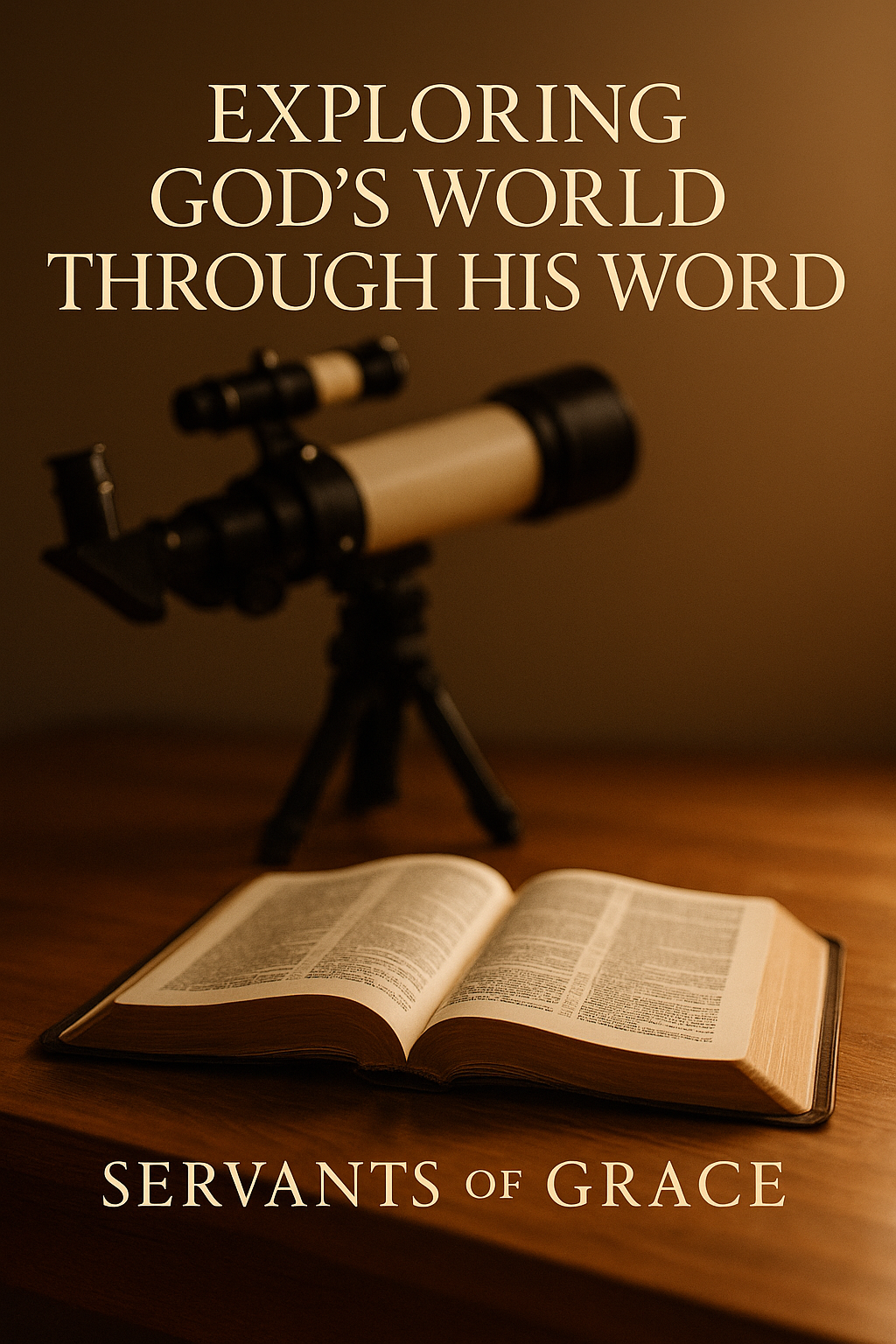
God’s Word and God’s world speak with one voice.
Question
Do Scripture and science really conflict?
Answer
No, when properly understood, Scripture and science do not conflict, because God is the Author of both His Word and His world. Any apparent conflict arises from human misunderstanding, either of the Bible or of the created order.
Two Kinds of Revelation
The Bible teaches that God reveals Himself in two ways:
General Revelation, in creation (Psalm 19:1–4, Romans 1:18–20). The heavens declare His glory and power.
Special Revelation, in Scripture (Psalm 19:7–11, 2 Timothy 3:16–17). God’s Word reveals His character, His will, and His plan of redemption through Christ.
General revelation tells us that God exists and displays His majesty, special revelation tells us who He is and how we can know Him. These revelations are perfectly harmonious because they come from the same God.
Understanding Categories
Conflict often happens when we confuse categories, when we expect the Bible to function as a modern scientific textbook or when we treat science as if it can speak with divine authority about metaphysical truth.
Scripture’s purpose is theological and redemptive. It tells us who God is, why we exist, what is wrong with the world, and how God saves.
Science’s purpose, when rightly practiced, is descriptive. It studies what God has made through observation, testing, and repeatable results.
When we let Scripture speak to ultimate causes and science describe observable patterns, they complement rather than contradict one another.
Common Category Errors
Method vs. Metaphysics: Science can observe how things work, only Scripture reveals why they exist.
Interpretation vs. Data: Sometimes it is not the Bible or the data that conflict, it is our interpretations of them.
Scope Creep: Trouble arises when science makes philosophical claims, for example, “There is no God,” or when Christians demand the Bible answer modern technical questions it never intended to address.
God’s Word is infallible, human science is fallible and revisable. When a conflict appears, we reexamine both our exegesis and our assumptions, not God’s truth.
Examples to Consider
Miracles: These are not violations of natural law, they are acts of the Lawgiver who governs creation.
Creation: Scripture teaches that God is Creator, humanity is made in His image, and the world is designed with purpose and order.
Resurrection: The resurrection of Jesus is a historical event verified by eyewitnesses. Science studies regular patterns, the Creator is free to act beyond them because He established and upholds them by the word of His power.
The Christian Posture
Christians should not fear honest scientific inquiry, but we must reject scientism, the belief that science is the only source of truth.
Instead, we approach all knowledge with:
Humility, recognizing our limitations.
Discernment, testing all claims against Scripture (Acts 17:11).
Worship, seeing creation as the theater of God’s glory (Psalm 19).
The fear of the Lord is the beginning of knowledge (Proverbs 1:7). All truth ultimately leads back to Him.
In Summary
God’s Word and God’s world are not enemies. When interpreted correctly, they speak in unison, one revealing God’s glory through creation, the other proclaiming His grace through Christ. Apparent conflicts invite us to deepen our study, not doubt God’s truth.
“Because God is the Author of both Scripture and creation, apparent contradictions are invitations to refine our interpretations, not reasons to abandon biblical authority.”
— Dave Jenkins | servantsofgrace.org
For more from Contending for the Word Q&A please visit our page here at Servants of Grace or at our YouTube.
Dave Jenkins is happily married to his wife, Sarah, and lives in beautiful Southern Oregon. He is a writer, editor, and speaker who loves Christ, His people, the Church, and sound theology.
When he is not engaged in ministry work, Dave enjoys spending time with his wife, going to movies, sharing a meal at a favorite restaurant, or playing a round of golf with friends. He is also a voracious reader, particularly of Reformed theology and the Puritans, and is often found working through a stack of new books from a wide range of Christian publishers.
Dave earned his M.A.R. and M.Div. from Liberty Baptist Theological Seminary.
Continue Growing in Biblical Truth
If this article served you, explore resources by Dave Jenkins and Theology for Life Publishing designed to help you grow in biblical clarity, theological depth, and faithful Christian living. You can view the featured titles below or explore more in the shop.