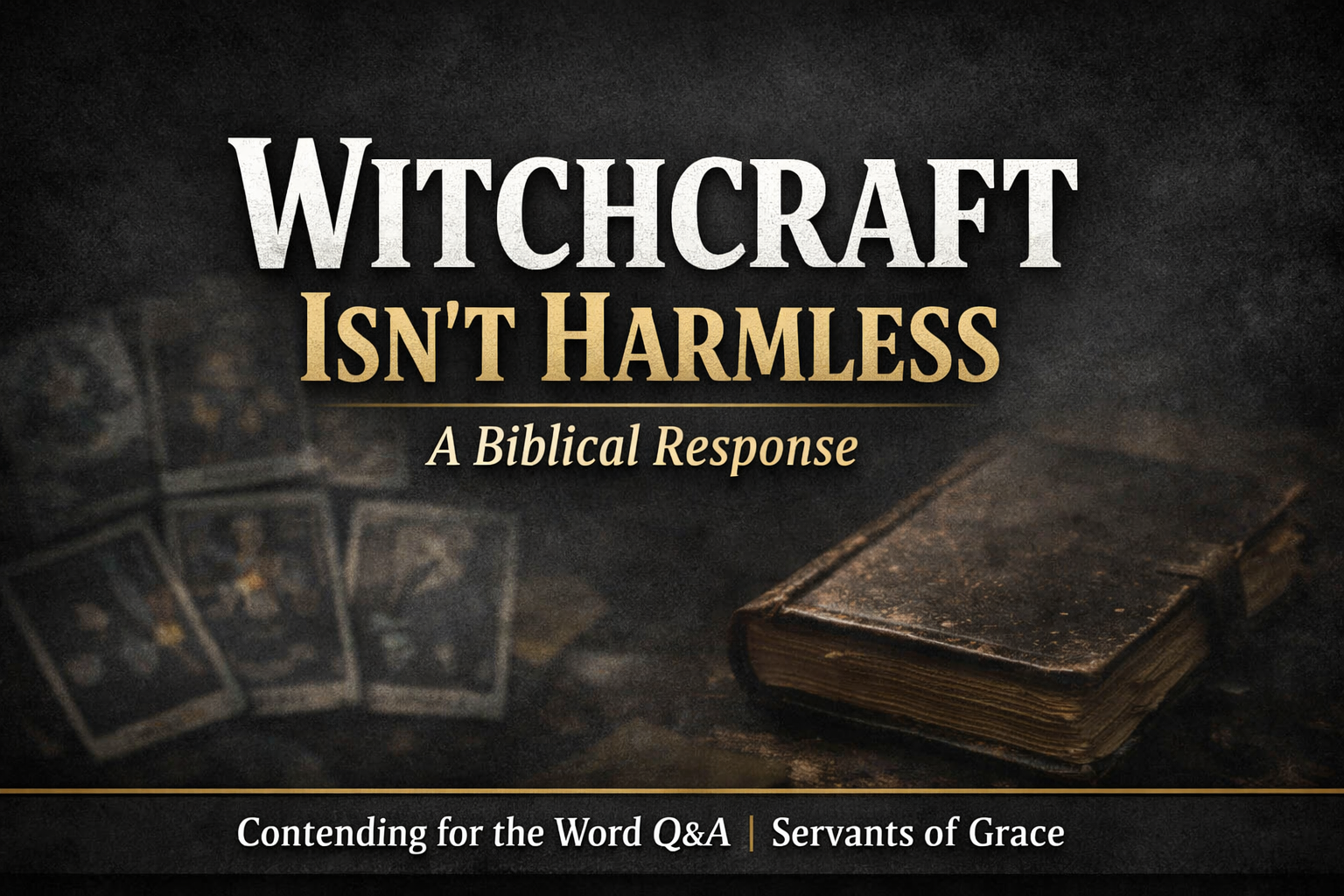
The Rise of Wicca and Witchcraft: A Biblical Response
By Dave Jenkins | Contending for the Word Q&A
Show Summary
Wicca and witchcraft are often marketed today as harmless, empowering, and even therapeutic. But what is really behind this rapidly growing spiritual movement?
In this episode of Contending for the Word Q&A, Doreen Virtue answers the question: How do Wicca and witchcraft often present themselves today as harmless, empowering, or therapeutic rather than spiritually dangerous?
Audio Player
Video Player
Key Scriptures
- John 14:6
- 2 Corinthians 11:14
- Deuteronomy 18:9–14
- Acts 19:18–20
Episode Highlights
- How Wicca and witchcraft are normalized through media, marketing, and retail culture
- Why the “harmless” and “therapeutic” framing is spiritually deceptive
- The rise of syncretism and the blasphemous claim of “Christian witches”
- Why spells can appear to “work” and how that leads to deeper bondage
- How Scripture warns that Satan masquerades as an angel of light (2 Corinthians 11:14)
- Why the gospel of Jesus Christ is the only true hope and rescue
Full Article
Wicca and witchcraft have become increasingly visible in modern culture. They’re often wrapped in language that sounds harmless—wellness, self-care, empowerment, healing, and personal freedom. But behind the rebranding is the same spiritual reality Scripture has always warned about: occult practices invite deception, bondage, and rebellion against the true and living God.
In this episode, Doreen Virtue speaks not as a detached observer, but as someone who once participated in these practices before the Lord saved her. She explains why dabbling rarely stays “small.” What begins with curiosity—tarot cards, spells, psychic readings, meditation techniques, and “energy” practices—often leads to a hunger for deeper spiritual experience. That desire can never be satisfied by counterfeit spirituality. Only Christ saves. Only Christ frees.
One of the most troubling developments today is the rise of so-called “Christian witches.” This is not simply confusion—it is syncretism and blasphemy. It attempts to blend the name of Jesus with practices God condemns. Some even claim that Jesus used witchcraft for His miracles. Scripture leaves no room for that claim. Christ’s miracles were signs of His divine authority as the Son of God, not manipulations of spiritual forces. He is Lord over all—not a practitioner of forbidden arts.
Doreen also notes how Wicca is often promoted as a “nature-based” spiritual path, frequently centered on goddess worship and spells meant to attract what one desires and banish what one fears. This stands in direct opposition to the gospel. Christianity is not about harnessing power; it is about surrendering to the Lordship of Christ. It is not about manifesting a preferred reality; it is about repentance, faith, and trusting God’s providence—even in suffering.
Scripture warns us that spiritual deception frequently comes clothed in light. 2 Corinthians 11:14 teaches that Satan masquerades as an angel of light. That deception can include “spirit guides,” goddess imagery, and counterfeit spiritual experiences that seem compassionate or empowering. And because some practices may appear to “work,” people are tempted to go deeper—unaware that they are walking into darker spiritual bondage.
The answer is not panic. The answer is clarity, discernment, and gospel confidence. Christians must speak with truth and compassion, especially because many drawn into these practices carry deep wounds, fears, and past trauma. But compassion never requires compromise. The most loving thing we can do is proclaim the Christ of Scripture—the only Savior who forgives sin, breaks bondage, and brings sinners into the family of God.
That is why this episode ends where every discerning conversation must end: with the call to share the gospel. The church does not overcome darkness by being quieter, but by being faithful. God saves sinners through the proclamation of Christ crucified and risen. And that message is still the power of God for salvation.
Takeaways / Reflection Questions
- Where do you see occult ideas being normalized in media, wellness culture, or retail marketing?
- Why is it dangerous to treat spiritual practices as “neutral” if God condemns them in His Word?
- How does John 14:6 challenge the pluralism behind goddess worship and pagan spirituality?
- How can you speak truth with compassion to someone who is drawn to Wicca or witchcraft?
- What practical steps can you take to share the gospel more boldly this week?
Call to Action
If this episode helped you, please share it with a friend, subscribe on YouTube, and leave a review on your favorite podcast app. And if you’d like to support this ministry, consider partnering with us so we can continue equipping believers with biblical truth.
Subscribe for more: Contending for the Word Q&A or at our YouTube.