The Resurrection and the Authority of Scripture: Why the Empty Tomb Changes Everything
Author: Dave Jenkins
Series: Risen and Revealed: Scripture, the Cross, and the Resurrection
Date: April 2026
Introduction
We live in a time when truth is constantly questioned, redefined, or dismissed altogether. For many, truth is no longer something objective and fixed but something shaped by personal experience, cultural pressure, or individual preference. In such a world, authority is no longer received but constructed.
But Scripture presses a deeper question upon us, one that every person must answer: Who or what has the final authority?
The resurrection of Jesus Christ is not merely a doctrine to be affirmed or a story to be admired. It is a decisive, historical reality that confronts every competing claim to truth. It does not simply offer encouragement. It demands a verdict. And that verdict reaches beyond the empty tomb to the very authority of Scripture itself.
If Christ is risen, then truth is not fluid. If Christ is risen, then authority does not belong to us. And if Christ is risen, then His Word stands over every human opinion, every cultural trend, and every competing worldview.
The Resurrection Is Not an Idea but an Event
The resurrection is not an idea. It is an event.
The apostle Paul does not allow us to treat it as anything less. Writing to the Corinthians, he makes a staggering claim: “If Christ has not been raised, then our preaching is in vain and your faith is in vain” (1 Corinthians 15:14). Christianity does not rest on moral teaching alone. It does not stand on inspiration, ethics, or tradition. It stands or falls on the reality that Jesus Christ was crucified, buried, and raised on the third day.
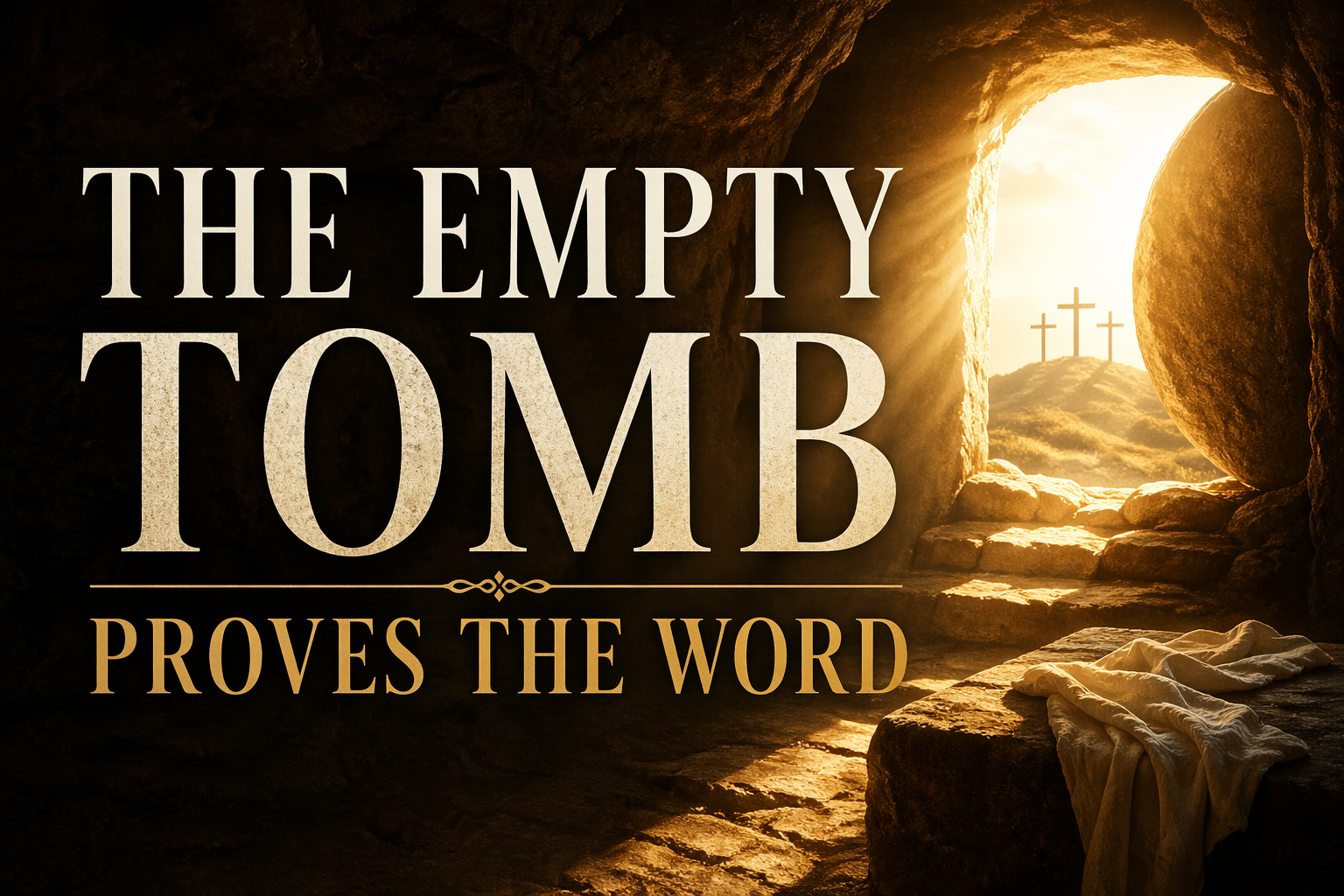
If the resurrection did not happen, then the Christian faith collapses. But if it did happen, and Scripture testifies that it did, then everything changes. The empty tomb is not merely the foundation of hope. It is the foundation of truth itself.
The Risen Christ Affirms the Authority of Scripture
After His resurrection, Jesus did not leave His disciples to interpret these events on their own. He did something profoundly instructive: He turned them to the Scriptures. Luke records that “beginning with Moses and all the Prophets, he interpreted to them in all the Scriptures the things concerning himself” (Luke 24:27). The risen Christ did not detach His resurrection from the Word of God. He rooted it in it.
This is crucial. Jesus did not treat Scripture as a helpful supplement or a devotional aid. He treated it as authoritative, unified, and centered on Himself. The resurrection did not replace Scripture. It confirmed it.
Elsewhere, Jesus declared plainly, “Scripture cannot be broken” (John 10:35). Those words carry enormous weight. If the One who rose from the dead affirms the authority and reliability of Scripture, then we are not free to treat it lightly. To trust Christ is to trust His Word. To submit to Christ is to submit to the authority of Scripture.
The Apostles Proclaimed a Scripture-Grounded Gospel
The apostles understood this clearly. When they went out proclaiming the gospel, they did not preach a message detached from the Bible. They proclaimed Christ from the Scriptures.
Peter, at Pentecost, explained the resurrection by pointing to the Psalms. Paul, in the synagogues and marketplaces, reasoned from the Scriptures. The Bereans were commended not for blind acceptance but for careful examination. They searched the Scriptures daily to test what they heard.
The resurrection, then, was never presented as an isolated claim. It was the fulfillment of everything God had already revealed. The gospel is not merely an experience or a feeling. It is truth, revealed by God, grounded in history, and proclaimed through His Word.
The Real Issue Is Authority, Not Evidence
And yet, the rejection of this truth is rarely about evidence alone.
Many assume that unbelief is primarily intellectual, that people simply need more arguments, more data, or more proof. But Scripture exposes a deeper issue. Paul writes in Romans 1 that although people know God, they do not honor Him as God. The problem is not the absence of light but the refusal to walk in it.
At its core, the issue is one of authority.
The resurrection of Jesus Christ confronts this rebellion head-on. It declares that Jesus is Lord, not merely in a theological sense, but in reality. His authority is not theoretical. It is absolute. Every worldview, every philosophy, and every claim to truth must ultimately answer to Him.
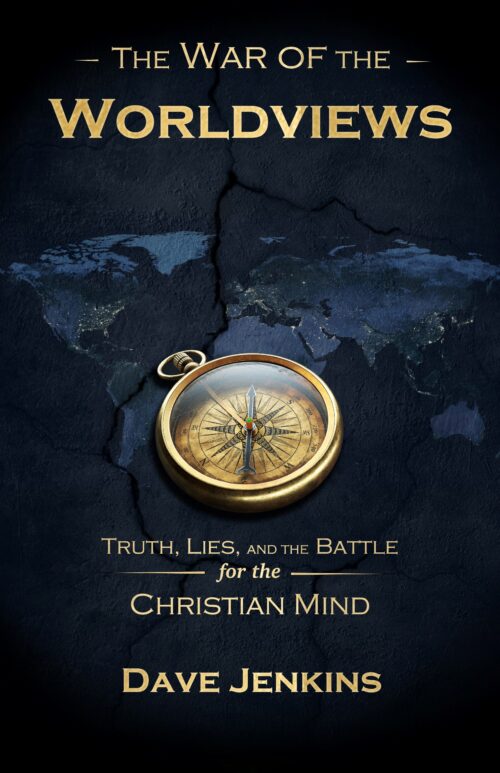
In The War of the Worldviews, I argue that every belief system rests on a final authority, something that determines what is true, what is good, and what is real. The resurrection of Jesus Christ exposes the insufficiency of every competing authority and calls us to submit to the Word of God.
If Christ Is Risen, We Must Submit to His Word
This is where the implications of the resurrection become deeply personal.
The empty tomb is not merely something to be acknowledged. It is something that demands a response. Jesus does not call people to admire Him from a distance. He calls them to follow Him.
“If you love me, you will keep my commandments” (John 14:15).
James presses the same point: “Be doers of the word, and not hearers only, deceiving yourselves” (James 1:22).
If Christ is risen, then His authority extends over every area of life. It shapes what we believe, how we think, how we live, and how we worship. The resurrection is not an invitation to casual agreement. It is a summons to total allegiance.
Conclusion
In the end, the empty tomb leaves no room for neutrality.
If Jesus Christ is risen, then His Word is true. If His Word is true, then it carries authority. And if it carries authority, then we are called to submit to it, not selectively, not partially, but wholly.
The question is not whether the resurrection matters.
The question is whether we will live under the authority of the risen Christ.
Because if the tomb is empty, then everything changes.
For more from our latest series visit here or at our YouTube.