⏱️ Estimated Reading Time: 4 min read
Moralism vs the Gospel: Why the Bible Is About Christ, Not Self-Improvement
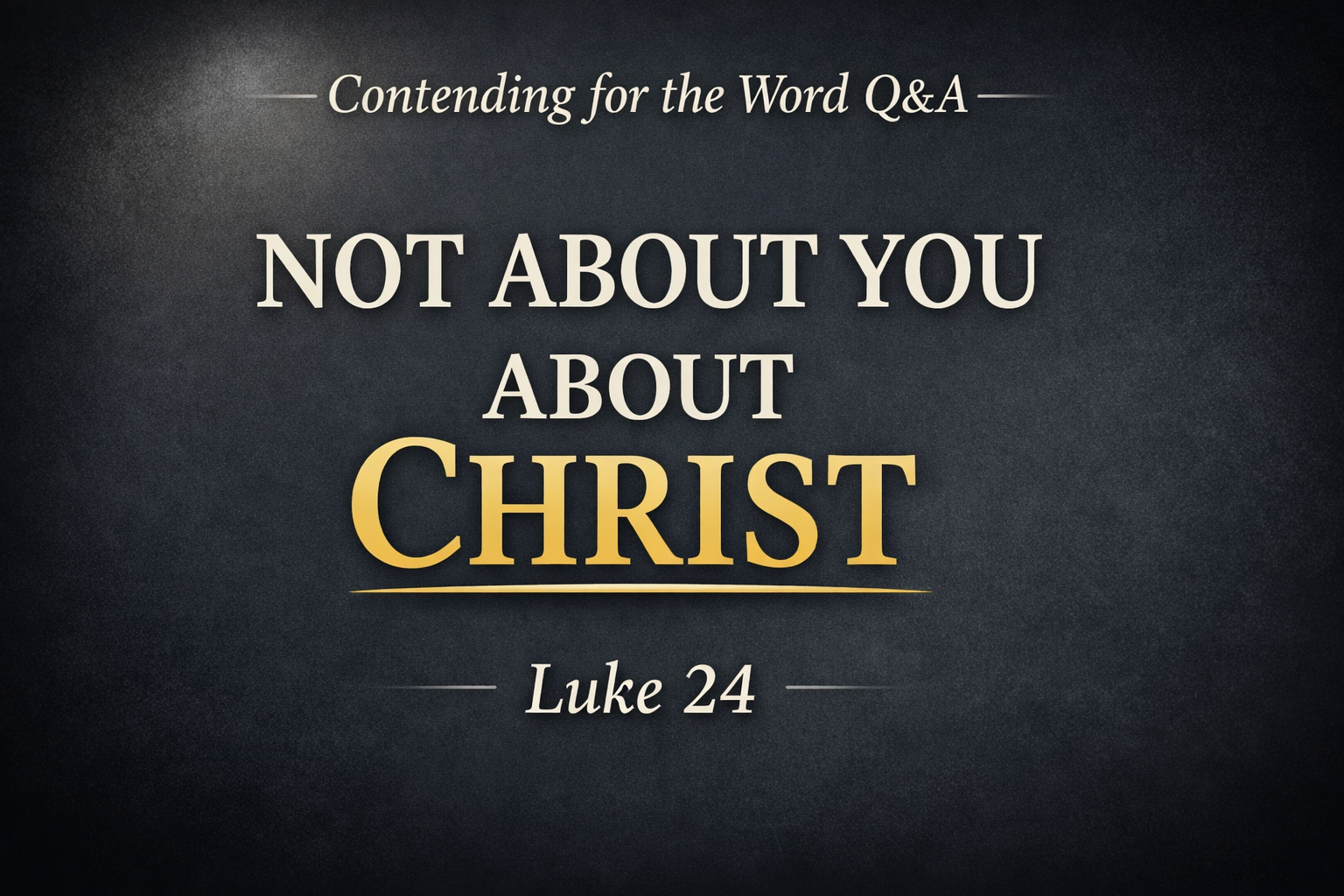
Contending for the Word Q&A
With Dave Jenkins
What does it mean to read the Bible redemptively rather than moralistically, and why does that matter for faithful Christian living?
Episode Summary
In this episode of Contending for the Word Q&A, Dave Jenkins addresses a subtle but deeply influential issue in how many Christians approach the Word of God: moralism.
A moralistic reading of Scripture treats the Bible primarily as a book about what we must do to become better people. A redemptive reading recognizes Scripture as God’s revelation of what He has done to save sinners through Jesus Christ. That distinction matters because it shapes how we understand the Bible, how we relate to God, and how we live the Christian life.
Drawing from Luke 24:25–27, Romans 8:1–4, and Titus 3:4–7, this episode explains why Christ must remain at the center of biblical interpretation. When Scripture is read rightly, obedience is the fruit of grace rather than the means of earning favor with God.
Listen to the Episode
Watch the Episode
Key Scriptures
- Luke 24:25–27
- Romans 8:1–4
- Titus 3:4–7
Episode Highlights
- The difference between moralistic and redemptive Bible reading
- Why moralism quietly shifts the focus from Christ to human effort
- How moralism produces either pride or despair
- Why redemptive reading keeps Christ central and assurance intact
- How obedience flows from grace, not fear
- Why the Bible is a book of redemption, not self-help
Full Article
As we conclude this week on a Christ-centered reading of the Word of God, we need to address a subtle but deeply influential issue in how many Christians read the Bible: moralism.
A moralistic reading treats the Bible as a manual for self-improvement. A redemptive reading recognizes that Scripture reveals what God has done to save sinners through Jesus Christ.
That distinction matters. It shapes how we understand the Word of God, how we relate to God, and how we live the Christian life.
Jesus sets the pattern in Luke 24:25–27, showing that all Scripture points to Him. Romans 8:1–4 declares that there is no condemnation for those in Christ, and Titus 3:4–7 makes clear that salvation is by mercy, not works.
Scripture is about redemption, not self-improvement. Obedience is the fruit of grace, not the means of earning it.
What Moralistic Reading Does
Moralistic reading asks, What should I do? It turns Scripture into a performance standard and reduces Christ to an example rather than a Savior.
This produces either pride or despair. Neither reflects the freedom found in the gospel.
What Redemptive Reading Does
Redemptive reading asks, What has God done? It sees Scripture as revealing God’s holiness, exposing sin, and announcing salvation in Christ.
Obedience flows from gratitude, not fear. From assurance, not anxiety.
Why This Matters
Moralism makes grace conditional and obedience exhausting. Redemptive reading keeps Christ central, assurance steady, and obedience joyful.
The Bible was not given to tell sinners how to save themselves, but to proclaim how God saves sinners through Jesus Christ.
How to Read Scripture Faithfully
- Is this showing God’s standard or God’s grace?
- Is this calling me to trust Christ or replace Him with effort?
- Is obedience flowing from assurance or fear?
Let the law expose sin. Let the gospel announce grace. Let Christ remain central.
The Bible is not a self-help manual. It is a book of redemption.
Takeaways
- The Bible is about Christ and His saving work
- Moralism turns Scripture into burden
- Redemptive reading produces assurance and joy
- Obedience flows from grace
- Faithful reading distinguishes law and gospel
Call to Action
For more from Contending for the Word Q&A, visit our page or watch on YouTube.