⏱️ Estimated Reading Time: 8 min read
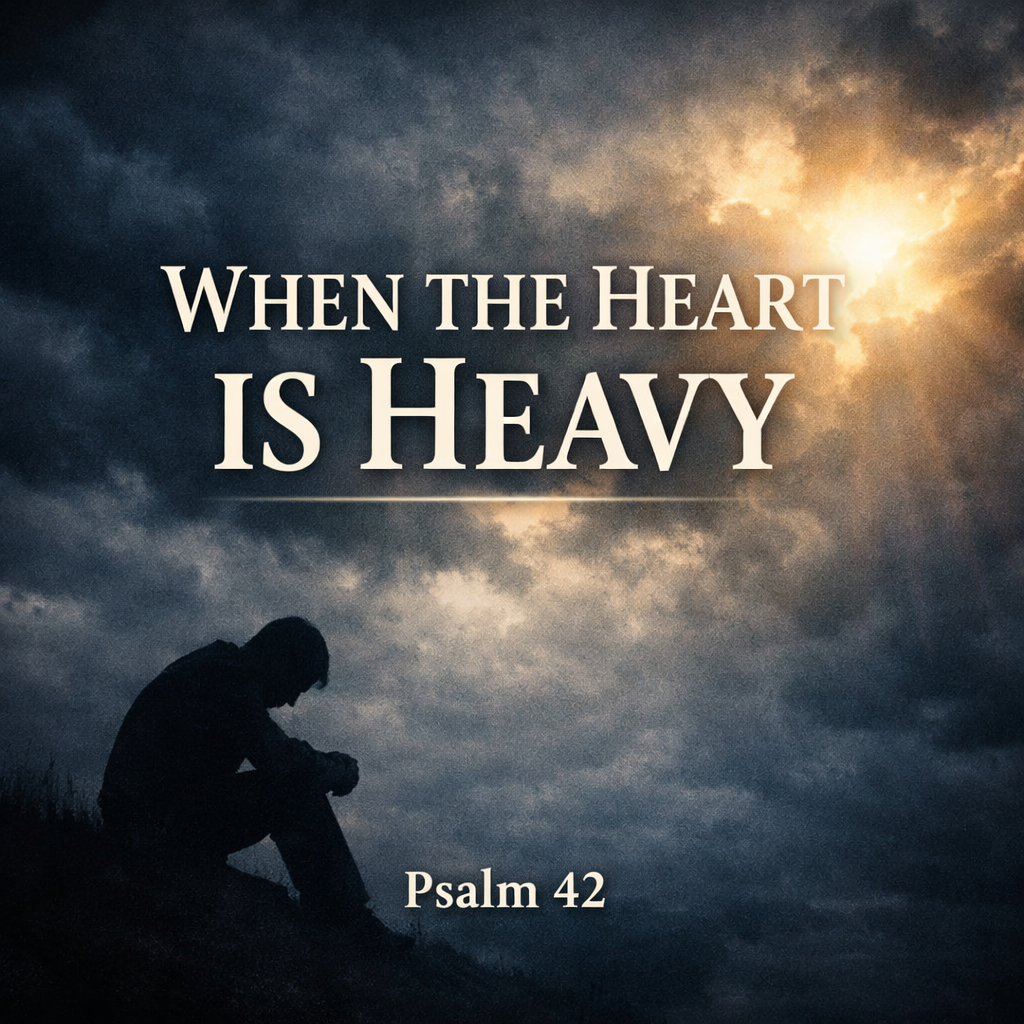
When the Heart Is Heavy: Hope in God Through Psalm 42
By Christina Fox
In seasons of grief, suffering, and lament, one of the most difficult struggles in the Christian life is knowing what to do with a heart that feels overwhelmed. Some people tend to emphasize the mind—what we know, believe, and confess from Scripture. Others tend to emphasize the heart—what we feel, experience, and carry through seasons of sorrow. But biblical lament shows us that these are not enemies. In the Psalms, the mind and heart meet, and in that meeting, God teaches us how truth leads the troubled soul toward hope.
Psalm 42 is one of the clearest examples of this reality. It gives voice to sorrow, longing, confusion, and spiritual distress. Yet it also shows us how to speak truth to our souls in the midst of pain. For believers walking through the valley of grief and suffering, Psalm 42 teaches us not only to pour out our hearts honestly before God, but also to anchor our hearts in who He is.
Psalm 42: The Cry of a Downcast Soul
Psalm 42 opens with one of the most familiar images in the Psalms:
“As the deer pants for streams of water, so my soul pants for you, my God. My soul thirsts for God, for the living God” (Psalm 42:1–2).
The psalmist is far from the temple, the place where God’s people gathered for worship. He is in distress, cut off from the joy he once knew in the public worship of God. His suffering is not merely external; it has reached deep into his inner life. He says, “My tears have been my food day and night” (Psalm 42:3). His enemies taunt him and ask, “Where is your God?”
This is what grief and suffering often feel like. There is spiritual thirst, emotional exhaustion, and the painful sense that what once felt steady now feels distant. The psalmist does not hide any of this. He does not pretend to be stronger than he is. He pours out his soul before God. He remembers better days and grieves the contrast between then and now.
He says plainly:
“Why, my soul, are you downcast? Why so disturbed within me?” (Psalm 42:5).
That question is not unbelief. It is the language of lament. It is the cry of a believer who knows God, longs for God, and yet feels the pain of living in a fallen world. Psalm 42 reminds us that deep faith and deep sorrow can coexist.
Where the Mind and Heart Meet
One of the great gifts of the Psalms of lament is that they show us how to bring both our thoughts and our feelings before the Lord. We are not brains on a stick, nor are we creatures ruled only by emotion. We are thinking and feeling people, and Scripture addresses both.
That is why Psalm 42 is so important. The psalmist does not simply express emotion and stop there. His lament is honest, but it is not directionless. He not only tells God how he feels, but he also reminds himself what is true.
Even in the middle of confusion, he refers to God as “my Rock” (Psalm 42:9). Even while wrestling with pain, he remembers the steadfast love of the Lord:
“By day the Lord commands his steadfast love, and at night his song is with me, a prayer to the God of my life” (Psalm 42:8).
This is where the mind and heart meet. The psalmist applies what he knows about God to the turmoil of his soul. He does not deny his emotions, but neither does he surrender ultimate authority to them. Instead, he brings his emotions under the light of truth.
Twice he says:
“Why are you cast down, O my soul, and why are you in turmoil within me? Hope in God; for I shall again praise him, my salvation and my God” (Psalm 42:5, 11).
That is the turning point of the psalm. The psalmist speaks to his soul. He confronts despair, not with self-help, not with empty optimism, but with the truth of God’s character. God is his salvation. God is his hope. God is his God.
The Role of Truth in Lament
It is easy, especially in seasons of suffering, to focus only on the emotional force of lament. And we should not minimize that force. The language of the Psalms is vivid because grief is real. Pain is real. The sorrow of living in a broken world is real.
But lament in Scripture is never merely cathartic. It is not emotional release disconnected from faith. Biblical lament brings pain into the presence of God and places that pain under the truth of His Word.
This matters because our emotions, though real, are not always reliable interpreters of reality. They can exaggerate. They can mislead. They can make temporary darkness feel final. They can make silence feel like abandonment. But the Word of God remains clear, sufficient, and true. What God has said is more stable than what we feel.
That is why theology matters in suffering. Not abstract theology divorced from life, but the living truth of God revealed in His Word. What we know about His character, His promises, His covenant faithfulness, and His saving work is not a side issue in grief. It is an anchor in grief.
The truth of Scripture steadies us when sorrow shakes us. It does not erase pain, but it keeps pain from defining ultimate reality. It reminds us that God is still our Rock, still our Savior, still our hope, even when our hearts feel heavy.
How to Practice Biblical Lament
Psalm 42 does not only give us theology to admire. It gives us a pattern to follow. When your heart is heavy, this psalm shows several practical ways to walk through grief and suffering with faith.
1. Bring your sorrow honestly to God
The psalmist does not sanitize his pain. He tells the Lord of his tears, his turmoil, and his spiritual thirst. Biblical faith is not pretending everything is fine. It is bringing what is true into the presence of God.
2. Remember what is true about God
Even in sorrow, the psalmist remembers God’s steadfast love and calls Him his Rock. In suffering, we need more than emotional expression. We need the stabilizing truth of God’s Word.
3. Preach truth to your own soul
The repeated refrain of Psalm 42 is a form of self-address shaped by Scripture: “Hope in God.” Sometimes one of the most important acts of faith is speaking biblical truth to your own discouraged heart.
4. Refuse to let feelings have the final word
The psalmist does not deny his downcast condition, but neither does he let despair close the story. He looks forward in faith: “I shall again praise him.” Grief may be deep, but it is not sovereign. Sorrow may be severe, but it will not have the final word for the believer.
Christ Our Hope in the Valley
Ultimately, Psalm 42 does not call us to place hope in our ability to manage our emotions well. It calls us to place our hope in God. And for the Christian, that hope is made even clearer in Jesus Christ.
Christ is the Man of Sorrows who entered fully into our suffering. He was despised and rejected, acquainted with grief, and He bore our sorrows in His redeeming work (Isaiah 53:3–5). He knows what it is to cry out in anguish. He knows what it is to suffer. He knows what it is to entrust Himself to the Father in the darkest hour.
Because of Christ, lament is never hopeless. We do not grieve as those who have no hope. Our tears are real, but so is our Redeemer. Our sorrow is deep, but so is His mercy. Our hearts may be heavy, but Christ is risen, reigning, and faithful.
That means the believer can say, even through tears, “Hope in God.” Not because the circumstances are easy. Not because the pain is imagined. But because Christ has secured our salvation, intercedes for us even now, and will one day wipe away every tear from our eyes.
Conclusion
When the heart is heavy, Psalm 42 gives us language for grief and direction for faith. It teaches us to pour out our sorrow honestly before God, to remember His steadfast love, and to speak truth to our souls when we feel overwhelmed.
This is the wisdom of biblical lament: the heart does not lead the mind, and the mind does not silence the heart. Rather, in the grace of God, truth leads the troubled heart toward hope.
So when your soul feels downcast, do not turn away from God. Turn toward Him. Bring your tears, your questions, your weariness, and your grief. And as you do, remember who He is: your Rock, your Savior, and your God.
“Why are you cast down, O my soul, and why are you in turmoil within me? Hope in God; for I shall again praise him, my salvation and my God” (Psalm 42:11).
For more from our latest series please visit here or at our YouTube.