Series: Starting the Year Rooted in Christ
We live in an age where silence is praised more than truth, where being agreeable is safer than being faithful. Many Christians today aren’t abandoning the truth—they’re just afraid to say it out loud.
Consider Jessica Tapia, a Christian teacher in California who was terminated for refusing to lie to parents about their children’s gender transitions and use pronouns that contradicted her biblical convictions. Her case is not isolated. It represents a growing cultural hostility toward Christians who refuse to bow to the idols of expressive individualism and state-sanctioned relativism.
If you are afraid of telling others of the glory of Christ in the revealed Word of God, it is time that you once again consider the glories of Christ in the Word.
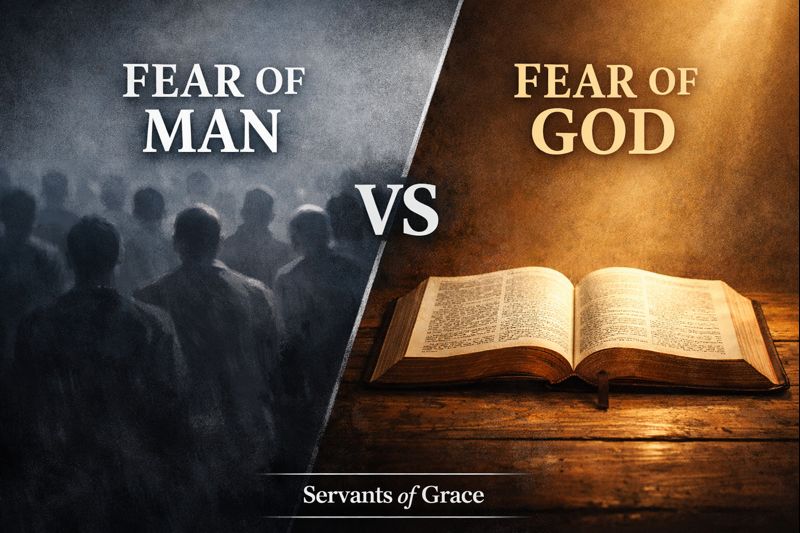
The fear of man has silenced many Christians, keeping them from speaking up in a culture that desperately needs the truth. But the fear of God has slain its legions on the battlefield of apathy, compromise, and worldliness. The answer is not retreat, but a deeper return to the Word of God, where we learn to stand with reverent courage and bold conviction.
The Fear of Man: A Subtle Enemy of Faithfulness
Proverbs 29:25 warns, “The fear of man lays a snare, but whoever trusts in the Lord is safe.” The fear of man isn’t always overt—it’s often subtle, creeping into our thoughts when we hesitate to speak biblical truth for fear of rejection or ridicule. It surfaces in the pulpit when pastors soften Scripture to avoid controversy, and in everyday conversations when believers remain silent about sin, salvation, or the Lordship of Christ.
Even Peter, one of the boldest apostles, faltered under this fear (Galatians 2:11–14). When he withdrew from Gentile believers out of concern for what others might think, Paul confronted him publicly—not to shame him, but to restore him to gospel fidelity.
In our day, the fear of man often disguises itself as compassion or cultural sensitivity. But when truth is sacrificed on the altar of acceptance, we have traded conviction for compromise. And compromise is not compassion—it is cowardice wrapped in cultural clothing.
The Fear of God: The Beginning of Wisdom and Boldness
This struggle between fearing man and fearing God isn’t new. Throughout history, believers have faced similar challenges, standing firm in their convictions despite societal pressures.
Psalm 111:10 reminds us, “The fear of the Lord is the beginning of wisdom.” This fear is not a cowering dread, but a holy reverence—a profound awe rooted in a biblical understanding of God’s character: His holiness, justice, sovereignty, mercy, and truth.
Isaiah, in the presence of the Lord, declared himself “undone” (Isaiah 6:5). Moses removed his sandals before the burning bush (Exodus 3:5). The early church, gripped by a holy fear, grew in power and witness (Acts 5:11–14). This kind of fear doesn’t paralyze—it propels.
Ecclesiastes 12:13 reminds us that fearing God and keeping His commandments is the whole duty of man. The fear of God compels us to obey, to speak, and to stand.
As Os Guinness aptly put it, “The fear of the Lord is the fear that drives out all other fears.” When God is big, man is small. And when we truly fear the Lord, we’re freed from the tyranny of human opinion.
Biblical Counseling and the Fear of Man
From a biblical counseling perspective, the fear of man is not merely a behavioral issue—it is a heart issue. Proverbs 29:25 reveals that this fear is a snare, because it places trust in man rather than in the Lord. At Servants of Grace, we emphasize that biblical counseling must always return to the heart, to the affections, and ultimately to the Word of God.
Fear of man arises when identity is misplaced—when we seek approval, security, or identity in others rather than in Christ. Colossians 3:3 reminds us, “For you have died, and your life is hidden with Christ in God.” Biblical counseling brings this truth to bear by helping believers identify false sources of security and realign their hearts with the fear of the Lord.
We don’t overcome fear by mere effort. We overcome it by replacing it—with a greater, weightier fear: the fear of God. Only then are we freed to speak, to love, and to live as God intends.
🔎 Reflect
- Where am I currently more afraid of man than God?
- How is my view of God shaping my courage (or lack thereof)?
- Am I grounded in Scripture, or drifting with the tide of cultural pressure?
- Who can walk with me, pray with me, and speak the truth in love to help me grow?
Final Encouragement: Take Heart, Christian
Beloved, the Lord has not called you to stand in your own strength, but in His. When the fear of man rises, lift your eyes to the cross. There, God’s justice and mercy met. There, Christ silenced every accusation and secured your standing before the throne of grace.
The world may mock, the culture may cancel, but our Savior reigns. Fear Him—and you’ll fear nothing else. Trust His Word—and you’ll never stand alone. So take up the sword of the Spirit. Fix your eyes on Christ. And stand firm.
“Be watchful, stand firm in the faith, act like men, be strong. Let all that you do be done in love.” —1 Corinthians 16:13–14
Keep Going
Want more help getting rooted in Christ this year? Explore the rest of the Starting the Year Rooted in Christ series and share this article with someone who needs encouragement to stand firm in the Word. Also visit our YouTube.