“Don’t Judge Me!” — A Misunderstood Verse
“Judge not, that you be not judged” (Matthew 7:1) is one of the most quoted—and most misunderstood—verses in all of Scripture. Many use it to silence any form of moral or theological evaluation. But Jesus wasn’t forbidding discernment—He was condemning hypocrisy. In context, He’s warning against judging others while ignoring your own sin (Matthew 7:2–5).
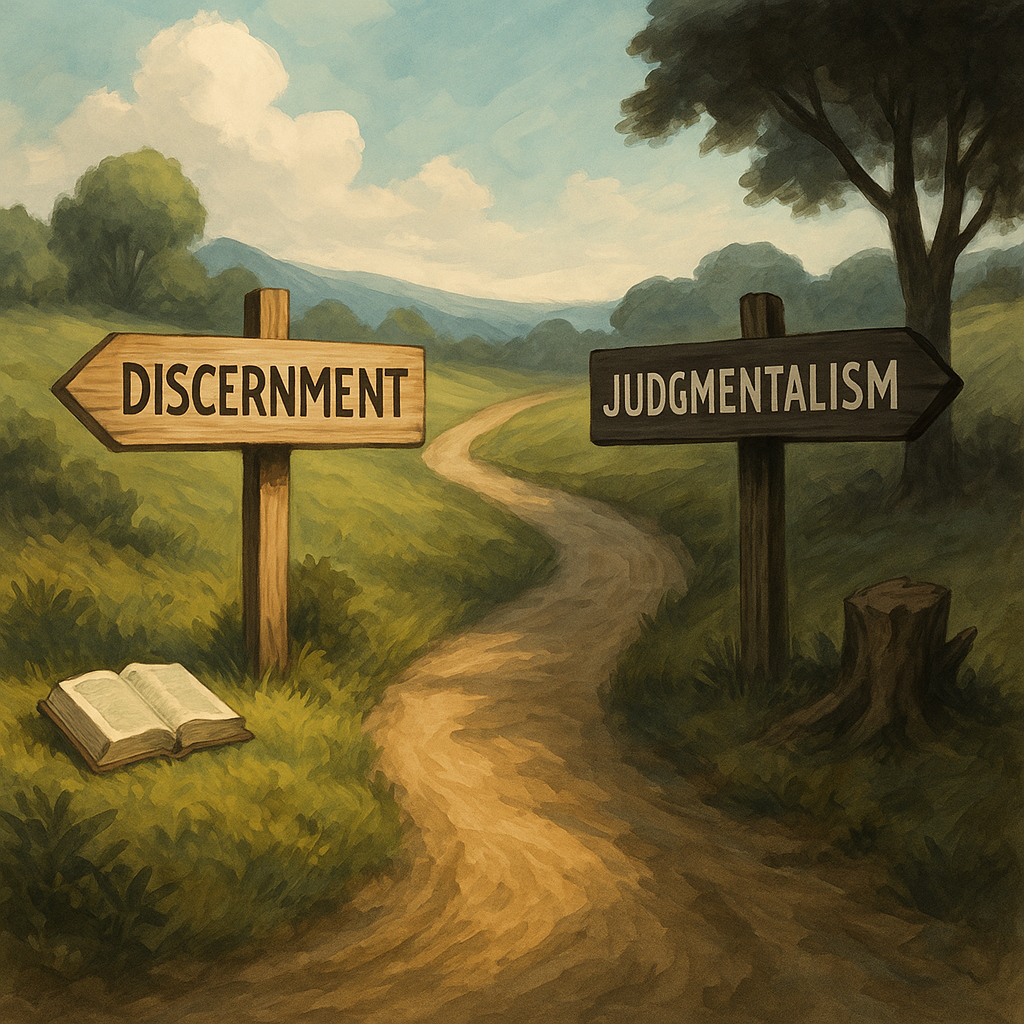
Central Question: What is the difference between discernment and being judgmental?
Biblical Discernment Is Necessary
Discernment is the God-given ability to distinguish between truth and error, good and evil (Hebrews 5:14). In 1 Thessalonians 5:21–22, Paul commands believers to “test everything; hold fast what is good. Abstain from every form of evil.” Jude 3 calls us to “contend for the faith.” That requires discernment—not silence.
Discernment is a mark of spiritual maturity. It protects the church, preserves sound doctrine, and helps believers grow in wisdom and holiness (Philippians 1:9–10). To refuse discernment is not humility—it is negligence toward God’s Word and God’s people.
What It Means to Be Judgmental
Being judgmental, however, means setting yourself up as the final authority, condemning others harshly, self-righteously, or without grace. It’s rooted in pride and lacks humility. Jesus condemned the Pharisees not because they cared about truth—but because they weaponized it to elevate themselves (Luke 18:9–14).
A judgmental spirit majors on fault-finding, assumes motives, and forgets mercy. It critiques without compassion and corrects without restoration (Galatians 6:1).
Key Differences Between Discernment and Being Judgmental
Comparison at a glance| Discernment | Being Judgmental |
|---|
| Guided by Scripture | Guided by opinion or pride |
| Aims to protect and restore | Aims to tear down or elevate self |
| Seeks truth with humility | Assumes motives and passes final judgment |
| Corrects with grace and love | Criticizes with harshness or bitterness |
How to Cultivate Christlike Discernment
- Stay grounded in the Word: God’s truth is the standard for discernment (2 Timothy 3:16–17).
- Check your heart: Examine your motives before speaking (Matthew 7:5).
- Speak the truth in love: Balance conviction with compassion (Ephesians 4:15).
- Pray for wisdom: Ask God for guidance, especially in difficult conversations (James 1:5).
Final Thoughts
Discernment is not unloving—it is a form of love. It’s the willingness to speak truth for the good of others and the glory of God. But it must always be paired with humility, patience, and grace.
The church does not need less discernment; it needs more of it. But we must also beware of crossing the line into judgmentalism. The difference matters for our Christian witness.
Let’s not fall into the ditches of silence or self-righteousness. Instead, let us be people of biblical conviction and Christlike compassion—discerning wisely, loving boldly, and restoring gently.
For more from Contending for the Word Q&A visit us at Servants of Grace or at our YouTube.