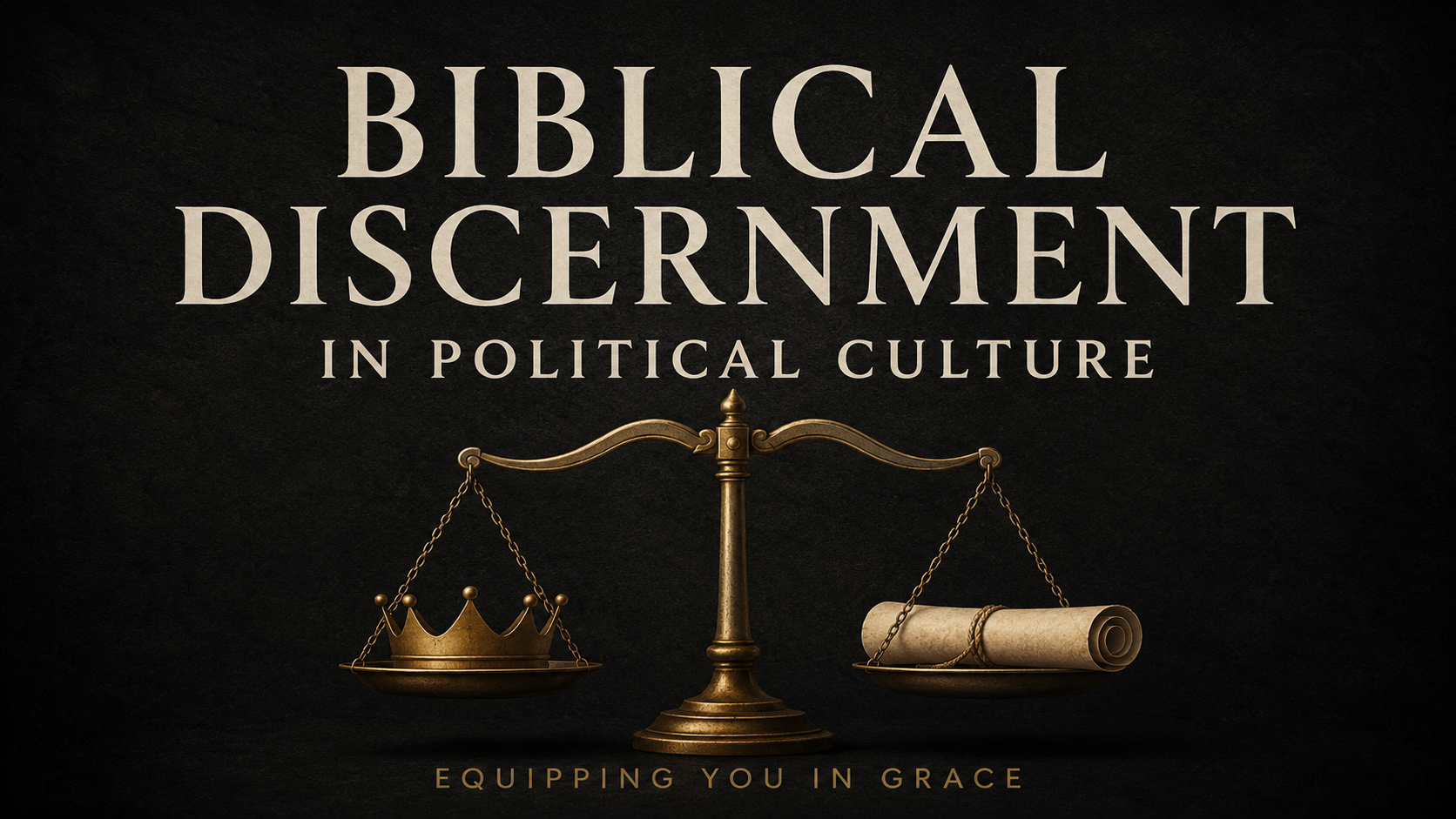
Political culture often rewards outrage, charisma, tribal loyalty, and emotional reaction. Christians are called to something better: biblical discernment rooted in the wisdom, truth, and moral clarity of God’s Word.In this episode of
Equipping You in Grace, Dave Jenkins explains how believers should evaluate leaders, rhetoric, policies, and cultural ideas without allowing personality, fear, or partisan loyalty to replace biblical conviction. Christians belong first to Christ, not to a political tribe.
Listen or Watch
What Biblical Discernment Requires
Biblical discernment is not cynicism, suspicion, or emotional outrage. It is the ability to evaluate truth, error, wisdom, morality, and character through the lens of God’s Word. It requires believers to apply God’s standards consistently, including when those standards confront the sins and blind spots of their own preferred tribe.Micah 6:8 reminds us that God defines what is good. Scripture calls Christians to care about justice, truthfulness, humility, integrity, self-control, and righteousness. These are not optional concerns when evaluating public leaders or political ideas.
Evaluating More Than Personality
Charisma, confidence, and aggressive rhetoric can create powerful emotional attachment. Yet biblical wisdom teaches Christians to look beyond personality and ask whether a leader demonstrates truthfulness, integrity, humility, justice, and moral seriousness.No earthly leader or movement is perfect. Still, recognizing imperfection is different from excusing sin because a leader seems useful to a political cause. Christians must not allow tribal loyalty to make them morally inconsistent.
Thinking at the Worldview Level
Policies and political ideas rest on deeper assumptions about human nature, justice, freedom, identity, authority, and human flourishing. Because every person is made in the image of God, Christians must evaluate these issues through the truth of God’s revelation rather than slogans, fear, or partisan narratives.Words such as compassion, justice, freedom, dignity, and equality may express real concerns. But biblical discernment asks how those words are being defined and whether the underlying worldview honors God’s design for humanity, truth, righteousness, and holiness.
Growing in Steady Biblical Wisdom
Discernment is cultivated through Scripture, prayer, humility, careful thinking, and life in the church. Christians need to spend more time being shaped by the Word of God than by outrage-driven media and political conflict.As Romans 12:2 teaches, believers are transformed by the renewal of their minds. In a culture marked by anger and manipulation, Christians can bear faithful witness by remaining truthful, humble, morally steady, and firmly anchored in Christ.For more biblical resources, visit
Equipping You in Grace or at our
YouTube.