⏱️ Estimated Reading Time: 2 min read
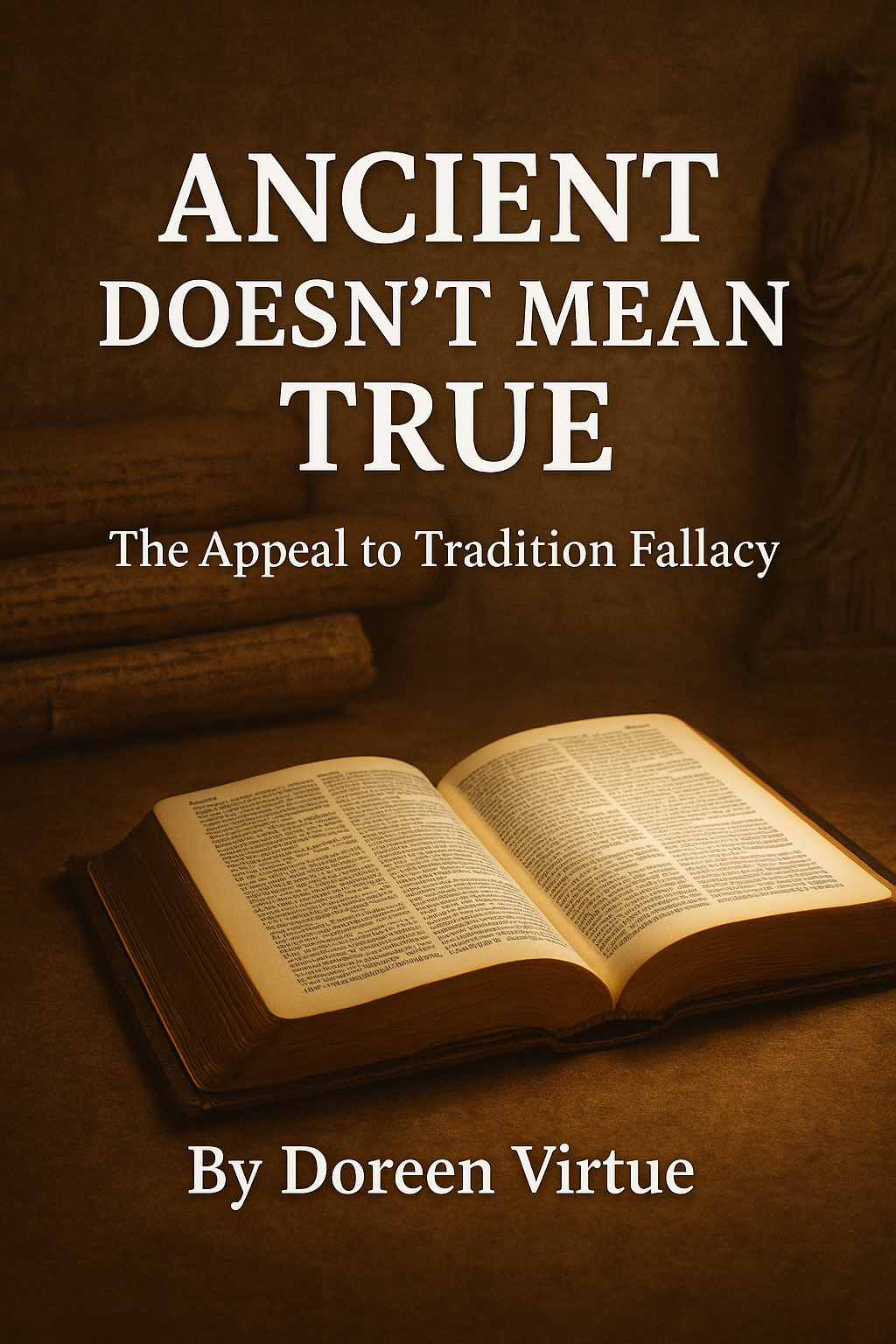
Ancient Doesn’t Mean True: The Appeal to Tradition Fallacy
By Doreen Virtue
Why Ancient Teachings Aren’t Always Biblical
In the new age, we believed in teachings because we thought they were ancient. We were impressed by the age of the teachings, so we thought it must be valid. So we accepted Hinduism, feng shui, and other false teachings because old manuscripts taught them.
This is a classic example of the appeal to tradition fallacy.
As Christians, we know that it doesn’t matter if a teaching is ancient or that old manuscripts or “desert fathers” or “early church fathers” taught it. What matters is whether or not it aligns with Scripture.
The appeal to tradition fallacy occurs when someone claims that something must be true, valid, or better simply because it has been believed or practiced for a long time.
This line of thinking assumes that age equals truth or value. Just because an idea is ancient doesn’t mean it’s correct — many ancient beliefs were based on heresy, condemned practices, superstition, idolatry, or ignorance of God’s truth.
We must compare everything with the Bible, and reject anything that contradicts the Bible. Only the Word of God is timeless, trustworthy, and true.
Check out our ongoing series on Scripture for All of Life to keep growing in biblical discernment.