Syncretism: How Mixing Christianity with Culture Corrupts the Gospel
Author: Dave Jenkins
Show: Contending for the Word Q&A
Date: March 19, 2026
Show Summary
Today’s Question: What is syncretism, and why is it spiritually dangerous for believers and churches?
In this episode, Dave Jenkins explains how syncretism blends Christianity with secular ideas, cultural spirituality, and pagan practices—resulting in a distorted, powerless, and false “Christianity.” Anchored in 2 Kings 17:33–41 and Galatians 1:6–9, this episode calls believers to reject compromise, guard the purity of the gospel, and cling to Christ alone.
Audio Player
Video Player
Key Scriptures
- 2 Kings 17:33–41
- Galatians 1:6–9
Episode Highlights
- Syncretism is the blending of Christianity with worldly spirituality, cultural ideas, or pagan practices.
- 2 Kings 17 shows a divided worship: “They feared the LORD but also served their gods.”
- Galatians 1 warns that even subtle distortion produces “another gospel.”
- Syncretism is not creativity—it is compromise.
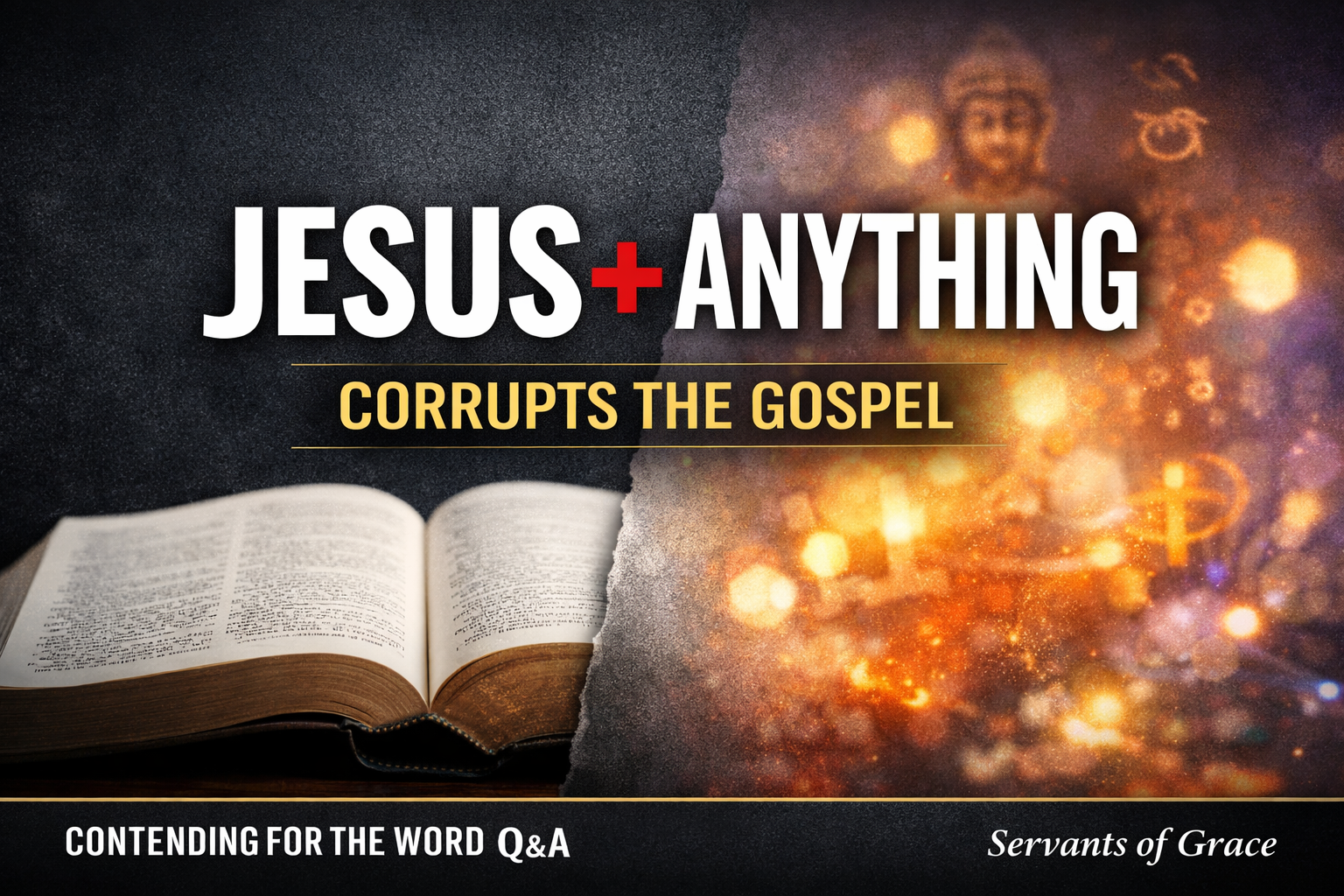
- Christ alone is sufficient; “Jesus plus anything” corrupts the gospel.
Full Article
Welcome to Contending for the Word Q&A, part of Contending for the Word, where we answer your questions on a wide variety of topics from the truth of God’s Word.
All right, everybody—welcome back to Contending for the Word Q&A. I’m your host, Dave Jenkins. Today we address a danger that is exploding in our culture—especially online and spiritual trends—and even inside some churches: syncretism.
Syncretism is the blending of Christianity with worldly spirituality. It is when the faith once for all delivered to the saints gets mixed with beliefs, practices, or philosophies of the culture. At first glance, syncretism can look harmless—maybe even helpful. But Scripture shows that syncretism is not a small compromise. It is a distortion that destroys the purity of the gospel.
So today’s question is: What is syncretism, and why is it spiritually dangerous for believers and churches? Let’s restate it so we feel its seriousness: How does blending Christianity with secular ideas, cultural spirituality, or pagan practices corrupt the gospel—and how can Christians recognize and resist it?
Scripture gives us clear warnings. Our anchor biblical text begins in 2 Kings 17:33–41. Israel feared the LORD outwardly, but worshiped idols generally. They mixed devotion to God with pagan practices. The text says they feared the LORD but also served their gods. This is the very definition of syncretism: a divided heart, a blended worship, and a corrupted faith. Then we turn to Galatians 1:6–9, where Paul warns that turning to another gospel is not progress, but disaster. Even small additions—small distortions—small compromises. Paul calls them anathema because they corrupt the purity of Christ’s gospel.
Syncretism is not creativity. It is compromise.
Here is today’s central truth: Syncretism mixes the truth of God with the beliefs of the world, producing a distorted, powerless, and false Christianity. The gospel loses its purity the moment it is blended with anything else. So, let’s walk through four ways syncretism shows up today and why it’s dangerous.
1) Syncretism blends worship of God with the worship of culture
In 2 Kings 17, Israel wanted the blessings of Yahweh and the practices of the nations. They tried to hold both in tension and ended up losing both. Syncretism today looks like Christianity mixed with New Age practices—faith blended with self-help spirituality—Jesus plus “positive energy”—Bible plus “manifesting”—prayer mixed with mysticism or visualization—Christian language built on secular worldviews. Whenever we blend God’s truth with the world’s lies, biblical worship collapses. God does not accept divided devotion.
2) Syncretism creates a different gospel
Paul says in Galatians that any distortion of the gospel—even subtle—is another gospel entirely. Syncretism creates “Jesus plus” salvation—grace plus works—Scripture plus new revelation—Christianity plus cultural ideology—the cross plus human effort. But the true gospel is Christ alone, by grace alone, through faith alone. The moment we add to the gospel, we lose the gospel.
3) Syncretism feels spiritual, but it is disobedience
The Israelites in 2 Kings didn’t feel rebellious—they felt spiritual. They thought blending practices made faith more relevant, more meaningful. But God called it rebellion.
Syncretism often sounds like:
- “This helps me feel close to God.”
- “This is just an extra spiritual tool.”
- “This is Christian because I use Jesus’ name.”
- “This practice isn’t harmful—it’s just cultural.”
The danger is that syncretism appeals to emotion but destroys obedience. What feels spiritual may not be biblical.
4) Syncretism destroys holiness and spreads confusion
Syncretism always leads to doctrinal compromise, moral compromise, confusion about truth, weakened churches, unbelievers seeing a distorted Christianity, and people drifting into full-blown error. When Christianity absorbs the world, Christianity loses its witness. God calls His people to be distinct—not blended, not deluded—not half-true but wholly devoted to Him.
So what does this mean for your life today?
- Examine your beliefs and practices. Is anything unbiblical creeping in?
- Let Scripture—not culture—define truth.
- Reject spiritual practices rooted in paganism, mysticism, or self-deification.
- Hold the gospel with clarity and conviction.
- Stay anchored in the local church. Accountability protects truth.
- Guard your heart from “Jesus plus anything.” Christ alone is enough and He is sufficient.
Dear Christian: syncretism does not strengthen faith—syncretism suffocates faith. The gospel loses its power when it is no longer pure—meaning it is no longer biblical. So what is syncretism and why is it dangerous? Because it mixes truth with error. Because it blends Christianity with worldly spirituality. Because it corrupts the gospel. And because it destroys the holiness and clarity of God’s people. God has given us a pure, perfect, life-giving gospel—one that cannot be improved, altered, or blended.
Thank you for joining me on today’s episode of Contending for the Word Q&A. Please stand firm in the Word of God, reject all counterfeits, and cling to the purity of the gospel of Christ. God bless you and keep you—and I’ll see you tomorrow.
Takeaways / Reflection Questions
- Where am I tempted to blend biblical truth with cultural assumptions?
- Are there any “Jesus plus” beliefs shaping my thinking or worship?
- Do I evaluate spiritual practices by Scripture—or by feelings and trends?
- How can I pursue greater holiness and clarity in my local church relationships?
Call to Action
If this episode helped you, please subscribe, share it with a friend, and leave a review. For more biblical resources, visit Contending for the Word Q&A page at Servants of Grace or at our YouTube.