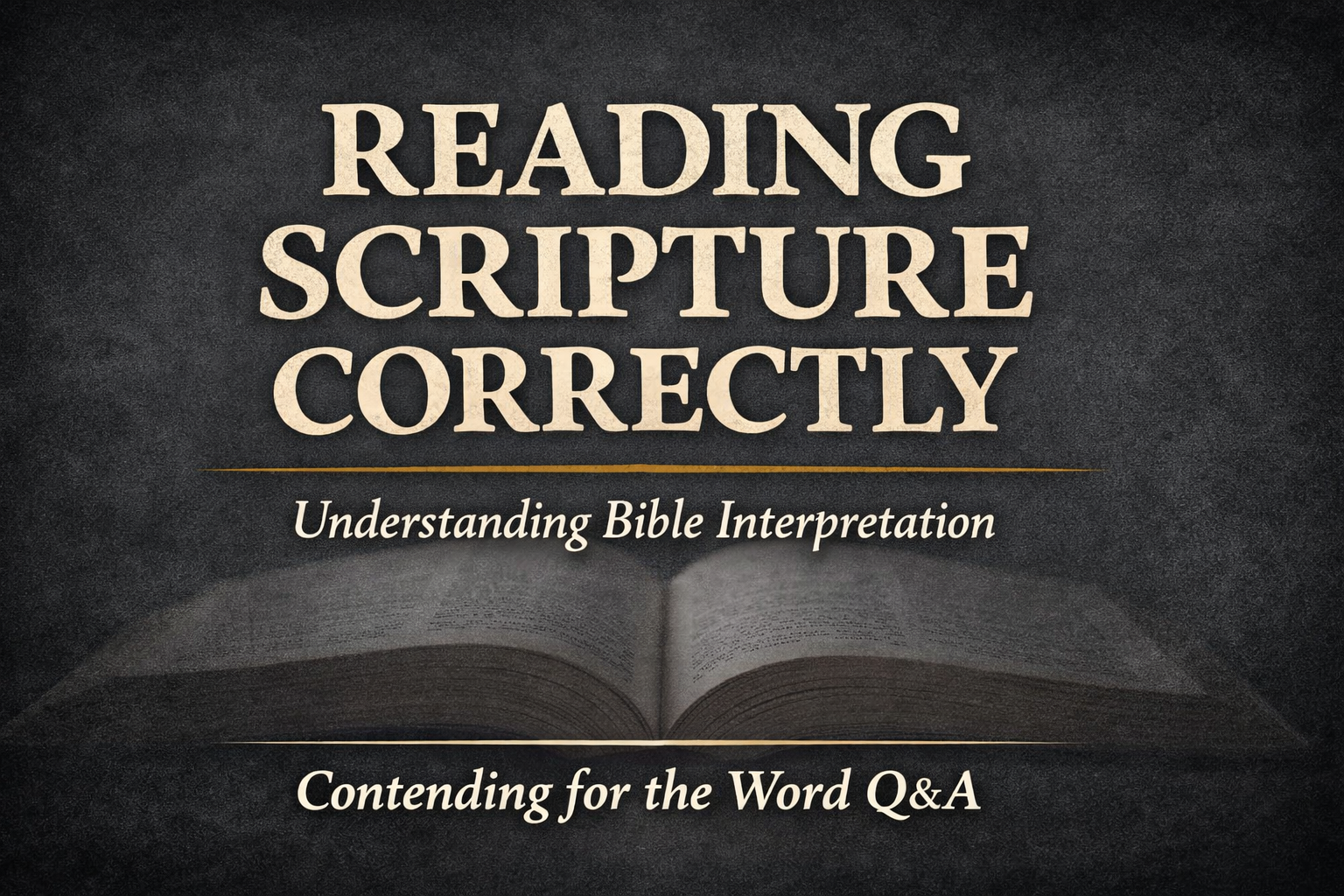
Reading Scripture Correctly: How Christians Interpret the Bible Faithfully
Author: Dave Jenkins
Show: Contending for the Word Q&A
Date: April 9, 2026
Reading Scripture Correctly: Show Summary
How can Christians know if they are understanding a verse of Scripture correctly?
In this episode of Contending for the Word Q&A, Dave Jenkins explains how believers can read the Bible with confidence by interpreting Scripture faithfully, carefully, and humbly. Drawing from Acts 17:11, 2 Timothy 3:16, and James 1:22, this episode shows how Christians can grow in discernment by reading verses in context, comparing Scripture with Scripture, observing the text carefully, and allowing God’s Word to shape their lives in faithful obedience.
God has not given His Word to confuse His people, but to guide them in truth. As believers read the Bible carefully and submit themselves to its teaching, they can grow in confidence that they are understanding Scripture rightly.
Audio Player
Video Player
Key Scriptures
- Acts 17:11
- 2 Timothy 3:16
- James 1:22
Episode Highlights
- Why context is essential for faithful Bible interpretation
- How Scripture interprets Scripture
- The importance of careful observation of the biblical text
- Why correct interpretation leads to humility and obedience
- How believers can grow in confidence as they read God’s Word
Reading Scripture Correctly in Context and Truth
Many Christians quietly wrestle with the question of whether they are understanding Scripture correctly. This often happens when believers hear different interpretations of a passage or encounter verses that are used in conflicting ways. That uncertainty can lead either to overconfidence or to hesitation and doubt. Yet God’s Word gives clear and gracious help for reading Scripture faithfully.
The question before us is this: How can Christians have confidence that they are understanding a verse of Scripture correctly?
Acts 17:11 commends the Bereans because they received the word with eagerness, examining the Scriptures daily to see if these things were so. In 2 Timothy 3:16, Paul reminds us that all Scripture is breathed out by God and profitable for teaching, reproof, correction, and training in righteousness. James 1:22 then exhorts believers to be doers of the Word and not hearers only. Together, these texts show that Scripture invites careful examination, humble reception, and obedient response.
The big idea is simple: We can know we are reading a verse correctly when our understanding aligns with the text, fits within the whole of Scripture, and leads to faithful obedience to God as revealed in His Word. Biblical confidence grows not from certainty in ourselves, but from trust in God’s Word.
Reading Scripture Correctly Begins with Context
One of the first indicators of a faithful reading is whether a verse is understood within its immediate biblical context. Ask questions such as: Does my interpretation make sense within the surrounding verses? Does it fit the message of the chapter or the book? Am I isolating this verse from its intended setting?
Reading verses in context helps protect us from misinterpretation and gives us confidence that we are hearing what God intended to communicate. No verse was given in isolation. It belongs within a sentence, a paragraph, a chapter, and a larger book with a clear purpose.
Compare Your Understanding with the Whole of Scripture
Scripture interprets Scripture. A correct understanding of a verse will not contradict the clear teaching of the rest of the Bible. If an interpretation conflicts with the gospel, God’s character, or the consistent teaching of Scripture, it should be reconsidered.
God’s Word is unified because God is its divine Author. Truth does not contradict truth. This principle helps believers remain grounded and balanced in their reading of the Word of God.
Observe What the Verse Actually Says
Faithful reading begins with careful observation. Before drawing conclusions, ask simple but important questions: What words are used? What commands, promises, warnings, or truths are present? What is emphasized in the passage?
We must slow down and let the text speak for itself. This guards us from importing our own ideas into Scripture instead of receiving what God has actually said. Good interpretation begins with humble attention.
Look for Fruit That Leads to Obedience
James reminds us that God’s Word is meant to shape our lives. Correct understanding of Scripture will lead toward humility, repentance, faith, and obedience, not pride, self-exaltation, or speculation.
Obedience does not determine the meaning of a text, but it often confirms a faithful understanding of it. God’s Word leads His people toward Christlike living. When Scripture is understood rightly, it forms the heart, renews the mind, and directs the life.
So how do you know if you are reading a verse correctly? You check the context. You compare Scripture with Scripture. You observe the text carefully. And you allow God’s Word to shape your life.
Confidence grows through faithful practice, not perfection. God has given His Word not to confuse His people, but to guide them in His truth. As you read Scripture, trust that God delights to lead His people into understanding. Stay in His Word, remain humble, and walk in faithful obedience by His grace.
Takeaways / Reflection Questions
- Do I usually read Bible verses in their proper context?
- Am I comparing my interpretation with the whole counsel of God?
- Do I slow down enough to observe what the text actually says?
- Is my study of Scripture leading me toward humility and obedience?
- How can I grow in confidence as I read and apply God’s Word?
Call to Action
Thank you for listening to or watching Contending for the Word Q&A. For more from Contending for the Word Q&A, please visit our page at Servants of Grace or our YouTube playlist. Be sure to subscribe to the show wherever you listen to podcasts, follow along on YouTube, and share this episode with someone who wants to grow in reading God’s Word faithfully.