What Is the Protestant Reformation?
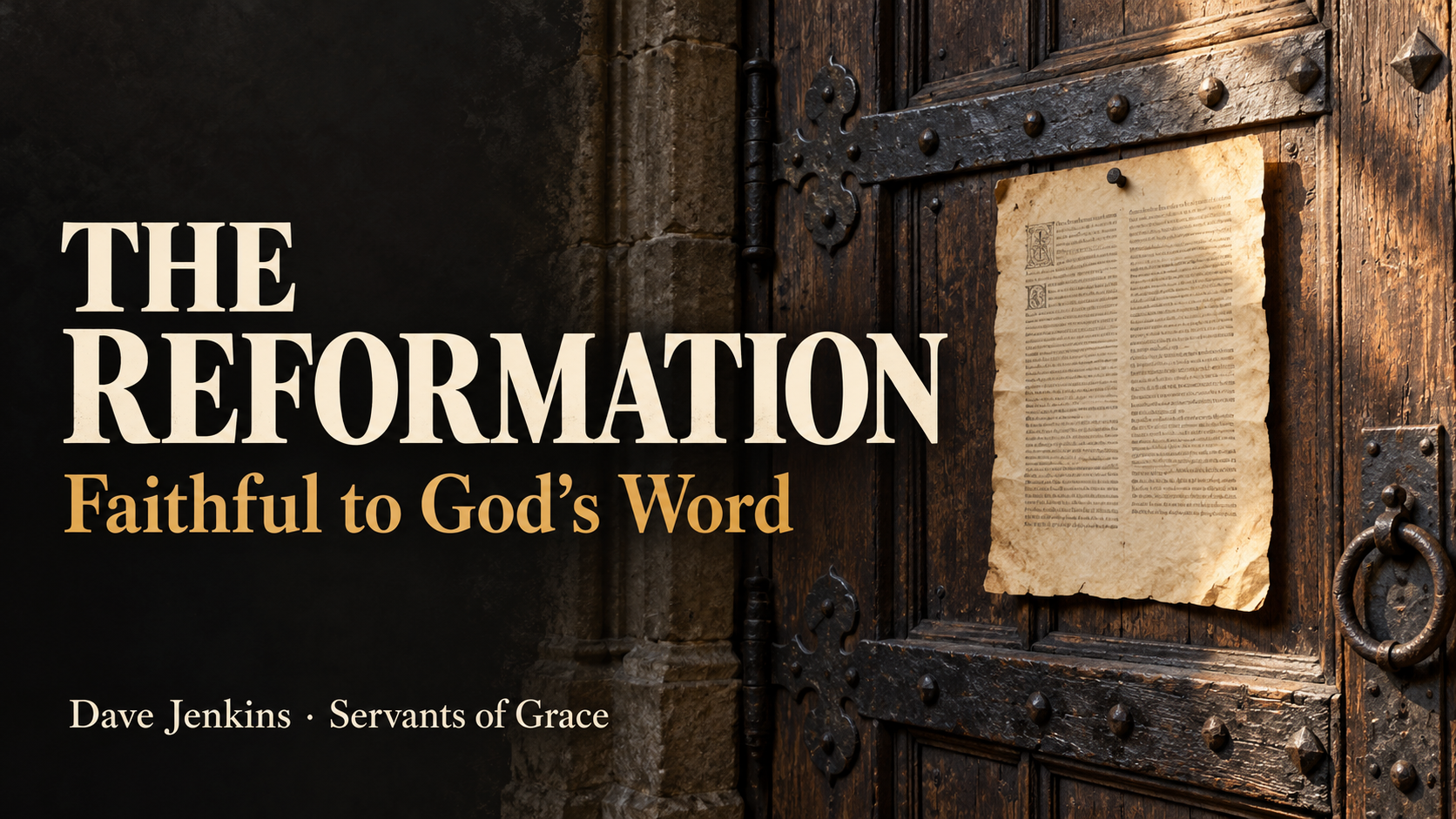
The Protestant Reformation was a sixteenth-century recovery of biblical authority led by faithful pastor-theologians such as Martin Luther, Ulrich Zwingli, and John Calvin. Their concern was profoundly pastoral: that Christ’s Church be grounded in the Word of God and the sufficiency of the finished work of the Lord Jesus. Luther’s confrontation of indulgences grew from a burden for souls and a conscience bound to Scripture, whatever the cost.
Yet Luther stood on the shoulders of earlier witnesses who labored for reform: Peter Waldo (c. 1140–c. 1205) and the Waldensians in the Alpine regions, John Wycliffe (c. 1328–1384) and the Lollards in England, and Jan (John) Hus (c. 1372–1415) in Bohemia. God, in every age, raises voices to call His people back to His Word.
The Purpose of the Protestant Reformation
At the heart of the Reformation was not innovation but restoration—returning the Church to the authority of God’s written Word. The central crisis concerned which authority governs Christ’s Church: Scripture, or Scripture plus church tradition and magisterial pronouncements. The Reformers answered with the cry of Sola Scriptura—that the Bible alone is the final, sufficient, clear, and binding authority for faith and life.
God speaks to His people through His written Word. We should read it, hear it preached, and submit our beliefs and lives to its authority.
The Five Solas:
- Sola Scriptura — Scripture alone
- Solus Christus — Christ alone
- Sola Gratia — Grace alone
- Sola Fide — Faith alone
- Soli Deo Gloria — The glory of God alone
The biblical doctrine of justification brings these truths into focus. God declares sinners righteous through faith alone in Jesus Christ, on the basis of Christ’s righteousness credited to them, not their own merit. Christ bore the judgment our sins deserved at the cross and rose from the dead. Our acceptance before God rests entirely on His saving work, received by faith (Romans 3:21–28; 4:5, 25). Salvation is God’s gift of grace, not a reward for our works. Good works follow as the fruit of salvation, as believers walk in the obedience God has prepared for them (Ephesians 2:8–10).
A return to Scripture naturally recovered the doctrines of grace, directing all glory to God in salvation. With Scripture as the plumb line, the Reformers gratefully learned from the Church Fathers yet refused to place any human authority above God’s Word.
The Results of the Reformation
Because the Church is composed of redeemed sinners—“at the same time righteous and sinful,” as Luther said—it is always in need of correction by Scripture. The Latin motto Ecclesia semper reformanda est (“the Church is always being reformed”) captures this posture of humble, continual submission to the Lord’s Word.
The Word of God stands over the people of God. We must not only preach the Word, but also hear it and obey it. As Romans 10:17 teaches, “Faith comes from hearing, and hearing through the word of Christ.”
Dr. Michael Horton writes, “Personally and corporately, the church comes into being and is kept alive by hearing the gospel. The church is always on the receiving end of God’s good gifts as well as His correction. The Spirit does not lead us apart from the Word but directs us back to Christ as He is revealed in Scripture. We always need to return to the voice of our Shepherd. The same gospel that creates the church sustains and renews it.”[1]
When we invoke the full phrase—“the church Reformed and always being reformed according to the Word of God”—we confess that we belong to the Church and not merely to ourselves, and that Christ continually renews His Church by His Word, not by the spirit of the age.[2]
Reformation begins personally, as God’s people return daily to Scripture in repentance, faith, and obedience—and it bears fruit corporately as churches submit all doctrine and practice to the Word of God.
Four Things Christians Should Know about the Protestant Reformation
- A Renewal Movement: The Reformation sought to reform the Church according to the Word of God.
- Scripture and Gospel Centrality: It restored Scripture’s primacy and the gospel’s central place in the life of the local church.
- The Spirit’s Work: The Reformation recovered rich, biblical teaching on the Holy Spirit’s person and work—Calvin is often called the “theologian of the Holy Spirit.”
- Christ Magnified: It makes much of Christ and little of man—exalting the person and work of Jesus while cultivating humility in His people.
Conclusion
The Five Solas are not optional add-ons; they give the Church her evangelical heart and biblical backbone. Each year on Reformation Day (October 31), we remember how the Lord used ordinary pastors and laypeople to call His Church back to Scripture. May their example strengthen us to hold fast to God’s Word, proclaim His gospel with conviction and compassion, and labor for the glory of Christ in every generation.
Soli Deo Gloria.
For more from our Reformation series please visit: Always Reforming: Fidelity to God’s Word in Every Generation or at our YouTube.