⏱️ Estimated Reading Time: 6 min read
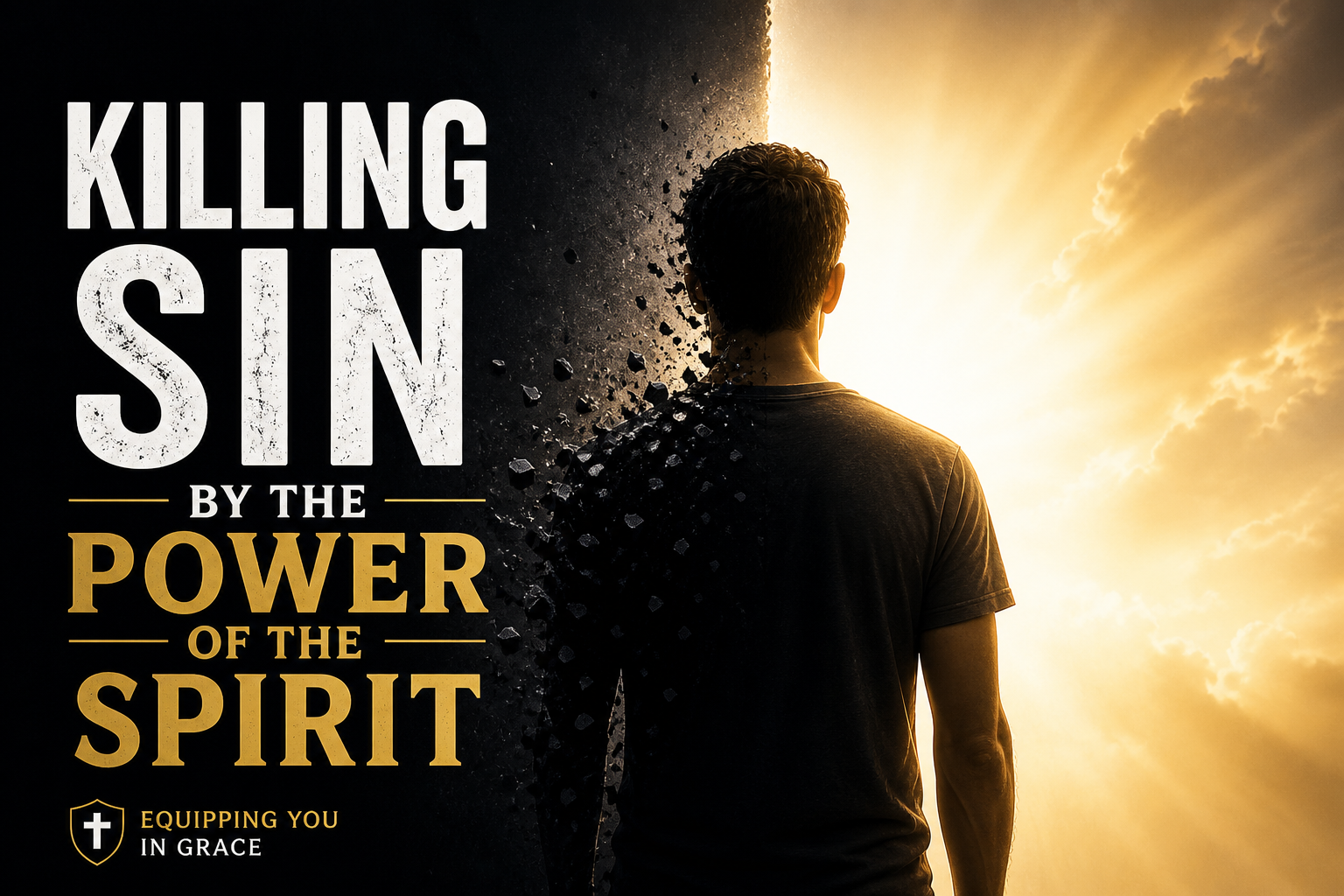
Mortification and the Risen Christ: Killing Sin by the Power of the Spirit
By Thaddeus Williams
The Christian life is not merely about avoiding sin or improving behavior. It is about living in the reality of what Christ has accomplished. Because Jesus Christ has died and risen again, the believer is no longer under the dominion of sin but has been brought into new life. This new life fundamentally reshapes how we understand the ongoing battle against sin.
Older Christians used the word mortification to describe this battle. Mortification refers to the Spirit-powered process of putting to death sinful desires that compete with the superior joy found in God. It is not a peripheral aspect of the Christian life. It is essential. Scripture speaks plainly: “For if you live according to the flesh you will die, but if by the Spirit you put to death the deeds of the body, you will live” (Romans 8:13).
There is no category in the New Testament for a Christian who is at peace with sin. The call is clear. Sin must be put to death.
Yet the ability to fight sin does not begin with human effort. It begins with the resurrection of Jesus Christ. The believer’s union with Christ is the foundation of all sanctification. Because Christ died, sin’s penalty has been paid. Because Christ rose, sin’s power has been broken. Paul makes this explicit in Romans 6 when he writes that we have been buried with Christ and raised with Him so that we might walk in newness of life. Likewise, in Colossians 3, he grounds the command to put sin to death in the reality that believers have been raised with Christ.
This means that mortification is not about earning life. It is about living out the life we have already been given. The fight against sin is not an attempt to achieve victory but the outworking of a victory that has already been secured in the risen Christ.
Even so, growth in mortification is rarely instantaneous. It often unfolds over time, as believers come to understand both the seriousness of sin and their dependence upon the Spirit.
Many begin in a place of indifference, where sin is minimized or excused. At this stage, there is little sense of urgency, little awareness of the destructive nature of sin, and little active resistance against it.
By God’s grace, that indifference is often replaced by a growing awareness. A believer begins to recognize that sin is not harmless, that it leads to death, and that God offers something far better. Yet at this point, sin may still feel vague and undefined, more like a general problem than a personal reality.
As clarity increases, attention often shifts to specific behaviors. A person begins to identify particular sins and seeks to address them. However, the tendency at this stage is to rely heavily on self-effort. Discipline and determination take center stage, but without deeper transformation, these efforts often fall short.
Eventually, many come to realize that sin is not merely a matter of behavior but of the heart. Outward actions are the fruit of inward desires, and lasting change requires addressing those deeper roots. Yet even here, there can still be a lingering reliance on self.
At this point, the importance of community often becomes clear. Sin is brought into the light, and trusted believers are invited into the struggle. Accountability, encouragement, and prayer from others become part of the fight. This is a vital step, but even this is not enough on its own.
True progress in mortification comes when the believer recognizes the necessity of the Holy Spirit’s power. Sin is not merely a bad habit. It is a deeply rooted corruption that cannot be overcome by human strength. The believer must learn to depend upon the Spirit through prayer, through the Word, and through a growing reliance on God’s grace.
As the Spirit works, there is genuine growth. Sin is not eradicated in this life, but it is weakened. Patterns begin to change. Desires are reshaped. There is increasing evidence of God’s work within. Yet even in this growth, the Christian does not boast. The progress is real, but the credit belongs entirely to God.
Scripture never calls believers to passivity, nor does it encourage self-reliance. Instead, it holds both responsibility and dependence together. We are commanded to put sin to death, and yet we are told that it is God who works in us both to will and to work for His good pleasure.
The seriousness of this task cannot be overstated. As John Owen famously warned, “Kill sin, or sin will be killing you.” Sin seeks to weaken faith, diminish joy, and draw the heart away from God. To ignore it is to invite spiritual harm. To fight it is to pursue life.
At the same time, the means of fighting must be rightly understood. Mortification cannot be accomplished through self-strength. All attempts to conquer sin apart from the Spirit ultimately fail. True mortification is a work of God within the believer, producing real and lasting change.
This brings us back to the central truth. The Christian fights sin in light of the resurrection. Because Christ is risen, sin is no longer the believer’s master. Because Christ is risen, the Spirit has been given. Because Christ is risen, holiness is not only commanded, it is possible.
So the question each believer must ask is simple and searching. Where am I in this fight? Am I minimizing sin, managing it, or truly putting it to death by the Spirit?
The call of Scripture is not to remain where we are. It is to move ahead. To grow in holiness. To deepen our dependence on God. To walk in the new life that Christ has secured.
Put sin to death.
Pursue joy in God.
Walk by the Spirit.
And give all glory to the risen Christ, who not only saves His people but faithfully sanctifies them.
For more from our latest series please visit here or at our YouTube.

Dr. Thaddeus Williams is an author, a pastor, and professor in Southern California. He earned his Ph.D. in Theology at the Vrije Universiteit of Amsterdam, and holds an M.A. in Philosophy of Religion from Talbot School of Theology. Dr. Williams has lectured in seminaries and churches throughout Nepal, Francis Schaeffer’s L’Abri Fellowships in Holland and Switzerland, along with churches and conferences throughout the United States.