⏱️ Estimated Reading Time: 5 min read
Kenneth Copeland’s Prosperity Gospel Money Claims Exposed
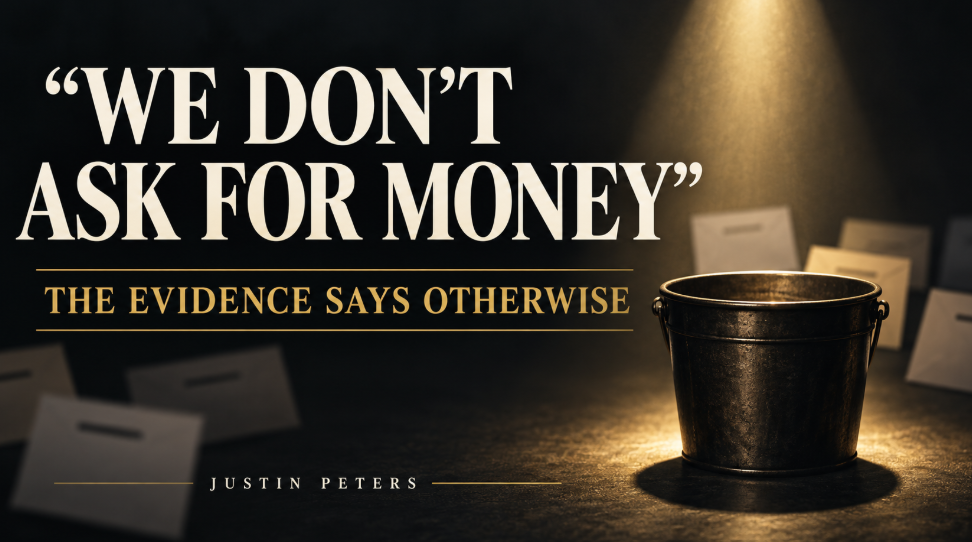
Kenneth Copeland Ministries claims, “We don’t do money asks.” In this episode of Sound Theology and Discernment, Justin Peters examines the ministry’s own convention footage and exposes fundraising appeals that connect financial giving with healing, prosperity, and supernatural returns.
Listen or Watch
Justin Peters examines footage from the Southwest Believers’ Convention after Courtney Copeland claimed that Kenneth Copeland Ministries does not ask people for money. The convention footage, however, shows repeated offerings, instructions for attendees to give “over and above,” and promises that financial seeds can produce healing and material prosperity.
The False Promise of a Hundredfold Return
The prosperity gospel teaches that financial giving can activate supernatural financial returns. Kenneth Copeland Ministries has promoted the idea that those who give money can expect God to multiply it back to them—sometimes described as a “hundredfold return.”
This teaching removes biblical passages from their proper context and presents giving as a financial transaction with God. Instead of encouraging generosity as an expression of worship, gratitude, and love, prosperity teachers turn giving into a method for obtaining wealth.
Scripture never promises that Christians who donate money to a particular ministry will receive one hundred times that amount in return.
Naming a Financial Seed for Healing
The most disturbing footage involves instructions for sick people to “name their seed” for healing. Attendees are told to give money while expecting a harvest of physical healing for themselves, their spouses, their relatives, or their children.
This practice preys upon people during seasons of profound suffering. Those facing cancer, chronic illness, disability, financial hardship, or the sickness of a child are especially vulnerable to promises that connect their giving with a divine miracle.
“And in their greed they will exploit you with false words.”
2 Peter 2:3
The problem is not simply that an offering is collected. Faithful Christian ministries may receive voluntary financial support. The problem is promising people that their money can secure healing, prosperity, deliverance, or supernatural favor from God.
The Prosperity Gospel Is Not the Biblical Gospel
The biblical gospel does not promise Christians uninterrupted health, financial abundance, or freedom from suffering. Scripture teaches that believers may suffer for the sake of Christ:
“For to you it has been granted for Christ’s sake, not only to believe in Him, but also to suffer for His sake.”
Philippians 1:29
The gospel is the good news that Jesus Christ, the eternal Son of God, took on human flesh, lived without sin, died as the perfect sacrifice for sinners, and bodily rose from the dead. Everyone who turns from sin and trusts in Christ receives the forgiveness of sins and eternal life.
Christ did not die to guarantee His followers earthly riches. He died to save sinners from the wrath of God and reconcile them to the Father.
False Teachers and God’s Judgment
Justin also explains that false teachers can themselves be an expression of divine judgment. Jeremiah described a terrible condition in which prophets spoke falsely, religious leaders ruled by their own authority, and the people loved it that way.
“An appalling and horrible thing has happened in the land: The prophets prophesy falsely, and the priests rule on their own authority; and My people love it so!”
Jeremiah 5:30–31
Paul likewise warned that people would turn away from sound doctrine and gather teachers who would tell them what they wanted to hear:
“For the time will come when they will not endure sound doctrine, but wanting to have their ears tickled, they will accumulate for themselves teachers in accordance with their own desires.”
2 Timothy 4:3
The popularity of a teacher does not prove that the teacher is faithful. Every sermon, prophecy, testimony, healing claim, and fundraising appeal must be tested by the written Word of God.
A Call to Repentance and Faith in Christ
This episode does not conclude with personal hatred toward Kenneth Copeland, George Pearsons, Benny Hinn, or others within the Word of Faith movement. It concludes with a call for them—and everyone who follows their teaching—to repent and believe the biblical gospel.
Genuine repentance would include publicly renouncing false teaching, acknowledging the harm caused by exploiting the sick and vulnerable, stepping away from public ministry, and submitting to the care and instruction of a faithful local church led by biblically qualified elders.
There is forgiveness in Jesus Christ for everyone who repents and trusts in Him. Christ perfectly satisfied the righteous wrath of God through His finished work on the cross. He rose bodily from the grave and saves everyone who comes to Him in faith.
In This Episode
- The claim that Kenneth Copeland Ministries does not ask for money.
- The difference between legitimate ministry support and spiritual exploitation.
- The false promise of a hundredfold financial return.
- How prosperity teachers connect financial seeds with physical healing.
- The exploitation of the poor, sick, and vulnerable.
- The biblical warnings concerning greedy false teachers.
- The difference between the prosperity message and the gospel of Jesus Christ.
- The fruit that should accompany genuine repentance.
About Sound Theology and Discernment
Sound Theology and Discernment helps Christians examine contemporary teaching, influential movements, and popular claims through the authority and sufficiency of Scripture. The program encourages believers to pursue sound doctrine, exercise biblical discernment, and remain firmly grounded in the gospel of Jesus Christ.
Test every teaching by Scripture, reject every distortion of the gospel, and remain committed to sound doctrine in the local church.
For more teaching from Justin Peters, please visit:
https://servantsofgrace.org/justin-peters-sound-theology/ or at our YouTube.
This video first appeared on the Justin Peters YouTube channel and is shared here with his permission:
https://www.youtube.com/watch?v=83wfuyOWWIs