False prophecy comes from people who claim divine authority while speaking untruths. God’s Word states that if a prophecy doesn’t come to pass, that person was speaking presumptuously for God and is a false prophet. The penalty for being a false prophet during Mosaic civil laws was death (Deuteronomy 18:22), showing that false prophecy is a sin that’s taken very seriously.
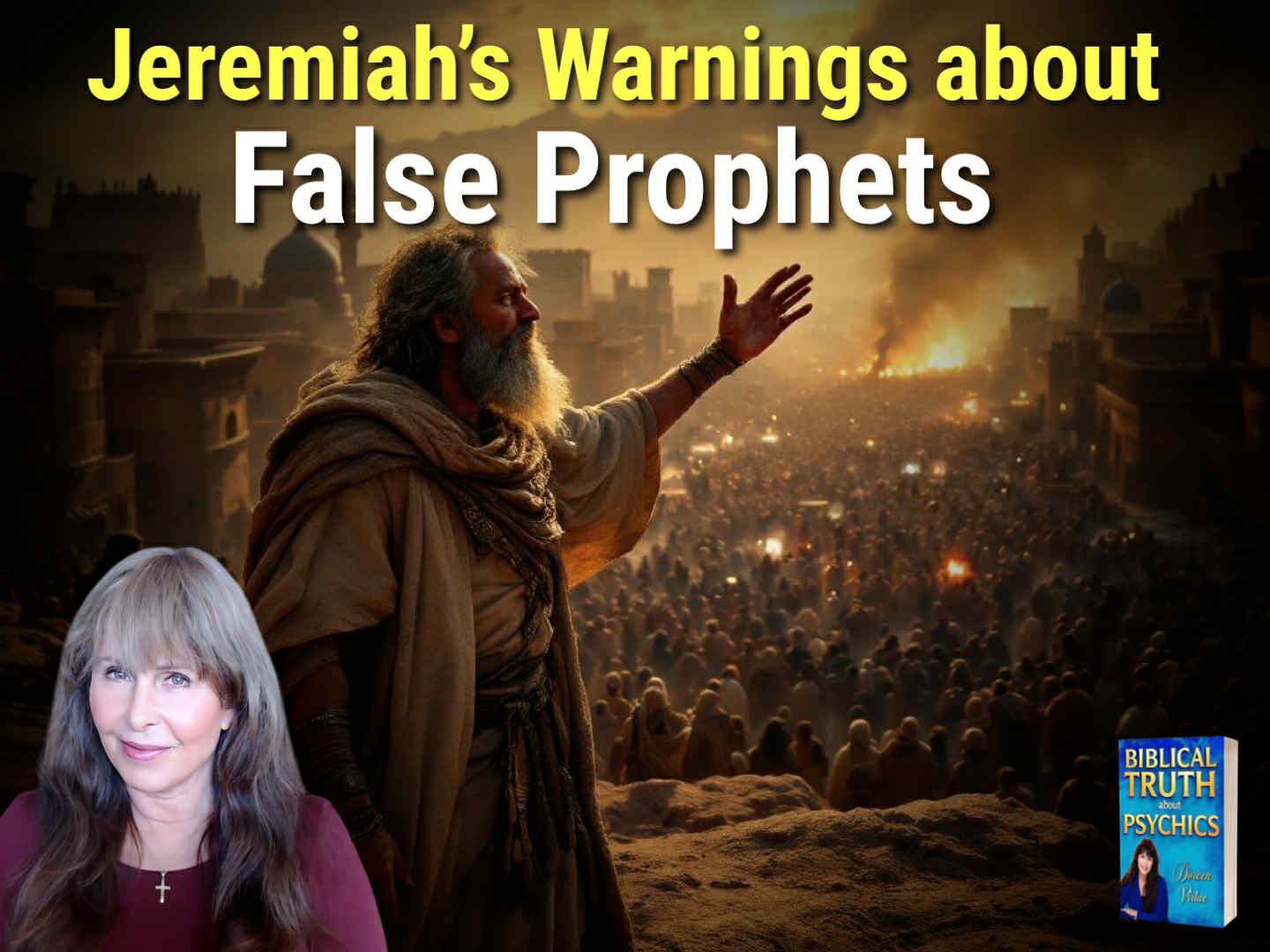
The prophet Jeremiah lived when false prophets offered reassurance at a time when people needed to repent and return to God’s covenant.
As Judah approached judgment for centuries of idolatry and rebellion, Jeremiah proclaimed God’s coming wrath and called the people to repent. Yet he was opposed by false prophets who promised peace, safety, and prosperity. They told the people exactly what they wanted to hear, even though their messages directly contradicted God’s Word.
This tension between Jeremiah and the false prophets reveals that people are drawn to comforting lies over uncomfortable truth. In the modern New Age, the same pattern appears. Channelers, psychics, and false teachers claim to deliver positive, uplifting messages from the spiritual realm, assuring listeners that “all is well,” that “humanity is awakening,” and that “peace is coming.” Yet like Hananiah in Jeremiah’s day, these voices distract from the reality of sin, judgment, and the need for repentance before the true God.
Jeremiah 23: A Scathing Indictment
Jeremiah 23 contains one of the most scathing indictments of false prophets in the Bible:
“Do not listen to the words of the prophets who prophesy to you, filling you with vain hopes. They speak visions of their own minds, not from the mouth of the Lord.”
(Jeremiah 23:16)
Instead of confronting sin, they offered soothing lies:
“They say continually to those who despise the word of the Lord, ‘It shall be well with you’; and to everyone who stubbornly follows his own heart, they say, ‘No disaster shall come upon you’.”
(Jeremiah 23:17)
These prophets promised peace when judgment was at the door. Rather than calling the nation to repentance, they reassured people in their rebellion. The Lord compared them to shepherds who destroy and scatter the sheep (Jeremiah 23:1-2). Their message was attractive, but it was a lie.
Jeremiah 28: Hananiah and the Test of Prophecy
This confrontation comes to a peak in Jeremiah 28. There the prophet Hananiah publicly contradicted Jeremiah. While Jeremiah warned of Babylon’s domination, Hananiah proclaimed that within two years God would break Nebuchadnezzar’s yoke and restore the temple vessels.
Hananiah’s optimistic message directly opposed the word God had given Jeremiah. Jeremiah responded by saying that prophets who promised peace must be tested by the outcome:
“As for the prophet who prophesies peace, when the word of that prophet comes to pass, then it will be known that the Lord has truly sent the prophet.”
(Jeremiah 28:9)
Hananiah then broke the wooden yoke Jeremiah wore as a symbol of submission to Babylon, declaring God had broken Babylon’s power. Yet Jeremiah declared in return that God would replace the wooden yoke with an iron one and announced Hananiah’s death for speaking rebellion against the Lord (Jeremiah 28:13-16). Within the same year, Hananiah died.
Marks of False Prophets
The pattern in Jeremiah reveals clear characteristics of false prophets:
- They promise peace without repentance. False prophets soothe rather than convict. They assure sinners that all is well when judgment is near.
- They speak from their own minds, not God’s Word. Their visions are self-generated, springing from their imagination or demonic influence.
- They appeal to popular opinion. Jeremiah was hated for proclaiming judgment, while Hananiah was applauded for preaching optimism.
- They’re exposed by reality. True prophecy is fulfilled; false prophecy collapses when tested.
These marks continue to distinguish true from false today. The measure of prophecy is whether it aligns with God’s Word and comes to pass.
Modern Parallels: New Age and False Peace
Modern New Age channelers and spiritual influencers mirror the false prophets of Jeremiah’s day. They speak in the name of “the universe,” “ascended masters,” or even a false “jesus,” offering messages of comfort and affirmation. They assure listeners that humanity is evolving into higher consciousness, that peace is dawning, and that judgment is unnecessary because “all is love.”
Like Hananiah, they proclaim peace where there is no peace. They fill people with “vain hopes,” encouraging them to stubbornly follow their own hearts. Just as Jeremiah’s contemporaries preferred pleasant lies over painful truth, many today flock to voices that affirm rather than confront. In both cases, the result is the same: deception that blinds people to the need for repentance and faith in God.
The popularity of New Age positivity parallels the popularity of false prophets in Jeremiah’s time. People would rather hear soothing affirmations than the reality of sin and judgment.
As 2 Timothy 4:3 warns:
“The time is coming when people will not endure sound teaching, but having itching ears they will accumulate for themselves teachers to suit their own passions.”
False prophets tragically continue today in some churches. The prosperity gospel promises health, wealth, and success if one has enough faith. Some preachers emphasize positive thinking and affirmations, offering a gospel of self-esteem rather than repentance and faith in Christ. Others downplay sin and judgment entirely, assuring people that God’s love means unconditional acceptance without transformation.
These messages resonate because they sound uplifting. Yet like Hananiah, they contradict the Word of God. The gospel doesn’t promise peace while ignoring sin; it proclaims forgiveness through Christ’s cross and warns of judgment for those who reject Him. Any message that denies this is false prophecy in new packaging.
True Prophecy and the Faithfulness of God’s Word
Jeremiah’s own ministry shows what true prophecy looks like. He spoke the Word of the Lord even when it was unpopular, costly, and dangerous. He wept for the people, yet he did not soften God’s message. His words were tested and proved true when Jerusalem fell to Babylon.
“Let the prophet who has a dream tell the dream, but let him who has my word speak my word faithfully. What has straw in common with wheat? declares the Lord. Is not my word like fire, declares the Lord, and like a hammer that breaks the rock in pieces?”
(Jeremiah 23:28–29)
The lies of the New Age are straw. The Word of God is wheat.
Christ the True Prophet
Ultimately, Jeremiah’s conflict with the false prophets points us to Christ, the true Prophet. While Hananiah died under judgment, Christ died as the sinless One, bearing judgment for His people. The resurrection confirmed that Jesus is the true and final Word of God (Hebrews 1:1–2).
In Him alone we find true peace through reconciliation with our Heavenly Father (Romans 5:1).
Today the world is full of modern Hananiahs. New Age channelers, prosperity preachers, and false teachers promise peace, abundance, and awakening while ignoring sin and judgment. Yet their words are empty. Only the Word of God stands. Only Christ offers true peace, purchased by His blood.
For more from Doreen please visit her page at Servants of Grace or at our YouTube.