⏱️ Estimated Reading Time: 3 min read
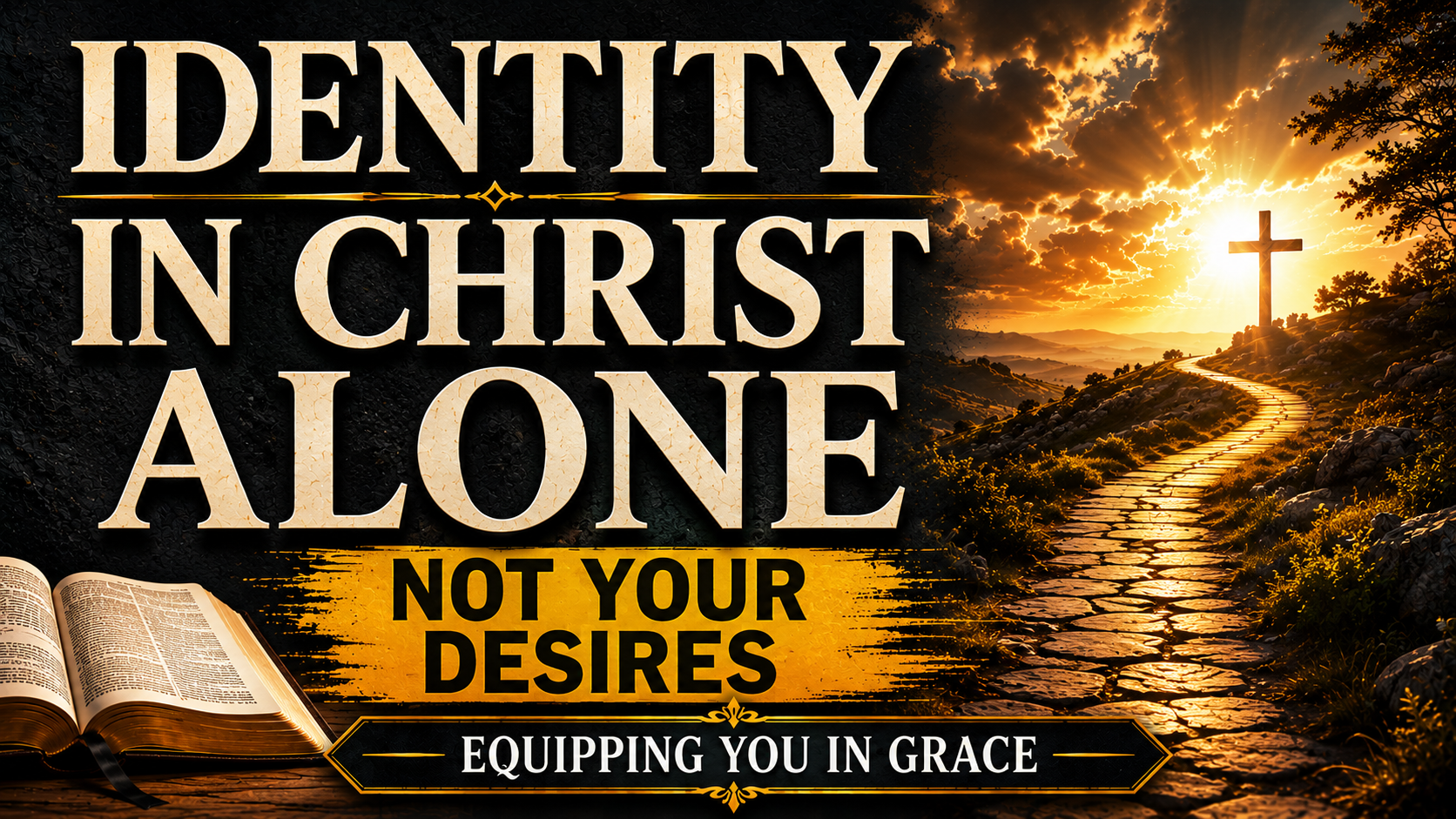
Identity in Christ Alone: Why Your Desires Don’t Define You
Author: Dave Jenkins
In this episode of Equipping You in Grace, Dave Jenkins examines one of the most important questions facing the church and culture today: Where does identity come from? In a world that increasingly teaches people to define themselves by their desires, feelings, and internal experiences, Scripture offers a radically different answer. The Bible teaches that our identity is not rooted in desire but in our relationship with Jesus Christ.
Listen or Watch
Audio Player:Watch the Episode
Video Player:Why Identity in Christ Alone Matters
Dave explores how modern culture shifted from understanding identity through external realities such as family, community, vocation, and faith to defining identity through inward desires and self-expression. He explains why this cultural shift has intensified conversations about sexuality and identity and why Christians often struggle to navigate these discussions with both truth and compassion.
Drawing from passages such as 2 Corinthians 5:17, Galatians 2:20, Romans 12:2, Ephesians 4:15, and Romans 8, Dave demonstrates that the defining reality of the Christian life is union with Christ. Believers are not ultimately defined by their desires, temptations, failures, or past experiences. They are defined by their new life in Christ, their adoption into God’s family, and their secure standing through the finished work of Jesus.
This episode also addresses the relationship between temptation and identity, the role of repentance and holiness in the Christian life, and how Christians can faithfully engage conversations about sexuality while speaking the truth in love. Ultimately, listeners are encouraged to anchor their identity in Christ alone and to rest in the stability, hope, and security that only the gospel can provide.
Questions About Identity in Christ Alone
- Where does identity come from?
- Why does modern culture define identity through desire?
- What does it mean to be united to Christ?
- Do our desires define who we are?
- What is the difference between temptation and identity?
- How do repentance and holiness relate to Christian identity?
- How should Christians speak about sexuality with truth and compassion?
- Why is identity in Christ more stable than identity rooted in desire?
Key Scriptures on Identity in Christ Alone
- 2 Corinthians 5:17
- Galatians 2:20
- Jeremiah 17:9
- Romans 12:2
- Luke 9:23
- Matthew 4:17
- 1 Peter 1:15-16
- Ephesians 4:15
- Romans 8:31-39
Continue Listening to Equipping You in Grace
Explore more episodes of Equipping You in Grace:
Equipping You in Grace Archive
Watch the complete Equipping You in Grace playlist:
Dave Jenkins is happily married to his wife, Sarah, and lives in beautiful Southern Oregon. He is a writer, editor, and speaker who loves Christ, His people, the Church, and sound theology.
Dave serves as the Executive Director of Servants of Grace Ministries and the Executive Editor of Theology for Life Magazine. He is the Host and Producer of the Equipping You in Grace Podcast and a contributor to and producer of Contending for the Word.
He is the author of The War of Worldviews: Truth, Lies, and the Battle for the Christian Mind (Theology for Life, 2026), Contentment: The Journey of a Lifetime (Theology for Life, 2024), The Word Matters: Defending Biblical Authority Against the Spirit of the Age (G3 Press, 2022), and The Word Explored: The Problem of Biblical Illiteracy and What To Do About It (House to House, 2021).
You can connect with Dave on Facebook, X (Twitter), Instagram, YouTube, or subscribe to his newsletter.
When he is not engaged in ministry work, Dave enjoys spending time with his wife, going to movies, sharing a meal at a favorite restaurant, or playing a round of golf with friends. He is also a voracious reader, particularly of Reformed theology and the Puritans, and is often found working through a stack of new books from a wide range of Christian publishers.
Dave earned his M.A.R. and M.Div. from Liberty Baptist Theological Seminary.