⏱️ Estimated Reading Time: 9 min read
Icon Veneration and Salvation: A Biblical Response to Eastern Orthodoxy
By Samuel Farag | Contending for the Word Q&A | March 2026
Show Summary
In this episode of Contending for the Word Q&A, Samuel Farag examines the relationship between icon veneration, church authority, and salvation within Eastern Orthodox theology. Looking at the Seventh Ecumenical Council (Second Nicaea, 787 AD), this episode explores whether icon veneration is treated as a required or salvific practice and how those claims compare with the teaching of Scripture.
Audio Player
Video Player
Key Scriptures
- Mark 7:1–13
- Mark 7:6–9
Episode Highlights
- The claim of infallibility in Eastern Orthodoxy
- The authority of the Seventh Ecumenical Council
- Whether icon veneration is treated as mandatory and salvific
- The historical meaning of anathema in Eastern Orthodox theology
- A biblical response from Mark 7:1–13
Full Article
Is Icon Veneration Really Mandatory in Eastern Orthodoxy?
By Samuel Farag
The Claim of Infallibility of the Eastern Orthodox Church
Do you kiss icons? It sounds like a strange question. Especially for those outside the Eastern Orthodox Church. But the answer to that question reveals whether you are cursed by God to go to Hell. At least that is the belief of Eastern Orthodoxy, according to a council that they believe is just as inspired by the Holy Spirit as the Scriptures. However, before we get to that council and its decrees, we need to understand a little more about what the Eastern Orthodox Church considers infallible.1
First, let’s look at what the Eastern Orthodox Church claims in its own words. Let us examine The Confession of Dositheus of 1672, and let us, in particular, look at the statement found in Decree 2, which reads:1
Wherefore, the witness also of the Catholic Church [Catholic Church here meaning the Eastern Orthodox Church] is, we believe, not of inferior authority to that of the Divine Scriptures. For one and the same Holy Spirit being the author of both, it is quite the same to be taught by the Scriptures and by the Catholic Church. Moreover, when any man speaks from himself he is liable to err, and to deceive, and be deceived; but the Catholic Church, as never having spoken, or speaking from herself, but from the Spirit of God — who being her teacher, she is ever unfailingly rich — it is impossible for her to in any wise err, or to at all deceive, or be deceived; but like the Divine Scriptures, is infallible, and has perpetual authority.1
So, the Eastern Orthodox Church makes the bold claim that it is just as infallible and authoritative as the Holy Spirit inspired Word of God. Thus, when they speak as an organization in an official capacity, they are speaking with words that are just as authoritative and as binding as the Scriptures. That means that all seven of the Ecumenical Councils that the Eastern Orthodox Church acknowledges are considered in their eyes to be just as infallible as the Bible. That means all the official hymns that are recited during their liturgies are just as infallible as the Bible. That means every official statement or decree or confession (like The Confession of Dositheus) is infallible.
Since they, as a church, cannot speak of any error, then all their documents are also without error.1
This is the first point that needs to be understood because any opinion or teaching of an individual Eastern Orthodox priest, bishop, or apologist can never overrule an official Eastern Orthodox claim. Many who desire to learn more about Eastern Orthodox or who are seriously considering joining this church usually have a hard time with the doctrine of icon veneration. This is a foundational belief for the Orthodox, but for those who have an evangelical background, the practice is uncomfortable for good reason. Yet, members and leaders in the Eastern Orthodox Church sometimes try to make potential converts feel at ease by claiming they don’t have to venerate icons. They just need to keep coming to the church. But is that true? Or is icon veneration a mandatory and salvific practice in Eastern Orthodoxy?
The Seventh Ecumenical Council
To best understand if icon veneration is required to be saved in the Eastern Orthodox Church, we need to look at one of the most provocative Ecumenical Councils of all time. That would be the Seventh Ecumenical Council, also known as Second Nicaea, which occurred in AD 787. In that council, the practice of icon veneration was both authorized and elevated to the significance of a required practice. For all intents and purposes, it was made into a salvific doctrine. Just look at the infallible anathemas from that council:2
To those who apply to the sacred images the sayings in divine scripture against idols, anathema! To those who do not kiss the holy and venerable images, anathema! To those who call the sacred images idols, anathema! To those who say that Christians have recourse to the images as to gods, anathema! To those who knowingly communicate with those who insult and dishonor the sacred images, anathema!2
In a PR attempt, Eastern Orthodox apologists sometimes try to temper the meaning of an anathema. They try to make Eastern Orthodoxy appear more palatable and downplay the decrees of the Seventh Ecumenical Council. Yet, here is the definition of anathema by the prominent Eastern Orthodox Saint John Maximovitch, which agrees with the beliefs and authorial intent of the writers of those anathemas from Second Nicaea:3
In the acts of the Councils and the further course of the New Testament Church of Christ, the word “anathema” came to mean complete separation from the Church.
“The Catholic and Apostolic Church anathematizes”, “let him be anathema”, “let it be anathema”, means a complete tearing away from the church.
While in cases of “separation from the communion of the Church” and other epitimia or penances laid on a person, the person remained a member of the Church,
even though his participation in her grace-filled life was limited, those given over to anathema were thus completely torn away from her until their repentance.
Realizing that she ([the] Eastern Orthodox Church) is unable to do anything for their salvation, in view of their stubbornness and hardness of heart,
the earthly church lifts them up to the judgment of God. That judgment is merciful unto repentant sinners, but fearsome for the stubborn enemies of God.
“It is a fearful thing to fall into the hands of the living God … for our God is a consuming fire.” Anathema is not final damnation: until death repentance is possible.
“Anathema” is fearsome not because the Church wishes anyone evil or God seeks their damnation. They desire that all be saved. But it is fearsome to stand before
the presence of God in the state of hardened evil: nothing is hidden from Him.3
This definition has been the Eastern Orthodox position throughout its history. It was only in the nineteenth century that some members of the Eastern Orthodox Church started to water down the definition of an anathema in order to be more inclusive and appealing to outsiders. However, the Eastern Orthodox Church has never officially changed its position. In fact, it cannot. If it did, then it would be to admit that they, as a church, committed an error. If they did that, then their whole theological system would collapse.
The Biblical Response to Eastern Orthodox Claims
So, how are believers to respond to these claims by the Eastern Orthodox Church that the practice of icon veneration is a requirement of salvation? How are believers to respond to these claims by the Eastern Orthodox Church that they themselves are just as infallible as God’s perfect Word? I suggest we point out that the claims of the Eastern Orthodox Church sound strikingly familiar to the baseless claims by the Pharisees and scribes of their own man-made traditions. In Mark 7:1-13, the religious elite of Jesus’s day saw that His disciples ate with hands that were unwashed. In their eyes, that also meant that their hands were defiled. This conclusion was not something they based on the Word of God. Instead, it was their own man-made rules they lived by and wickedly raised to the level of being equal to God’s commands. The Eastern Orthodox Church has done the same with its claim of infallibility and its unbiblical practice of icon veneration.
The Pharisees and scribes confronted Jesus and asked Him why His disciples did not walk according to the “tradition of the elders.” Today, the Eastern Orthodox Church, in essence are asking why we as Bible-believing Christians don’t follow their “holy traditions.” So, as Jesus responded to the religious elite of His day, so we too should respond to the religious elite of our day, by saying:
“Well did Isaiah prophesy of you hypocrites, as it is written, ‘This people honors me with their lips, but their heart is far from me; in vain do they worship me, teaching as doctrines the commandments of men.’ You leave the commandment of God and hold to the tradition of men.” And he said to them, “You have a fine way of rejecting the commandment of God in order to establish your tradition” (Mark 7:6-9)!
Beloved, don’t be intimidated by those who claim they possess the fullness of the faith when that faith they promote contradicts the faith presented in the Scriptures. Jesus did not lay down His life for His sheep so that His followers could bow down and lay their lips on icons under the threat of hellfire. That is the byproduct and innovation of fallible men. Instead, put your trust and faith in the teachings found in the only truly inerrant and infallible source we are called to follow. The Word of God.
To God be all the glory!
Takeaways/Reflection Questions
- Why is the claim of church infallibility such a serious issue for biblical Christians?
- How does Mark 7:1–13 help believers evaluate the claims of tradition?
- Why must Scripture remain the final authority for faith and practice?
- How should believers respond when ancient tradition is treated as equal to the Word of God?
Sources/Citations
- The Confession of Dositheus (1672), Decree 2, via Christian Research Institute / CRI Voice:
https://www.crivoice.org/creeddositheus.html - Second Council of Nicaea (AD 787), anathematisms regarding sacred images, via New Advent:
https://www.newadvent.org/fathers/3819.htm - St. John Maximovitch, explanation of “anathema,” via Orthodox.net:
https://www.orthodox.net/redeeming/redeeming.02.32.html
- The Confession of Dositheus (1672), Decree 2, via Christian Research Institute / CRI Voice:
Call to Action
For more biblical discernment, apologetics, and theological resources, visit
Servants of Grace and explore more episodes of Contending for the Word Q&A or at our YouTube.
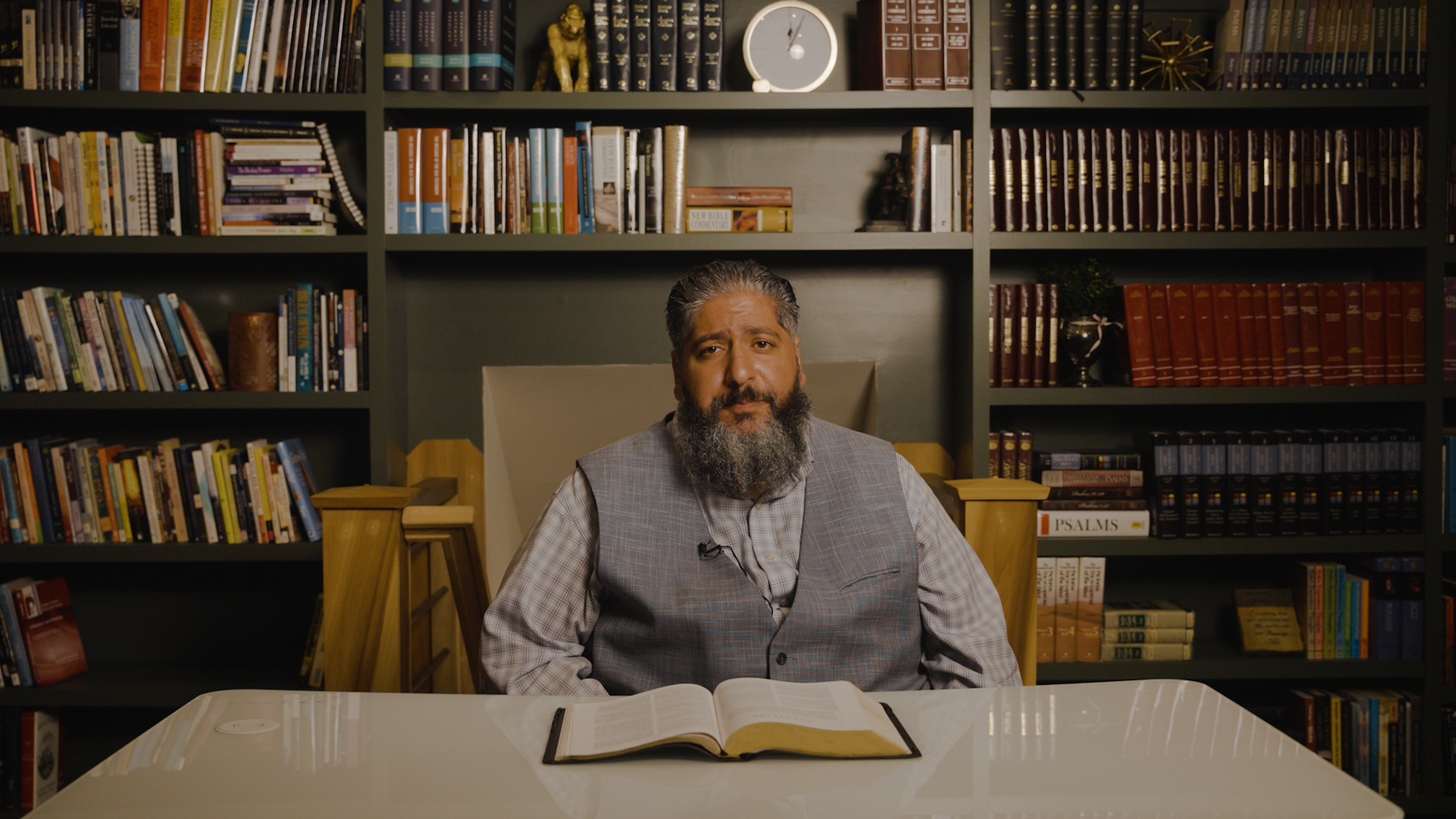
Samuel Farag is the pastor of Bethel Baptist Church of Gorham, New York, a missionary with Village Missions, and the founder of Expositing the Word Ministries.
Samuel grew up and spent 32 years in the Coptic Orthodox Church. In the summer of 2017, the Lord graciously saved him when God opened his ears to hear the true Gospel, and he surrendered his life to Christ in repentance and faith.
After being born again, Samuel sensed God’s call to preach and teach the Word of God. He began his theological training at Liberty University and later earned a Master of Theological Studies degree from Southwestern Baptist Theological Seminary. He is currently pursuing a Master of Divinity degree and, Lord willing, plans to pursue a PhD in Church History.
Samuel currently serves as the pastor of Bethel Baptist Church of Gorham, NY, and as a missionary with Village Missions. He is also the founder of Expositing the Word Ministries, a teaching ministry committed to the faithful exposition of Scripture and the proclamation of the biblical Gospel.
His articles and sermons can be found at ExpositingTheWord.org, and his preaching ministry is also available through the podcast Expositing the Word with Samuel Farag.
Samuel has a deep love and compassion for those who are in—or considering—the Oriental and Eastern Orthodox Churches. Having come out of the Coptic Orthodox tradition himself, he is committed to clearly proclaiming the true Gospel of Jesus Christ according to Scripture and to exposing theological errors within Orthodoxy that promote a different gospel that cannot save.
Samuel is married to his wife, Mercy, and they live in the Finger Lakes region of Western New York with their two daughters.