Government Has Authority, but Answers to God

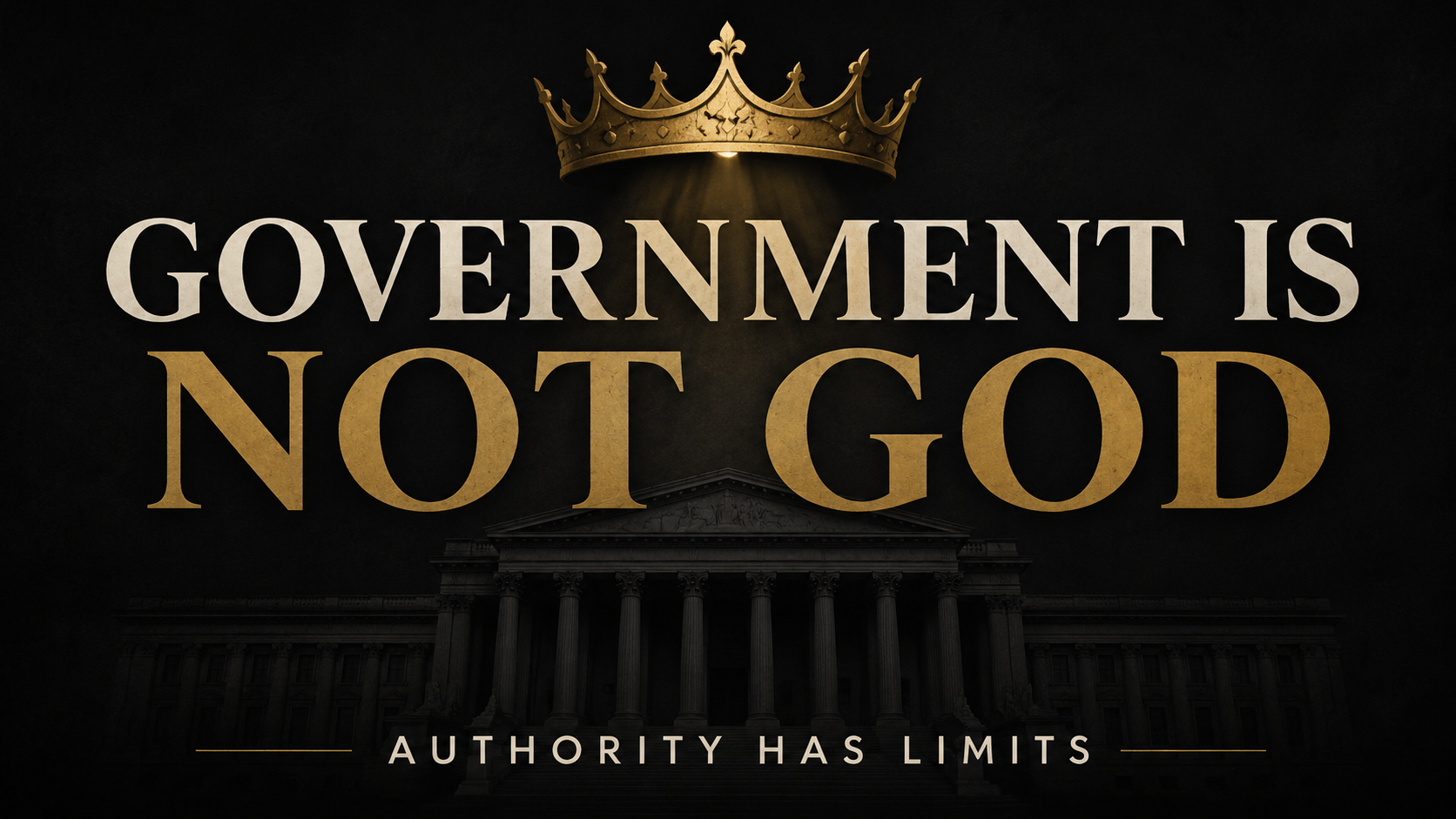
Dark Christian podcast thumbnail with a shadowed government building beneath a gold crown and bold text reading, “Government Is Not God: Authority Has Limits.

⏱️ Estimated Reading Time: 4 min read

Government Has Authority, but Answers to God
Government possesses real authority, but it never possesses ultimate authority.In this episode of Equipping You in Grace, Dave Jenkins examines what Scripture teaches about government, submission, obedience, resistance, and the Christian’s ultimate allegiance to Jesus Christ.Romans 13 teaches that governing authorities have been established by God to restrain evil and preserve order in a fallen world. Christians should therefore respect rightful authority, pray for their leaders, pursue peace, and live as faithful citizens.Yet Acts 5:29 also establishes a necessary boundary: “We must obey God rather than men.” When human authorities command what God forbids or forbid what God commands, Christians must remain faithful to Christ.Government has real authority, but it remains delegated, limited, temporary, and accountable to God. Christ alone possesses ultimate authority.

Listen or Watch


In This Episode, You Will Learn

  • Why governmental authority is real but delegated.
  • What Romans 13 teaches about Christian submission.
  • When obedience to God requires resisting human commands.
  • Why government cannot define truth, morality, or human identity.
  • How political fear can reveal misplaced trust.
  • Why Christians must reject both statism and reactionary rebellion.
  • How believers can remain steady during political instability.
  • Why Christ alone possesses ultimate authority.

Government Has Real but Limited Authority

Scripture does not teach Christians to despise governmental authority. Romans 13 makes clear that governing authorities exist under the sovereign rule of God and serve a genuine purpose in restraining evil and preserving order.Government, however, is not self-originating authority. It is delegated authority. Because its authority comes from God, government remains accountable to God and cannot rightly claim absolute authority over human life.This protects Christians from two opposite errors. We must not treat government as though it were ultimate, but neither should we treat all authority as inherently illegitimate.

When Government Exceeds Its Authority

Acts 5:29 provides one of Scripture’s clearest principles for understanding the limits of human authority. When the apostles were commanded to stop preaching Christ, they responded, “We must obey God rather than men.”The apostles were not rejecting authority altogether. They recognized that every human authority exists beneath the authority of God.Christians therefore obey governing authorities faithfully unless obedience to government would require disobedience to God. Biblical submission is not blind obedience. It is ordered obedience under the higher authority of Christ.

The Danger of Statism

One danger Christians must recognize is statism, the elevation of government into the highest moral authority and source of security, identity, meaning, and societal salvation.Government cannot redefine what God has already revealed. It cannot determine ultimate truth, redefine morality, control the conscience, or demand the allegiance that belongs to Christ alone.Government is not the church. Government is not the family. Government is not God.When those distinctions collapse, political power begins carrying theological weight it was never designed to bear.

Political Fear and Misplaced Trust

Political fear can reveal where our confidence has been placed. When political outcomes begin determining our emotional stability, government may be carrying weight in our hearts that belongs to God alone.Christians should care deeply about justice, truth, righteousness, leadership, and the direction of society. But there is a significant difference between wise concern and emotional dependence.Government can restrain evil externally, but it cannot regenerate the human heart. Government can enact laws, but it cannot create righteousness. Government can preserve order, but it cannot redeem humanity.Only Christ can save.

What Faithful Christian Submission Looks Like

Faithful Christians should respect rightful authority, pray for governing leaders, pay taxes, pursue peace, contribute to the good of society, and obey lawful commands.At the same time, Christians must never surrender biblical conviction or ultimate allegiance to human authority.We can respect government without worshiping it. We can obey lawful authority without surrendering conscience. We can disagree firmly without becoming consumed by rage. And we can remain faithful to Christ even when obedience becomes costly.

Christ Alone Is Ultimate

Every ruler, every government, every political system, and every nation ultimately stands beneath the authority of Jesus Christ.That truth produces both humility and courage. Humility reminds us to recognize legitimate authority. Courage reminds us that no earthly authority stands above Christ.Christians therefore do not need to live in political panic. We can remain thoughtful, faithful, courageous, and steady because our hope does not rise and fall with political outcomes.Government has authority, but it answers to God. Christ alone is ultimate.

Grow in Grace with Equipping You in Grace

Equipping You in Grace exists to help Christians grow in the knowledge of God’s Word, sound doctrine, biblical discernment, and faithful Christian living. Explore Equipping You in Grace Watch the YouTube Playlist
“`

Continue Growing in Biblical Truth

If this article served you, explore resources by Dave Jenkins and Theology for Life Publishing designed to help you grow in biblical clarity, theological depth, and faithful Christian living. You can view the featured titles below or explore more in the shop.


Explore the Shop

Facebook
X
LinkedIn
Pinterest
Email
Print
0

Your Cart Is Empty

No products in the cart.