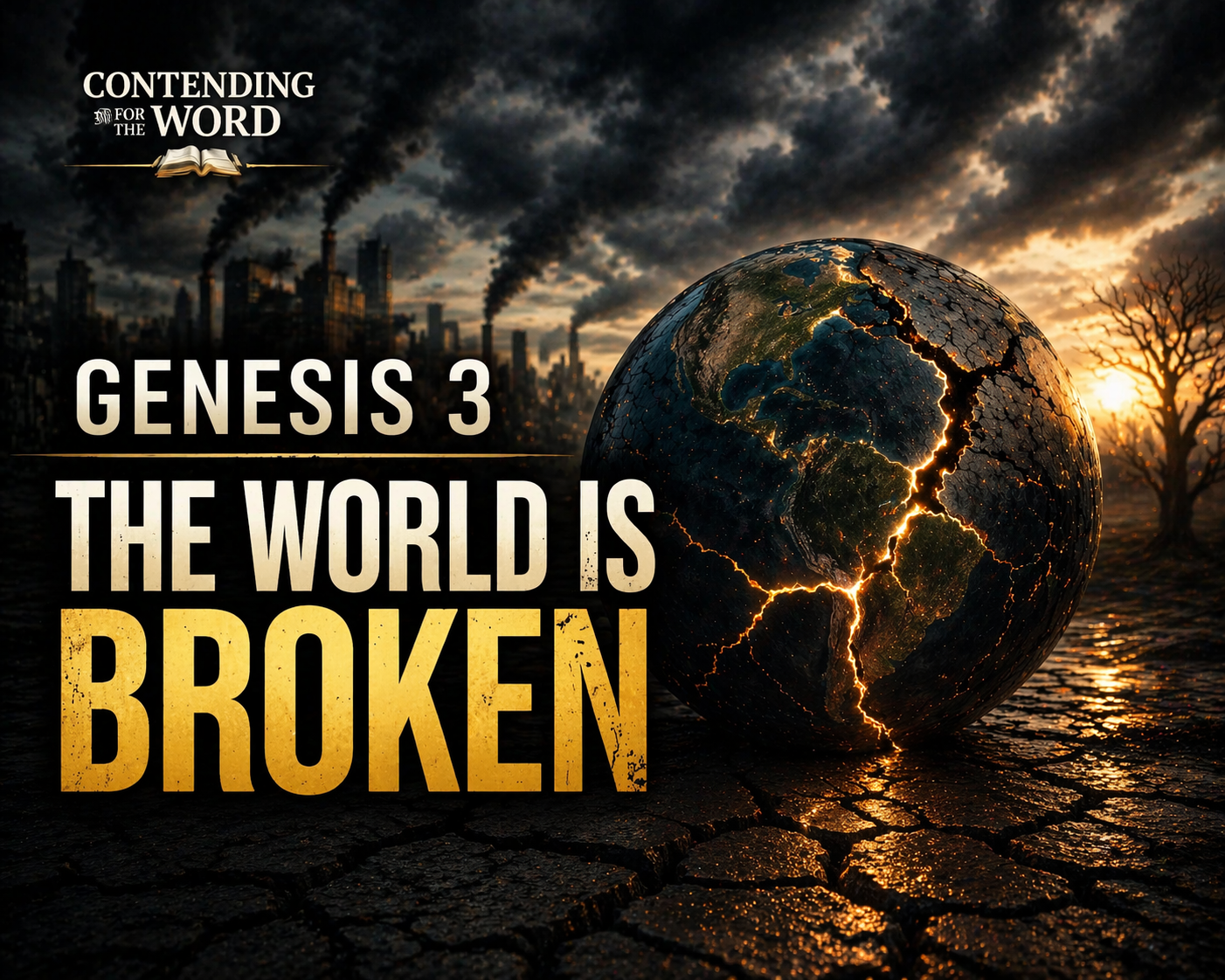
Genesis 3 and the Fall: Why the World Is Broken
The modern world cannot explain itself—technology advances, but corruption persists; revolutions promise liberation, yet produce new forms of control.
Genesis 3 explains what headlines cannot. In this episode of Contending for the Word, Dave Jenkins walks through Genesis 3 to
explain why the world is broken, what the Fall did to human nature, what theologians mean by total depravity, and why modern culture resists the biblical
doctrine of sin.
Episode Summary
In this episode, Dave Jenkins explains how Genesis 3 reveals the root problem of humanity—sin—and why modern explanations for brokenness fall short.
This episode clarifies the doctrine of the Fall, total depravity, and why redemption in Christ is necessary.
Listen
Watch
Key Scriptures
- Genesis 3 — The Fall and the rupture of God’s good design
- Jeremiah 17:9 — The deceitfulness of the human heart
- Romans 1:18–25 — Suppressing truth and exchanging worship
- Romans 3:10–18 — The universal scope of human sin
- Ephesians 2:1–10 — Dead in sin, made alive by grace
- John 3:19–21 — Loving darkness rather than light
- Romans 8:18–23 — Creation groaning under the curse
Episode Highlights
- Genesis 3 diagnoses what modern culture cannot: the problem is not merely external systems, but internal sin.
- The Fall is a rejection of authority—autonomy replaces trust as the root instinct of fallen humanity.
- Total depravity clarified: not maximal evil, but total corruption—every faculty is affected.
- Noetic effects of sin: sin distorts perception and suppresses truth.
- Human dignity remains: the image of God is marred, not erased.
- Genesis 3:15 promises hope: the first gospel points to Christ.
Full Article
Genesis 3 explains why the world is broken. Technology advances, but corruption persists. Revolutions promise liberation, yet often produce new forms of control. Education increases, but moral clarity decreases. Scripture explains why: creation establishes design, but the Fall explains distortion.
What Happened in Genesis 3
In Genesis 3, the serpent’s strategy begins with a question: “Did God actually say?” The issue is not merely a command, but authority, trust, and the goodness of God. The temptation escalates: “You will be like God, knowing good and evil.” In other words, autonomy—self-rule and self-definition—becomes the heartbeat of fallen humanity.Creatures attempt to occupy the Creator’s seat, and the result is rupture: our relationship with God fractures, shame enters, fear grows, and blame-shifting becomes instinctive.What the Fall Means for Humanity
Modern culture often diagnoses brokenness in external terms—systems, trauma, oppression. These realities can be real, but Scripture goes deeper. The problem is not external first—it is internal. The problem is sin.The Fall does not erase human dignity. We remain image-bearers of God. But the image is marred—distorted by sin.Why the World Is Broken According to Scripture
This is where theologians speak of total depravity. This does not mean people are as evil as they could be. It means every part of the person is affected: mind, will, desires, conscience, and reasoning.Scripture is clear: “The heart is deceitful above all things” (Jer. 17:9). Romans 1 describes truth suppression. Romans 3 reveals universal sin. Ephesians 2 declares spiritual death. This is not pessimism—it is divine realism.Genesis 3 also contains hope: Genesis 3:15 promises the One who will crush the serpent. Redemption only makes sense in light of the Fall. If sin is shallow, the cross is excessive. If sin is radical, the cross is glorious.Understanding the Fall does not lead to despair. It leads to clarity—and prepares us to see the necessity and beauty of Christ.Next Episode: Redemption
If this episode helped you understand why the world is broken, stay with us—because the same Bible that diagnoses sin also proclaims redemption.
🔔 Subscribe on
YouTube
and visit the
Contending for the Word podcast page.