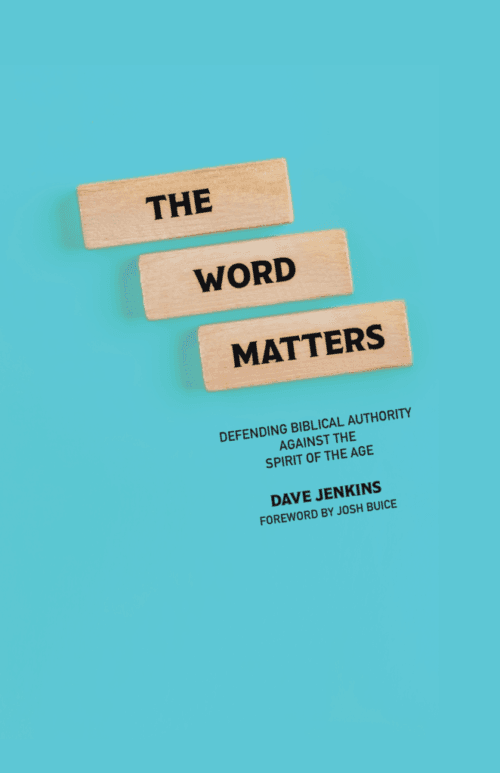
Cultivating Biblical Discernment in an Age of Confusion
By Dave Jenkins
📖 Scripture for Life
In a time when false teaching abounds and biblical illiteracy is rising—even in the church—the call to cultivate discernment is not a luxury, but a necessity. Biblical discernment is not simply a skill for scholars or polemicists. It is a Christian virtue, grounded in Scripture, modeled throughout church history, and vital for both everyday believers and seasoned apologists.
For more on how God’s Word shapes every area of life, see our Scripture for All of Life series.
1. Discernment Begins with a Right View of Scripture
Scripture is clear: discernment starts with the fear of the Lord and grows through immersion in His Word.
Here’s why the sufficiency of Scripture is a cornerstone of our faith.
“The fear of the Lord is the beginning of wisdom, and the knowledge of the Holy One is insight.” — Proverbs 9:10
“Your word is a lamp to my feet and a light to my path.” — Psalm 119:105
To rightly discern truth from error, Christians must first embrace the Bible as inerrant, authoritative, sufficient, and clear. Without this foundation, we are left to drift with culture or trust our feelings—both disastrous alternatives.
From the earliest days of the church, this conviction has been central. Athanasius, a 4th-century bishop, stood virtually alone against the Arian heresy because he believed the Scriptures clearly taught the full deity of Christ. His courage earned him exile, but his faithfulness helped preserve orthodoxy for generations. Discernment demands a convictional stand on what God has said.
2. The Heart That Loves Christ Will Love the Truth
Jesus said:
“If you love me, you will keep my commandments.” — John 14:15
Love for Christ produces a love for His Word—and therefore, a love for truth. A discerning heart is not primarily critical; it is affectionate. It longs to know the Lord more deeply and walk in faithful obedience.
“Discernment is not knowing the difference between right and wrong. It is knowing the difference between right and almost right.”
— Charles Spurgeon
In an age saturated with half-truths, emotionalism, and theological drift, biblical discernment acts like spiritual radar. It keeps us aligned with the truth, not swayed by trends or personalities.
3. Rejecting the False, Clinging to the True
Paul urged the Thessalonian believers:
“Test everything; hold fast what is good. Abstain from every form of evil.” — 1 Thessalonians 5:21–22
This is not passive. It requires vigilance. Christians must examine sermons, books, social media content, and even popular worship songs in light of God’s Word.
The Bereans offer a helpful model:
“They received the word with all eagerness, examining the Scriptures daily to see if these things were so.” — Acts 17:11
For the average Christian, this might look like:
- Comparing what a pastor or teacher says with Scripture
- Asking trustworthy leaders when something feels off
- Reading the Bible daily, even in small portions, to grow in doctrinal clarity
For the apologist, discernment also means:
- Studying heresies and false philosophies to refute them clearly
- Training others to spot counterfeit ideas
- Defending the gospel not only intellectually but with pastoral care and biblical conviction
The early Reformers modeled this balance. Martin Luther boldly declared at the Diet of Worms:
“My conscience is captive to the Word of God.”
He was not simply protesting Roman Catholic abuses—he was affirming that discernment must be rooted in Scripture alone.
4. Receiving the Word with Joy
Biblical discernment is not only about what we reject—it’s about what we rejoice in.
“The precepts of the Lord are right, rejoicing the heart.” — Psalm 19:8
“I rejoice at your word like one who finds great spoil.” — Psalm 119:162
Truth is not dry. It is life-giving. Those who discern well do so not out of pride or suspicion, but out of joy. They have tasted and seen that the Lord is good. They are nourished by His truth and anchored by His promises.
Jonathan Edwards once wrote:
“The Word of God is like a fire to inflame the affections, and like a hammer to break the hard heart.”
5. Cultivating Discernment: Practical Help for Today
Whether you are a new believer, a mature saint, or a trained apologist, here are practical ways to grow in discernment:
- 📖 Read the Bible daily – even small portions, prayerfully and thoughtfully.
- 📚 Study theology – use trusted resources like confessions, catechisms, and biblically faithful books.
- 🗣️ Listen to sound preaching – prioritize churches and ministries that handle God’s Word rightly (2 Timothy 2:15).
- ❓ Ask good questions – “What does Scripture say?”, “Is this consistent with the gospel?”, “Does this glorify Christ?”
- 🕰️ Engage with church history – learn from faithful men and women who stood firm in difficult times.
- ❤️ Cultivate humility – the goal is not to win arguments but to uphold the truth and love others well (Ephesians 4:15).
Conclusion: Anchored in the Word, Equipped for the Battle
Biblical discernment is not optional—it is essential for every Christian living in a confused and compromised age. It flows from a heart transformed by grace, rooted in Scripture, and animated by love for Christ.
May we, like the faithful saints before us, passionately engage God’s Word, reject what is false, hold fast to what is true, and receive the Word with joy—day after day, for the glory of God and the good of His people.