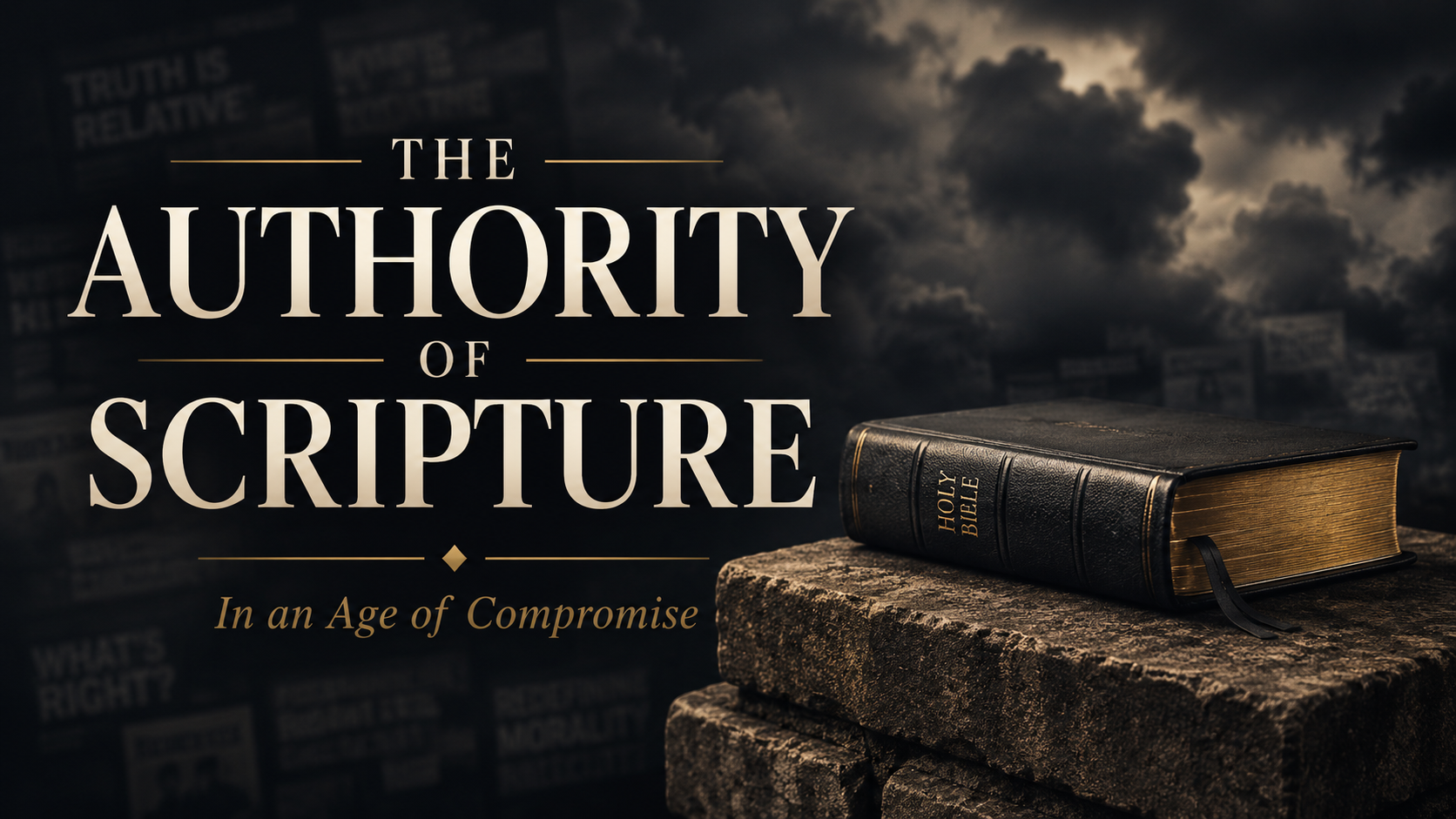
Why the Authority of Scripture Still Matters: Standing Firm in an Age of Compromise
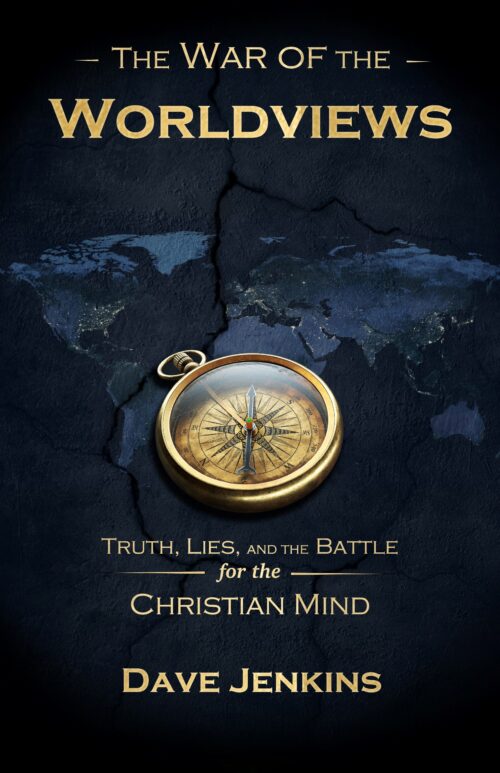
By Dave Jenkins | Scripture for Life Series
Every generation faces cultural storms, but not every storm strikes at the foundation. Some storms challenge preferences, traditions, or public influence. Others strike deeper. In our day, one of the fiercest storms facing the Church is not merely political or philosophical. It is theological. It is an assault on the authority of the Word of God.
In 2 Timothy 3:16–17, Paul writes:
“All Scripture is breathed out by God and profitable for teaching, for reproof, for correction, and for training in righteousness…”
This passage is not merely a doctrine to affirm. It is an anchor for the Christian life. Scripture is not simply helpful religious advice. It is the very Word of the living God, binding on our lives, churches, consciences, worship, doctrine, and mission. To compromise the authority of Scripture is to cut ourselves off from the very source of truth, life, and godliness.
And yet, compromise is exactly what we are witnessing.
Some argue that the Church has misunderstood biblical sexuality for two thousand years and must now evolve. Others say we must “unhitch” from the Old Testament to make Christianity more appealing to modern ears. Popular evangelical figures like Andy Stanley have suggested that the early Church did not rely on Scripture in the way Christians have historically understood, but primarily on the resurrection.1 That is not a small matter. It raises serious questions about the authority, unity, and sufficiency of God’s Word.
The issue is not whether the Church should speak with compassion. Christians must always speak the truth in love. The issue is whether compassion will be defined by Scripture or by the spirit of the age. When love is separated from truth, it becomes sentimentality. When truth is separated from love, it becomes harshness. Biblical faithfulness refuses both errors.
Even in broadly evangelical circles, the influence of progressive authors like Jen Hatmaker and Sarah Bessey has led many to abandon clear biblical teaching in favor of a gospel shaped more by personal experience and cultural approval than by Scripture. Hatmaker, for example, now affirms same-sex relationships while continuing to use spiritual vocabulary that can confuse undiscerning readers.2 Bessey, likewise, often elevates experience and narrative in a way that can displace the authority of Scripture.3
But this problem is not limited to high-profile names. Many churches remain silent. They avoid preaching clearly on sin, repentance, holiness, gender, marriage, judgment, and the lordship of Christ. Not because Scripture is unclear, but because they fear the fallout.
Silence in moments like this is not neutrality. It is retreat.
God’s people have faced this kind of pressure before. Church history is filled with examples of faithful men who stood firm on the Word of God when it cost them dearly. Athanasius stood against the Arian heresy because Scripture teaches that Jesus is fully God. B.B. Warfield defended the inspiration and authority of Scripture when many academics were abandoning confidence in the Bible. Charles Spurgeon, during the Downgrade Controversy, warned of the slow but deadly erosion of biblical conviction among ministers who still claimed to preach the truth.
These men were not faithful because they were combative by nature. They were faithful because they understood what was at stake. To question the authority of Scripture is ultimately to question the authority of God. To abandon Scripture is to abandon the sure Word that testifies to Christ. To reinterpret the Bible in light of culture is to replace divine revelation with human speculation.
Jesus Himself modeled a Scripture-submitted life. When tempted by Satan in the wilderness, He did not rely on personal experience, clever argument, or human wisdom. He answered with the written Word of God: “Man shall not live by bread alone, but by every word that comes from the mouth of God” (Matthew 4:4).
If Christ stood on Scripture, how can we stand anywhere else?
The drift around us should not surprise us, but it should sober us. Recent research shows that confidence in the Bible as the literal Word of God has declined significantly in America. Gallup reported in 2022 that only 20 percent of Americans said the Bible is the literal Word of God.4 The consequences of this drift are visible all around us: biblical illiteracy, theological confusion, moral compromise, and gospel erosion.
The Church is not merely battling the culture outside her walls. She is also battling confusion within.
The answer is not to become cleverer, louder, trendier, or more culturally acceptable. The answer is to return. We must return to Scripture. We must believe it, teach it, preach it, obey it, defend it, and trust that the God who spoke still speaks through His Word.
This means parents must teach their children Scripture, not merely values. Pastors must preach the Word, not motivational talks dressed in religious language. Seminaries must train future ministers with conviction, not compromise. Believers must saturate their minds with God’s truth, not the slogans of the age.
If Scripture is not our final authority, someone else will be. More often than not, that authority will become the self: our feelings, our tribe, our preferences, our wounds, or our cultural moment. But the Word of God stands forever. It does not move. It does not bend. It does not break.
Jude 3 urges believers to “contend for the faith that was once for all delivered to the saints.” That faith is rooted in the revealed Word of God. To stand on that Word will be costly. It may bring mockery, misunderstanding, marginalization, or ministry isolation. But to abandon that Word is far more costly.
Let the world shift. Let trends fade. Let the culture rage.
Let us stand on the unshakable, unchanging Word of the living God.
Reflection Questions
- Are there areas where I have softened or avoided Scripture’s authority in my own life or ministry?
- How can I help others, especially the next generation, grow in biblical conviction?
- What slogans or teachings have I heard recently that subtly undermine the authority of God’s Word?
For Further Study
Citations
- Andy Stanley, Irresistible: Reclaiming the New That Jesus Unleashed for the World (Zondervan, 2018).
- Religion News Service, “The Politics of Jen Hatmaker: Trump, Black Lives Matter, Gay Marriage and More,” October 25, 2016.
- Sarah Bessey, Jesus Feminist: An Invitation to Revisit the Bible’s View of Women (Howard Books, 2013).
- Gallup, “Fewer in U.S. Now See Bible as Literal Word of God,” July 6, 2022.