The Gospel of Jesus Christ is the power of God for salvation which leads people away from idolatry. Therefore, business built upon selling idolatry (such as New Age products) become upset when they lose revenue because their customers turn to Jesus.
So it’s common for people whose income is from New Age methods to attack those of us who share the Gospel. They attempt to discredit us so that their customers won’t listen to the Gospel. Yet, God’s Word does not return void!
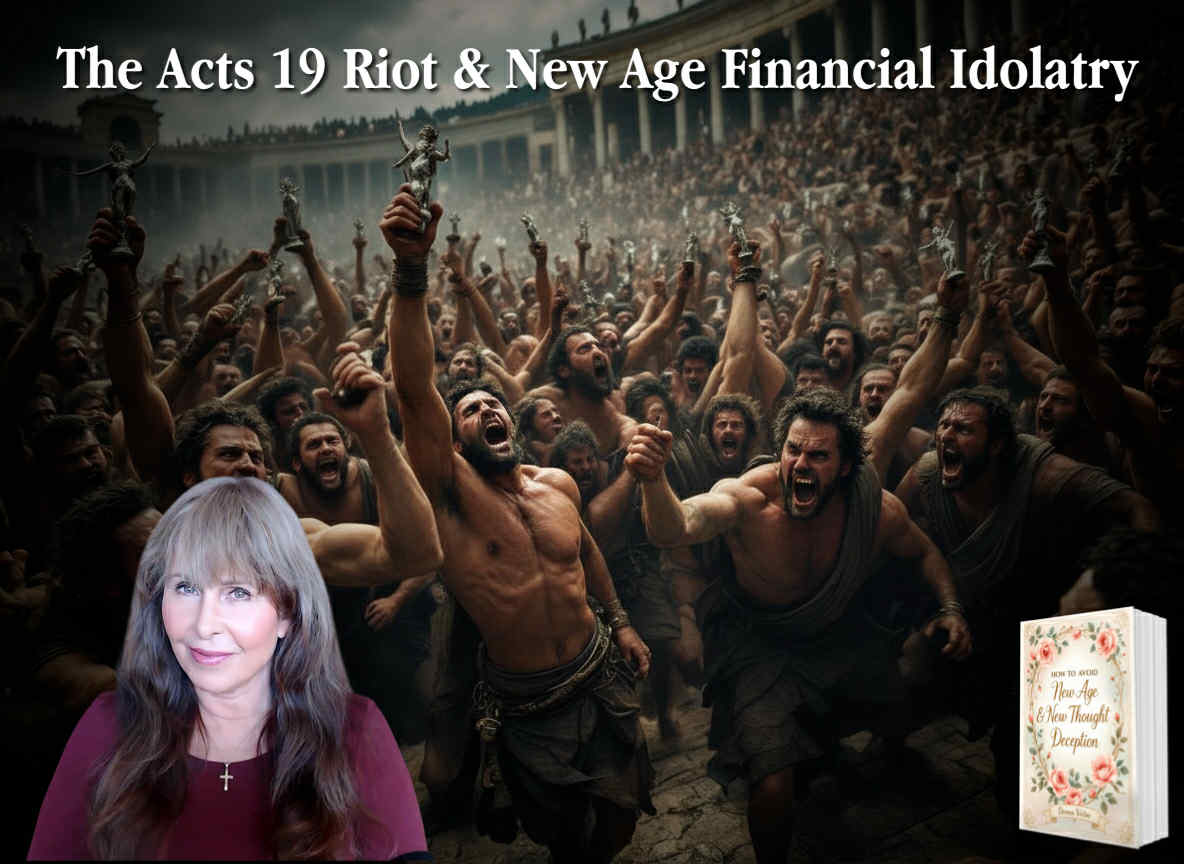
We see this same process in Acts 19, because the New Age is really the old age that the Bible recorded. In Acts 19, the preaching of Paul in Ephesus resulted in fewer people purchasing goddess statues from the local silversmiths. This sparked a riot among craftsmen whose financial prosperity depended on selling idols. The anger of the mob was driven by greed and fear of financial loss.
Today, a similar dynamic exists in the world of New Age professionals such as psychics, energy healers, yoga instructors, astrologers, and channelers whose livelihoods are threatened when the Gospel exposes their practices as counterfeits and draws people away from their services. By comparing the Ephesian mob with the modern New Age marketplace, we see that while times and cultures change, the hostility toward the truth of Christ remains constant, especially when that truth endangers financial gain.
Acts 19 describes how Paul’s ministry in Ephesus had a profound impact on a city saturated with paganism. The text tells us that “many of those who practiced magic arts brought their books together and burned them in the sight of all” (Acts 19:19). The Word of God spread with such power that entire industries built upon sorcery and idolatry were undermined.
The craftsmen, led by a silversmith named Demetrius, became alarmed that Paul’s preaching was persuading people that “gods made with hands are not gods” (v 26). Their trade depended on producing silver shrines of Artemis, a goddess whose temple in Ephesus was one of the wonders of the ancient world.
Demetrius admitted that the issue was economic survival: “This trade of ours is in danger of falling into disrepute” (v 27). His words ignited a mob that filled the theater shouting, “Great is Artemis of the Ephesians!” for two hours (v 34).
Paul wanted to enter the theater and face the mob, but the disciples and the Asiarch Roman officials wouldn’t allow him to be put into danger (vv 30–31). The mob seized Paul’s companions, Gaius and Aristarchus (v 29). The mob turned into a chaotic riot and most of the people involved didn’t even know the purpose of the riot (v 32). Finally, the city clerk stopped the riot through legal reasoning and appealing to the mob’s fear of Roman reprisal (vv 35–41).
The riot reveals three truths that we continue to see displayed today:
- idolatry and profit were tightly intertwined.
- when the Gospel confronts false religion, it threatens the wallets of those who profit from deception.
- opposition to Christ often disguises itself as piety while hiding financial motives.
Just as silversmiths crafted idols in Ephesus, New Age practitioners craft services and products that cater to spiritual hunger apart from Christ. Their industries thrive on people seeking hope, healing, or power outside of God’s Word.
Horoscopes, birth charts, and astrological readings are sold in books, apps, and personalized consultations. Psychic readings, mediumship, and tarot sessions charge fees that can climb into hundreds of dollars per hour. Yoga studios and retreats market themselves as spiritual sanctuaries while charging premium rates. Crystal sellers, Reiki healers, and “manifestation coaches” profit from people’s desire for control over life.
When the Gospel of Jesus is faithfully proclaimed, people realize that these New Age practices are empty and dangerous. They begin to leave behind astrology, psychic consultations, yoga rituals, and Reiki in the same way that Ephesian converts burned their magic books. And when clients walk away, the income streams of New Age professionals dry up. Like Demetrius and the silversmiths, modern practitioners may respond with anger, defensiveness, or slander against Christian evangelists because their livelihoods are threatened.
In both Acts 19 and today, the root issue is financial idolatry. Money has always been a powerful false god, and people will go to extreme lengths to protect it. Jesus warned, “You cannot serve God and money” (Matthew 6:24). When profit depends upon deception, any challenge to that deception will be met with hostility.
Demetrius cloaked his concern for money in the language of piety, warning that the temple of Artemis might lose its majesty. Yet his words betrayed the real fear: “this trade of ours is in danger” (v 27). Similarly, many New Age entrepreneurs claim to be motivated by compassion, enlightenment, or holistic well-being. Yet beneath the surface, their livelihood depends upon clients consuming their lies. If those clients come to Christ, the steady flow of income evaporates.
This is one reason why evangelism encounters fierce resistance from individuals and also entire industries. The Gospel exposes and dismantles entire systems of deception that are profitable.
The Anger of the Mob and the New Age Defense
The angry mob in Ephesus chanted slogans of devotion to Artemis as a cover for their economic panic. Likewise, modern New Age defenders often attack Christianity by accusing it of being narrow-minded, brain-washed, judgmental, or intolerant. These accusations can mask their deeper financial anxiety that if Christianity spreads, people may stop paying for tarot readings, yoga retreats, or energy healings.
Social media provides modern mobs. Christian testimonies exposing New Age practices frequently receive backlash online. Ex-New Agers who share how Christ saved them are often mocked or attacked by those who feel threatened. Influential New Age teachers with massive platforms may rally their followers to slander Christians who expose the dangers of these practices. The digital shouting of “Great is Artemis of the Ephesians!” finds its echo in comment sections, forums, and viral posts defending crystals, astrology, or yoga.
In Acts 19, the burning of magic scrolls symbolized the power of Christ over sorcery and deception. The financial value of those books was immense, yet converts willingly destroyed them because they’d found something greater. The Gospel offered what idols never could: forgiveness of sins, reconciliation with God, and eternal life in Christ.
Today the same is true. New Age practices promise enlightenment, healing, and empowerment, but they instead deliver bondage, confusion, and spiritual emptiness. Jesus said, “I am the way, and the truth, and the life; no one comes to the Father except through Me” (John 14:6). The Gospel frees people from dependence upon astrology, energy healing, or crystal idols, and gives them a new identity in Christ. When people encounter the true Savior, they reject the counterfeits.
For converts in Ephesus, the decision to burn their magic scrolls was costly. For modern New Age professionals who repent, the decision to walk away from their livelihood is also costly. Some ex-psychics, yoga teachers, or healers who come to Christ must abandon their businesses and start over. This echoes Jesus’ call to deny oneself, take up the cross, and follow Him (Luke 9:23).
Christians who evangelize must be prepared for resistance. Just as Paul faced riots, Christians today may face hostility from those whose incomes are threatened. Yet we must remember that our call is to be faithful to God, not popular with people. The Gospel confronts darkness, and the darkness often pushes back.
The riot in Acts 19 is a mirror reflecting how the Gospel continues to disrupt economies built on idolatry. Demetrius and his fellow silversmiths represent the same spirit that animates modern New Age industries where a defense of profit is disguised as devotion. Those who are unsaved are empty and seeking, yet they can never be truly peaceful without Christ. When Christians boldly share the Gospel and people turn to Christ, the false spiritual marketplace loses customers, and those profiting from deception may rage against the truth.
Yet God’s Word does not return void and the power of Christ always prevails. Just as the Ephesian believers willingly burned their costly books, modern converts testify that knowing Christ is worth more than all the riches and lies of the New Age. The Gospel may threaten livelihoods built on deception, but it offers life, truth, and eternal hope that no idol or false practice could ever provide.