⏱️ Estimated Reading Time: 8 min read
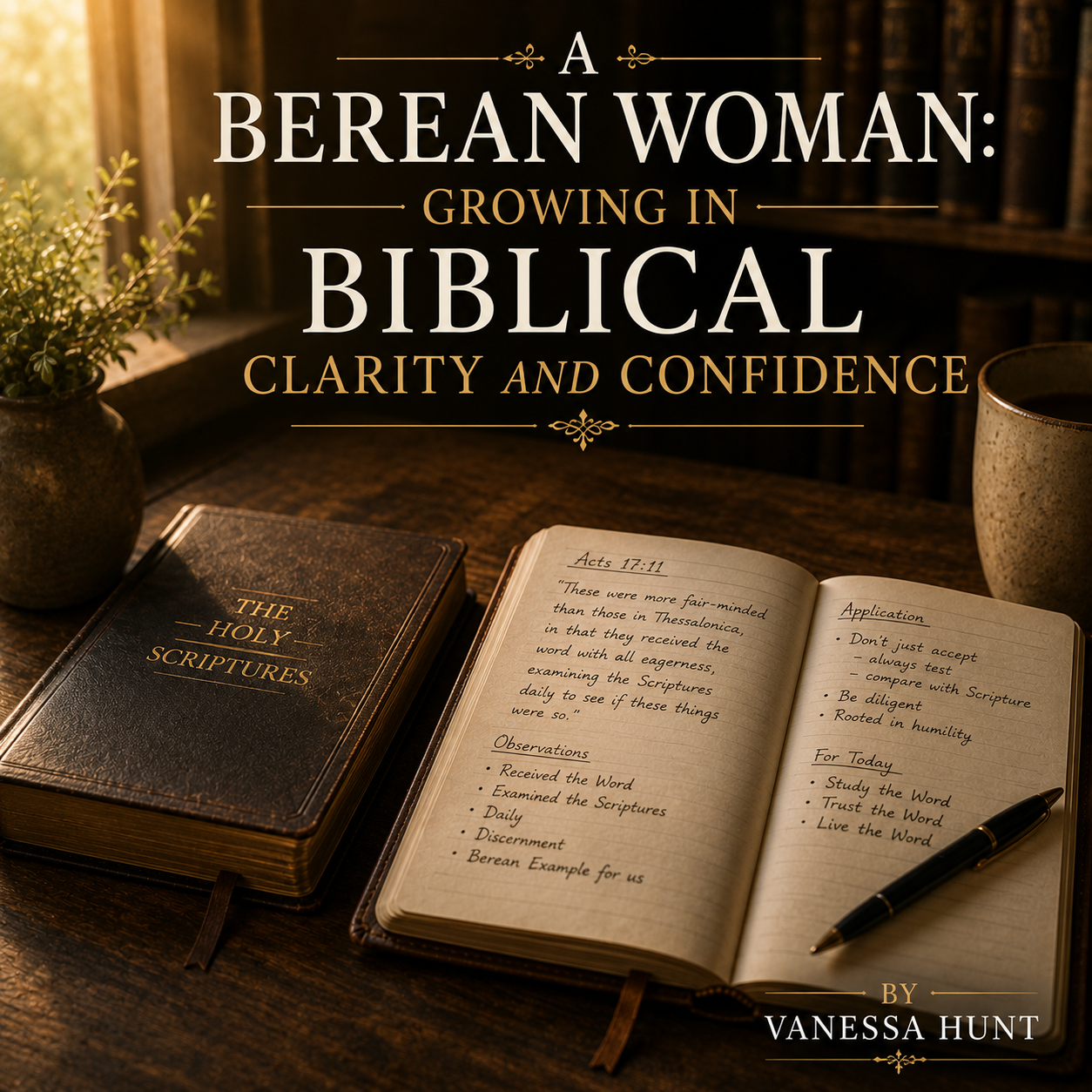
A Berean Woman: Growing in Biblical Clarity and Confidence
By Vanessa Hunt
My daughter has almost completed her freshman year of college. She attends a very small, local, Christian university and is having a wonderful experience so far. At the end of the first semester, she had to write an extensive paper for her theology class and asked me to read it over before submitting it. Her professor had instructed the students in the proper way to exegete Scripture and the assignment was their chance to show whether they had learned this very necessary skill. As I skimmed through the pages, I marveled at how well she seemed to understand the importance of reading a passage in context.
After giving it the “mom seal of approval”, I told her that she was light years ahead of where I was when I was her age. Despite attending a Christian university myself, knowing that there was a right and a wrong way to read God’s Word wasn’t something I learned until I was much, much older. The youth groups of my generation were big on games and pizza, but not on hermeneutics and apologetics. Which led to me having a fervent, yet shallow, faith. I was passionate, but easily swayed by emotions and couldn’t have given real answers about why I believed what I believed. I loved the Lord, but I didn’t love His Word as much as I should. Sadly, this shallow, emotions-based approach to studying and applying Scripture continues to be a massive problem within the broader Church and particularly within women’s groups.
There wasn’t one specific moment where I realized that I needed to spend time in deeper study of the Bible, but rather a series of moments that all added up to the fact that I was ill-prepared to meet the seismic shifts happening inside and outside the broader Evangelical community. Years spent in Bible studies, where I was rarely asked to read a verse in its context, or to consider the fact that Jeremiah 29:11—which states, “For I know the plans I have for you, declares the Lord, plans for peace and not for evil, to give you a future and a hope”— was, in fact, a promise to Israel and not one that I could claim for myself, meant that I had to essentially be deprogrammed. Now, that isn’t to say that the Lord doesn’t have plans for our good, because He does (many verses do confirm this). Rather it is to say that understanding verses in the proper biblical context is vital to their accurate interpretation and application.
I often think about how similar this process is to what happens when we try to make healthier choices for our bodies. If we’ve spent years consuming fatty, sugary foods then we have been conditioned to only crave those things. Our appetite is not only satisfied by unhealthy food, but it also actually wants more of it. Similarly, if our appetite for God’s Word has been satiated by verses taken out of context, eisegesis, and extra-biblical sources then we will have to retrain ourselves to hunger for the healthier option.
Once I learned how to properly study the Bible, I began to want more of it. My appetite changed and the fluffy, shallow, me-centered content was no longer appealing. And not only did my appetite change, but I grew in discernment so that I was more equipped to recognize errors when they crossed my path. “And it is my prayer that your love may abound more and more, with knowledge and all discernment, so that you may approve what is excellent, and so be pure and blameless for the day of Christ, filled with the fruit of righteousness that comes through Jesus Christ, to the glory and praise of God” (Philippians 1:9-10).
As a woman, I’m aware of the fact that my nature makes me more susceptible to having my emotions wielded against me. The enemy of our souls knows the pressure points, and I truly believe that this is why there has been such a dearth of women who have been properly discipled in Bible study, hermeneutics, systematic theology, and Church history. As a Titus 2 woman (who just turned 50!), it is my responsibility to come alongside younger women and help them to mature in these areas. So, here are my recommendations for women who want to grow in Biblical clarity and confidence.
First, read your Bible. This may seem rudimentary, but women are far more likely to turn to social media pages or books about faith rather than actually opening up God’s Word and reading it. To change our appetite, we must be almost ruthless about the habits we’ve developed. Scaling back on extra-biblical sources is a must if we are to mature in our walk with Christ. Just as someone who is getting healthy will only occasionally allow for a sugary treat, we should see the content about the Bible as secondary to the Bible itself. And we should always carefully test that content to be certain that it aligns with Scripture. “Beloved, do not believe every spirit, but test the spirits to see whether they are from God, for many false prophets have gone out into the world” (1 John 4:1).
Second, learn biblical hermeneutics. Hermeneutics help us to know how to properly interpret and understand the Bible. Reading is one thing, applying is another. For example, I was never taught that Scripture interprets Scripture. If we are confused about a passage or think that there is a contradiction, we use other passages of Scripture to help us find clarification. We must read the Bible within context which includes cultural, historical, and other elements which help us to understand the true meaning of the text. “Do your best to present yourself to God as one approved, a worker who has no need to be ashamed, rightly handling the word of truth” (2 Timothy 2:15).
Third, study Church history. Knowledge of Church history has been long neglected, but it’s an essential part of how we grow in clarity and confidence. Most churches never offer classes or incorporate this information into sermons, so we have generations of Christians who simply have no idea how to answer questions about how the Bible actually came to be in our hands, what happened during the Reformation, or the many councils held throughout history. When we know how to answer these questions for ourselves, we become more confident in answering them when asked by others. And, trust me, people are asking.
Fourth, utilize apologetics. Christian apologetics is the practice of giving a defense of our faith. It’s helps us to know how to respond to skeptics and even attacks on Christianity. Sadly, this is another neglected area for women (and the Church at large), but I’m seeing a resurgence of interest as we engage more with a culture that is antagonistic to historic Christianity. When you study apologetics, you will not only be better equipped to handle those encounters, but you will also grow in confidence in your own faith as you learn how to answer the questions that come your way. “But in your hearts honor Christ the Lord as holy, always being prepared to make a defense to anyone who asks you for a reason for the hope that is in you; yet do it with gentleness and respect” (1 Peter 3:15).
Lastly, becoming more rooted in Biblical clarity and confidence is not something that happens overnight. It’s a deliberate, lifelong pursuit that reshapes us—changing our appetite from milk to meat. As we delve more deeply into God’s Word, we move beyond shallow understandings to get to the true meanings of the text, and this guards us against deception and error. Ultimately, our goal is to know and love Him more deeply and give Him glory as we share the hope we have in Christ with those around us. Every woman who desires to be more confident in this area must be passionate about being a woman of the Word, trusting that the Lord will be faithful to transform her heart and her mind.
Clarity in Scripture: The Authority, Clarity, and Sufficiency of God’s Word
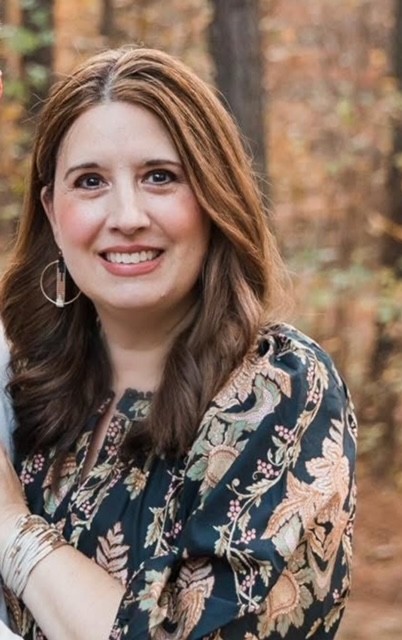
Vanessa Hunt is a Willamette Valley, Oregon based author and speaker who is passionate about helping women develop a solid Biblical worldview through which they will be better equipped to navigate the culture, workplace, marriage and parenting. She offers encouragement and inspiration on her website At the Picket Fence and in her book, ‘Life in Season: Celebrating the Moments that Fill Your Heart and Home’. Her greatest joys are her husband Robb and their two mostly-grown children. Vanessa and Robb are Outpost Directors for their local Stand to Reason apologetics class. She is a regular contributor to Clear Truth Media and Club31 Women, a division of Baker Publishing. Her work has been featured in Proverbs31 Women, Joyful Life Magazine, Home Front, Good Housekeeping, Better Homes & Gardens and HGTV.