How to Read the Bible Faithfully in a Confused Culture
Dave Jenkins | Contending for the Word Q&A | Servants of Grace | April 29, 2026
Show Summary
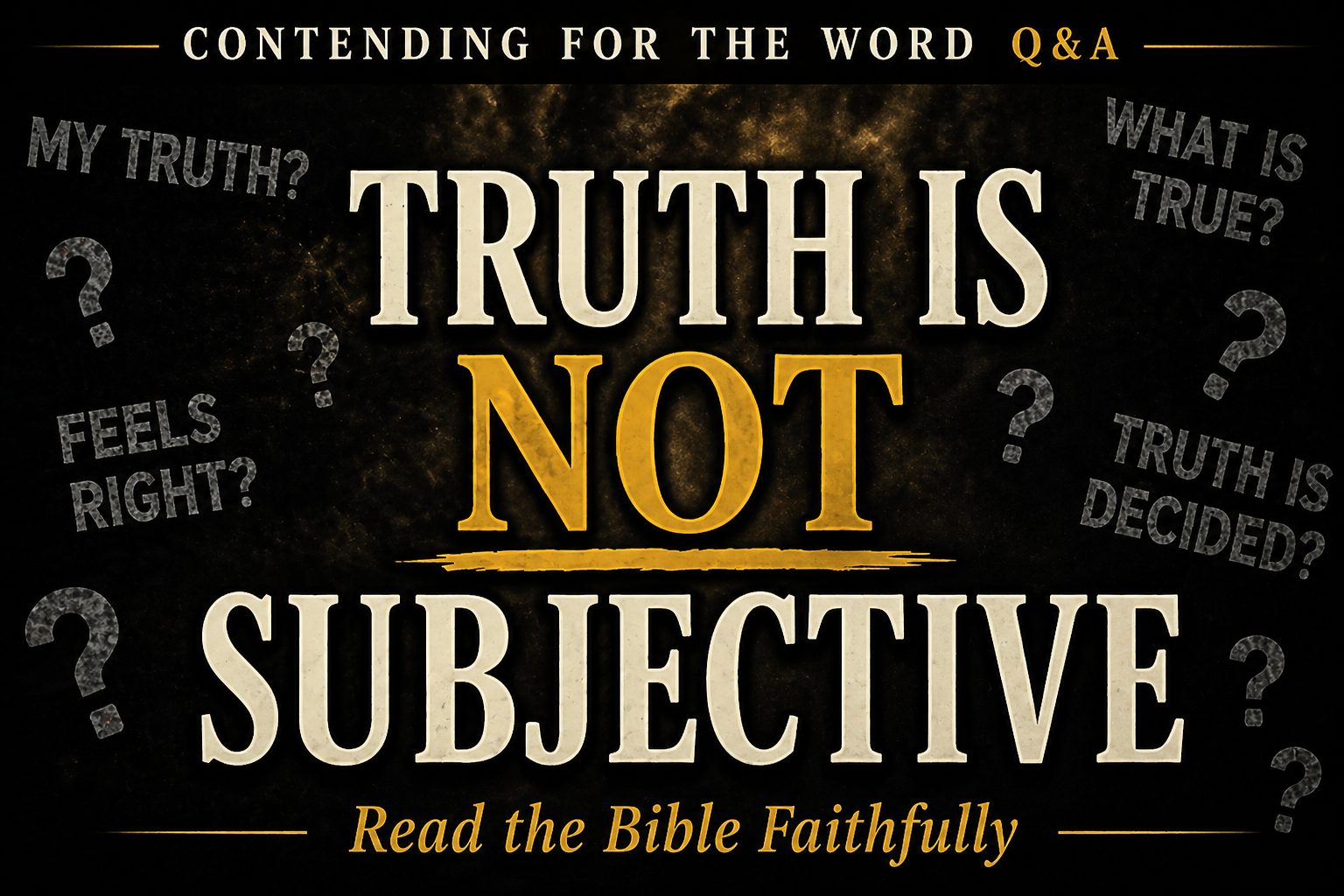
We are living in a confused culture. Truth is treated as subjective, meaning is reshaped, and even Scripture is often reinterpreted to fit cultural expectations.
In this episode of Contending for the Word Q&A, Dave Jenkins answers the question: How do we read the Bible faithfully in a confused culture—not just academically, but personally, practically, and faithfully?
This episode calls Christians to submit to the authority of Scripture, interpret it carefully, and apply it with clarity and courage in every area of life.
Listen or Watch
Key Scriptures
- 2 Timothy 3:16–17
- Psalm 119:105
Episode Highlights
- Scripture is God’s Word and our final authority
- Faithful reading requires careful interpretation
- Culture pressures how we understand truth
- Christians must read, trust, and apply God’s Word
- Clarity is found in Scripture, not culture
Full Article
We are living in a confused culture. Truth is treated as subjective, meaning is reshaped, and even Scripture is often reinterpreted to fit cultural expectations. That reality raises an urgent question for Christians today: How do we read the Bible faithfully—not only with accuracy, but with conviction and obedience?
Scripture itself gives us the foundation. As 2 Timothy 3:16–17 teaches, all Scripture is breathed out by God and is profitable for teaching, for reproof, for correction, and for training in righteousness. God’s Word is not merely informative—it is authoritative and transformative. Likewise, Psalm 119:105 reminds us that God’s Word is a lamp to our feet and a light to our path. In a dark and confused world, Scripture provides clarity.
To read the Bible faithfully begins with recognizing its authority. Scripture is not one voice among many—it is the Word of God. That means we do not stand over it as judges—we sit under it as those who are taught. We do not reshape it to fit our preferences—we receive it as God has given it.
Faithful reading also requires careful interpretation. Context matters. Meaning matters. We are not free to impose our ideas onto the text. Instead, we seek to understand what God has actually said in His Word. This involves reading passages in their proper context, understanding their original meaning, and interpreting them in light of the whole counsel of Scripture.
At the same time, we must recognize the cultural pressures that shape how people approach truth today. Our culture resists authority, elevates personal experience, and redefines truth according to individual preference. These pressures can subtly influence how Scripture is read and applied. Faithful reading requires awareness of these influences and a deliberate commitment to resist them.
Ultimately, reading the Bible faithfully is not only about understanding—it is about obedience. It means applying God’s Word in every area of life, even when it is difficult or unpopular. This requires courage. Not harshness, but clarity. Not compromise, but conviction rooted in the truth of God’s Word.
We are not lacking information today—we are lacking clarity. And God has given clarity in His Word. So read the Word of God. Trust the Word of God. And live by the Word of God.
Takeaways
- Submit to the authority of Scripture
- Interpret the Bible carefully and contextually
- Recognize and resist cultural pressure
- Apply God’s Word with clarity and courage
Related Resources
Call to Action
If this episode encouraged you, share it with others who want to grow in their understanding of God’s Word.
Subscribe to Contending for the Word Q&A on YouTube or your favorite podcast platform, and visit Servants of Grace for more biblical resources to help you stand firm in the truth of God’s Word.