⏱️ Estimated Reading Time: 9 min read
The Identity Crisis: A Biblical Answer to What It Means to Be Human
By Dave Jenkins
Show: Contending for the Word
Date: May 19, 2026
Show Summary
What does it mean to be human? In this episode of Contending for the Word, Dave Jenkins addresses one of the most important worldview questions facing our culture today. In a world that tells people to define themselves by their feelings, desires, and self-expression, Scripture offers a radically different answer. Grounded in Genesis 1:26–27, this episode explains that identity is not something we invent. It is something we receive from the God who created us in His image.
Dave walks through the biblical storyline of creation, fall, redemption, and consummation to show how human identity is rooted in God’s design, distorted by sin, and restored through Jesus Christ. This episode also examines expressive individualism and why self-defined identity cannot provide the stability, clarity, or hope that only God’s Word can give.
Audio Player
Video Player
Key Scriptures
- Genesis 1:26–27
- Genesis 3
- 2 Corinthians 5:17
- 1 John 3:2
Episode Highlights
- Why identity begins with God, not the self
- What it means to be made in the image of God
- How the fall distorted humanity’s understanding of identity
- Why expressive individualism leads to confusion
- How the gospel restores our identity in Christ
- How Christians should speak truth with clarity and compassion
Full Article
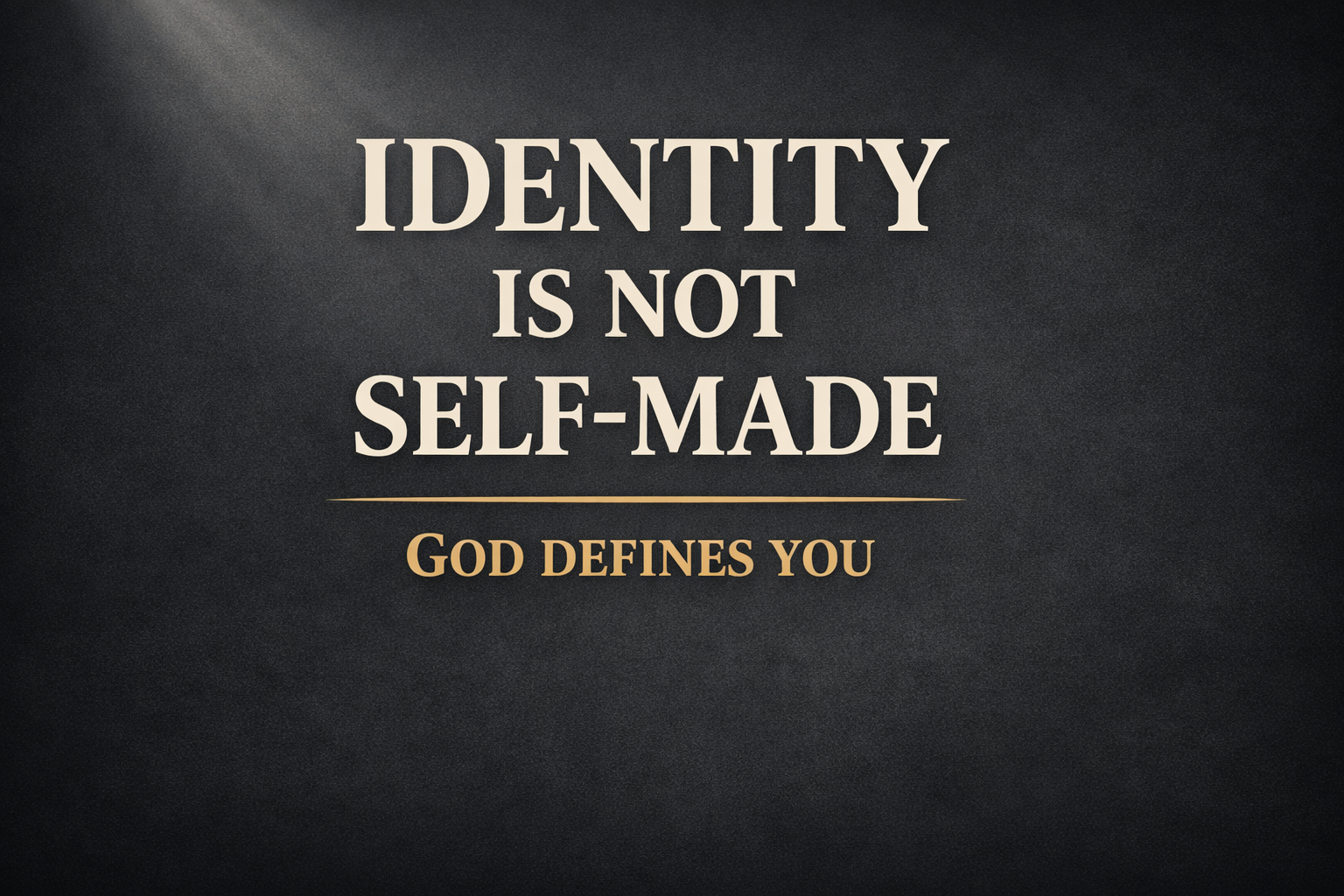
Modern culture sends a constant message to people today. Look within. Define yourself. Create your own truth. Discover your identity from your desires, your feelings, and your personal sense of self. But the Word of God tells a very different story. According to Scripture, identity is not something we invent. It is something we receive from the God who created us.
That is why the modern identity crisis is not merely a social issue or a political issue. At its core, it is a theological issue. It is about whether human identity is grounded in the Creator or constructed by the creature. It is about whether truth comes from God or from within ourselves. And it is about whether human beings can truly understand who they are apart from the One who made them.
Scripture gives us clarity from the very opening pages of the Bible. In Genesis 1:26–27, we are told that God created humanity in His image. Those words form the foundation for a biblical understanding of human identity. Human beings are not accidents. We are not self-created. We are image bearers of the living God. That truth gives dignity, purpose, and meaning to every human life.
The doctrine of the image of God matters deeply because it tells us that humanity is fundamentally different from the rest of creation. Animals are created by God, but only human beings bear His image. Every person has value, not because of ability, intelligence, achievement, or status, but because every human being reflects something of the Creator. This is why the Christian worldview has always affirmed the unique worth and dignity of human life.
Genesis also tells us something else that is vital in our cultural moment. Human beings are created male and female. That distinction is not accidental or socially constructed. It is part of God’s design for humanity. Human identity, then, is not detached from creation. It is rooted in creation itself. God defines what it means to be human, and He has spoken clearly in His Word.
Yet when we look around at modern culture, we see deep confusion about identity. Why is that? The Bible answers that question in Genesis 3. The fall introduced distortion into every area of human life, including our understanding of ourselves. Adam and Eve were created in fellowship with God, under His authority, and secure in His design. But when they listened to the serpent and rebelled against God, humanity turned away from the Creator and began seeking autonomy apart from Him.
This is where the roots of the modern identity crisis are found. Sin introduces the lie that human beings can determine truth for themselves. Instead of receiving identity from God, fallen humanity seeks to define itself. Instead of trusting God’s design, we attempt to construct our own version of reality. The result is confusion. The image of God is not erased by sin, but our desires are distorted, our thinking is darkened, and our understanding of ourselves becomes clouded.
That is why Scripture repeatedly warns us that the human heart is not a reliable guide to truth. Our desires do not always align with God’s will. Our feelings do not always reflect reality. Our internal sense of self cannot bear the weight of defining who we are. When identity is separated from God’s design, confusion inevitably follows.
This confusion has taken a particularly powerful form in modern culture through what many scholars call expressive individualism. This worldview teaches that the deepest truth about a person is found within the self. Your inner feelings define who you are. Your desires reveal your identity. Your internal sense of self determines your purpose. According to this way of thinking, the highest moral good is expressing that inner identity outwardly.
That message sounds appealing because it promises authenticity, freedom, and self-expression. But from a biblical perspective, it is profoundly unstable. It places the individual self at the center of identity rather than God. It asks, “What do I feel about myself?” instead of asking, “What has God said about me?” Once identity becomes self-defined, purpose becomes subjective, morality becomes flexible, and human life loses any fixed meaning grounded in creation.
Nowhere is this more visible than in modern conversations about gender and personal identity. In the biblical worldview, male and female are part of God’s created order. But expressive individualism reverses that order and expects creation to conform to personal identity. In that framework, the internal sense of self becomes the ultimate authority. Yet human beings were never designed to create themselves. We were designed to receive identity from our Creator.
That helps explain why the modern search for identity often produces not peace, but anxiety. If identity must be constructed, then it must constantly be defended. If identity depends on inner feelings, then it becomes unstable as feelings shift. But the Word of God offers something far more solid. According to Scripture, identity begins not with the self, but with the Creator. God defines reality. God establishes design. God gives purpose to human life.
The good news of the gospel is that Scripture does not leave us in the confusion produced by sin. Through Jesus Christ, what sin has distorted is restored. The gospel does not merely forgive sin. It also restores our understanding of who we truly are. In 2 Corinthians 5:17, we are told that anyone who is in Christ is a new creation. That means believers are no longer ultimately defined by their desires, their feelings, or their past. They are defined by their relationship to Christ.
In Christ, we are forgiven. In Christ, we are adopted. In Christ, we are redeemed. Our identity is no longer rooted in the shifting realities of human experience, but in the finished work of Jesus Christ. That identity is far more stable than anything the world can offer. The gospel answers the deepest human longing to know who we are, why we matter, and where we belong.
This also shapes how Christians should respond in a confused age. We must speak truth about identity with both clarity and compassion. Scripture never asks us to choose between truth and love. Christ Himself came full of grace and truth. That means our conversations about identity should not be driven by fear, hostility, or panic. They should be marked by biblical conviction, humility, and a sincere desire to point people to the One who brings freedom.
Many people today are wrestling with identity because they are searching for belonging, meaning, and stability. The church must be a place where people encounter both truth and grace. It should be a place where Scripture is taught clearly and where the transforming power of the gospel is on display. When the church faithfully proclaims creation, sin, redemption, and restoration, it offers something the world cannot provide: a stable, God-centered understanding of what it means to be human.
And Scripture points us forward to an even greater hope. The Christian story does not end with the brokenness of the present age. In 1 John 3:2, believers are reminded that we are already children of God, but what we will be has not yet fully appeared. Our identity in Christ is both present and future. Even now, we belong to Him. Even now, we are being renewed. And one day, when Christ returns, the distortions of sin will be fully removed, and humanity will perfectly reflect the glory of the God who created us.
That means Christians do not need to panic in the face of cultural confusion. We need to remain steady in the truth of God’s Word. The culture may redefine humanity again and again, but the Creator has already spoken. Human identity cannot be understood apart from the God who made us. Our identity is not something we create. It is something we receive from the God who made us in His image and redeems His people through His Son.
Takeaways and Reflection Questions
- Why does Genesis 1:26–27 provide the foundation for understanding human identity?
- How has modern culture detached identity from God’s design?
- Why is expressive individualism unable to provide lasting stability?
- How does the gospel restore our understanding of who we are?
- How can Christians speak truthfully and compassionately about identity today?
Call to Action
If this episode helped you think more clearly about the identity crisis in our culture, please subscribe to Contending for the Word wherever you listen to podcasts or at our YouTube. You can also follow Servants of Grace for more biblical teaching, worldview clarity, and discipleship resources to help you stand firm in God’s Word in a confused age.

Dave Jenkins is happily married to his wife, Sarah, and lives in beautiful Southern Oregon. He is a writer, editor, and speaker who loves Christ, His people, the Church, and sound theology.
Dave serves as the Executive Director of Servants of Grace Ministries and the Executive Editor of Theology for Life Magazine. He is the Host and Producer of the Equipping You in Grace Podcast and a contributor to and producer of Contending for the Word.
He is the author of The War of Worldviews: Truth, Lies, and the Battle for the Christian Mind (Theology for Life, 2026), Contentment: The Journey of a Lifetime (Theology for Life, 2024), The Word Matters: Defending Biblical Authority Against the Spirit of the Age and The Word Explored: The Problem of Biblical Illiteracy and What To Do About It (House to House, 2021).
You can connect with Dave on Facebook, X (Twitter), Instagram, YouTube, or subscribe to his newsletter.
When he is not engaged in ministry work, Dave enjoys spending time with his wife, going to movies, sharing a meal at a favorite restaurant, or playing a round of golf with friends. He is also a voracious reader, particularly of Reformed theology and the Puritans, and is often found working through a stack of new books from a wide range of Christian publishers.
Dave earned his M.A.R. and M.Div. from Liberty Baptist Theological Seminary.