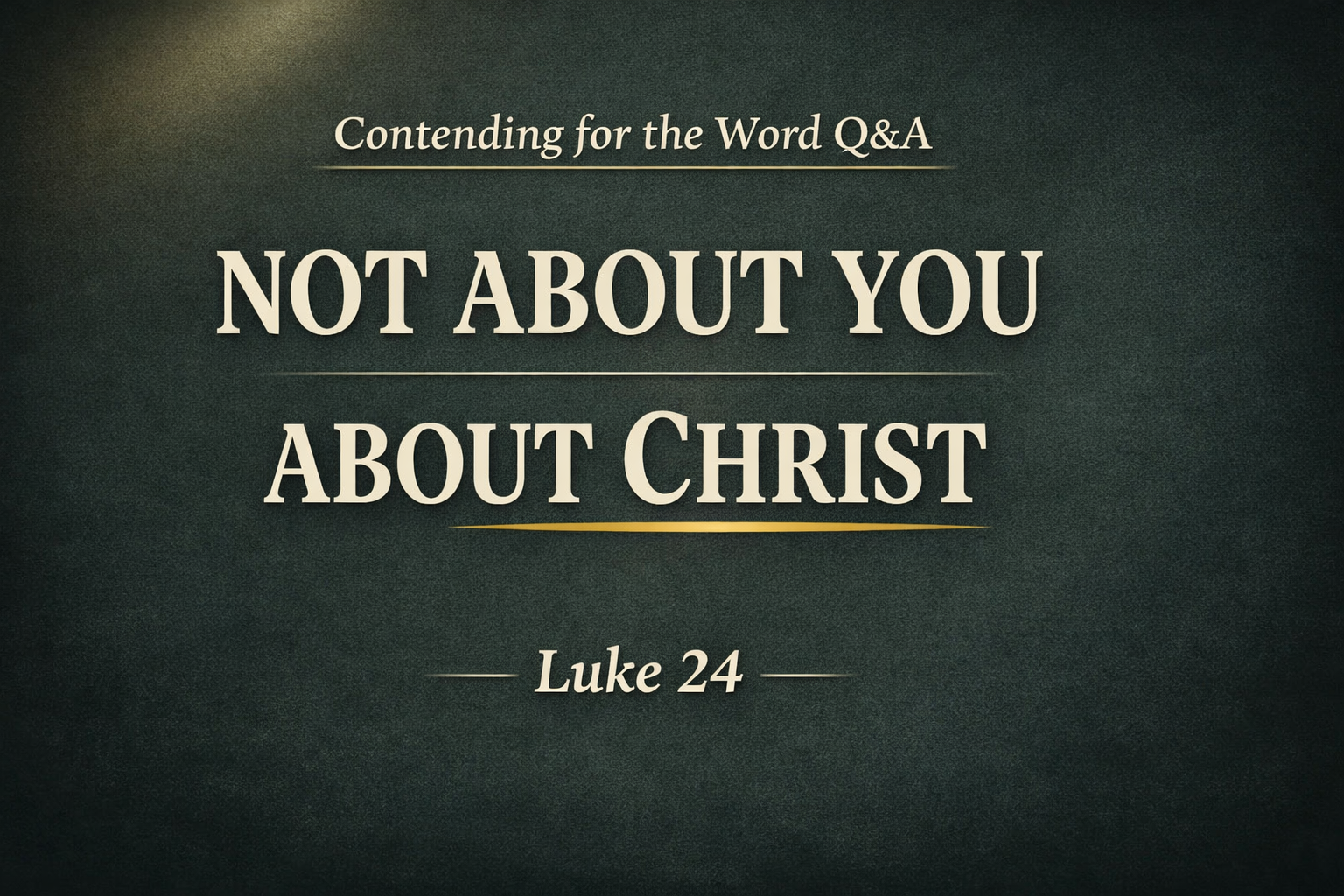
The Bible Is About Christ, Not You
Author: Dave Jenkins
Series: Contending for the Word Q&A
Date: April 17, 2026
Is the Bible primarily about us or about Christ?
That question shapes how we read Scripture, understand the gospel, and grow in our faith. In this episode of Contending for the Word Q&A, Dave Jenkins explains why the Bible is ultimately about God’s glory revealed in Jesus Christ, not the elevation of ourselves. When we read Scripture with Christ at the center, we understand the Bible more faithfully and find our true place in God’s story.
Listen to the Episode
Watch the Video
Question
Is the Bible really about me, or about Christ?
Key Scriptures
- Luke 24:25–27
- Romans 11:36
- Colossians 2:6–7
Anchor Text
Luke 24:27: “And beginning with Moses and all the Prophets, he interpreted to them in all the Scriptures the things concerning himself.”
Episode Summary
Many Christians approach the Bible asking first, “What does this say about me?” But Scripture invites us to begin somewhere better and truer: with God and His work in Christ. In this episode, Dave Jenkins shows that the Bible is not primarily about us. It is about God’s glory revealed in Jesus Christ. And when we read Scripture that way, we actually find lasting hope, clarity, and transformation.
Big Idea
The Bible is not primarily about us. It is about God’s glory revealed in Christ.
Why This Question Matters
How we answer this question determines whether Scripture forms us around the gospel or subtly reshapes the gospel around ourselves. In a self-focused age, it is easy to treat the Bible as if it exists mainly to validate our experiences, improve our lives, or provide personal inspiration. But Scripture gives us something far better. It reveals God, His purposes, His saving work, and His glory in Christ.
1. Scripture Reveals God Before It Addresses Us
The Bible begins with God, not with humanity. From creation to redemption, Scripture reveals who God is, what He has done, and how He saves. Faithful reading begins with theology before application, God before self. When we reverse that order, we distort the meaning of the text.
Seeing God clearly in Scripture is what rightly shapes how we see ourselves. The Bible does address us, confront us, comfort us, and instruct us, but it does so only after revealing the character and work of God.
2. When We Center Ourselves, Scripture Becomes Moralistic
When the Bible is treated as mainly about us, it often becomes a collection of moral lessons or self-improvement strategies. Biblical figures become examples to imitate rather than sinners in need of grace. God’s commands become burdens rather than responses to redemption. Christ is reduced to an example instead of being seen as the Savior.
Reading Scripture this way drains the gospel of its power and replaces grace with pressure. Instead of seeing God’s redemptive work, we reduce the Bible to a list of lessons for better living. That is not faithful Christian reading. It is moralism.
3. Christ-Centered Reading Places Us in the Right Relationship to Scripture
When Christ is at the center, we do find ourselves in the story, but in the right place. We are not the heroes. We are not the saviors. We are the redeemed. Scripture shows us our need, Christ’s sufficiency, and God’s faithfulness.
Only then does application make sense. Obedience flows from gratitude, not from self-effort. The Christian life is not built on self-exaltation but on union with Christ, dependence on His grace, and confidence in His finished work.
4. Scripture Shapes Our Identity in Christ
Colossians reminds us that our lives are rooted in Christ. Scripture is meant to deepen that rootedness, not replace it with self-focus. When we read the Bible in a Christ-centered way, we grow in humility, assurance, and obedience. Our identity is formed not by what we achieve, but by what Christ has already accomplished.
This is why Christ-centered reading leads to lasting transformation rather than temporary motivation. It anchors us in truth, steadies us in grace, and teaches us to live in light of the gospel.
How to Read Scripture More Faithfully
As you read Scripture, start with better questions:
- What does this passage reveal about God?
- How does this text point to Christ?
- What does this show me about my need for the grace of God?
When Christ is central, Scripture becomes clearer, richer, and more life-giving. The Bible is ultimately about God’s glory revealed in Jesus Christ. And here is the good news: when Scripture is not about us, it is far better for us.
Takeaways
- The Bible begins with God, not with us.
- Self-centered reading often turns Scripture into moralism.
- Christ-centered reading restores the gospel to its proper place.
- We find our true identity and hope only when we read Scripture in light of Christ.
Conclusion
The Bible is about Christ, not you. That is not bad news. It is the best possible news. Because when Scripture reveals God’s glory in Christ, it also shows us where true hope, true life, and true transformation are found. Read God’s Word with Christ at the center, and rest in the utter sufficiency of His grace revealed in His Word.
Call to Action
If this episode encouraged you, share it with someone who wants to grow in reading Scripture more faithfully. For more from Contending for the Word Q&A please visit our page at Servants of Grace or our YouTube playlist.