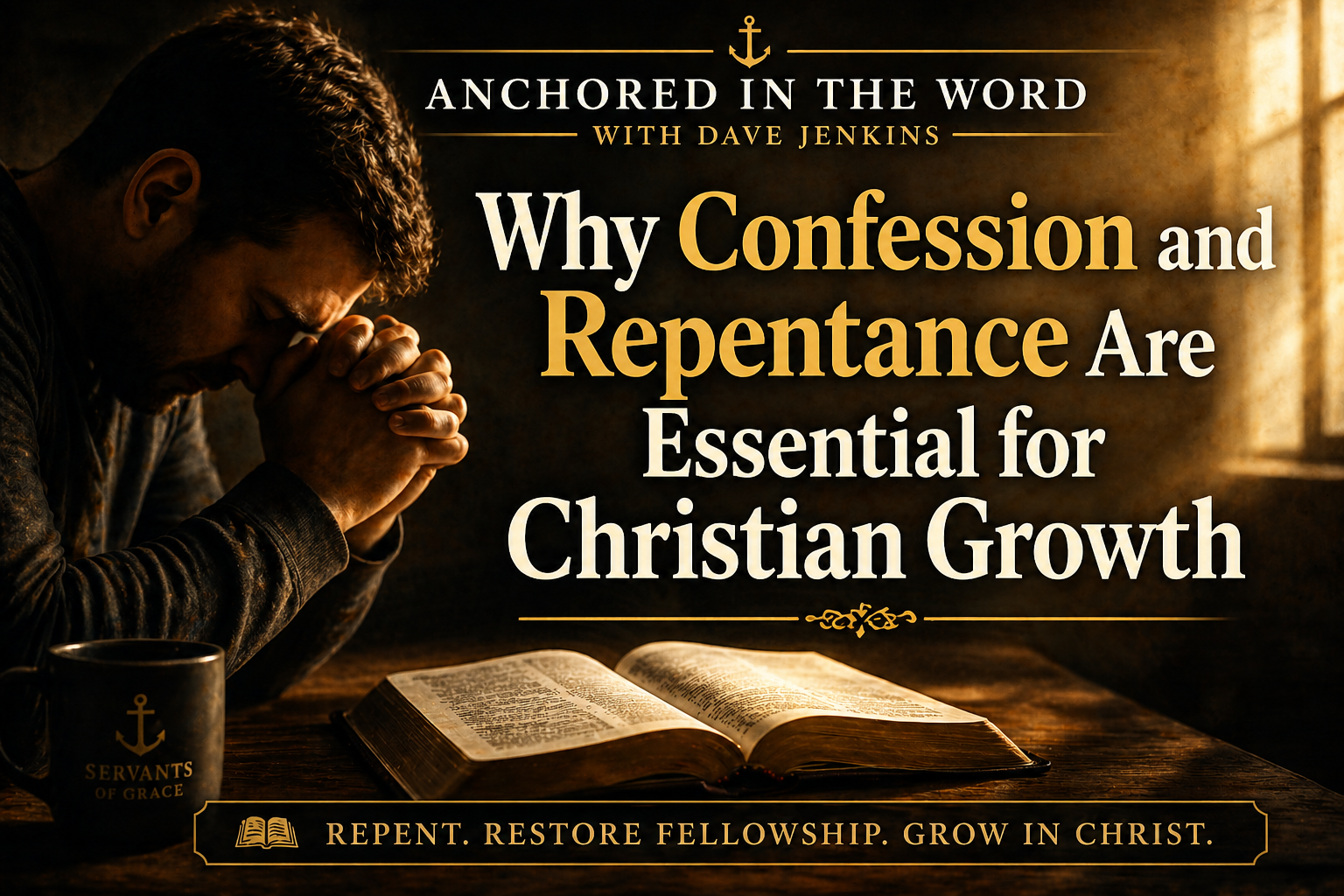
Why Confession and Repentance Are Essential for Christian Growth
Author: Dave Jenkins
Show: Anchored in the Word with Dave Jenkins
Date: April 30, 2026
Show Summary
Why are confession and repentance essential for Christian growth? In this episode of Anchored in the Word, Dave Jenkins explains why repentance is not merely the beginning of the Christian life, but its ongoing rhythm. Drawing from passages such as 1 John 1:9, Mark 1:15, Psalm 32, Romans 8:13, and James 5:16, Dave shows how confession restores fellowship with God, repentance produces spiritual fruit, and the grace of God leads believers into deeper holiness, joy, and assurance in Christ.
Audio Player
Video Player
Key Scriptures
- 1 John 1:9
- Mark 1:15
- Revelation 2–3
- Matthew 3:8
- Psalm 32
- Romans 8:13
- Ezekiel 36:26–27
- Hebrews 12:6
- James 5:16
- Acts 11:18
- Romans 2:4
Episode Highlights
- Repentance is the ongoing rhythm of the Christian life
- Confession restores fellowship with God
- Repentance is more than simply saying “I’m sorry”
- Unchecked sin hardens the heart and hinders communion with God
- Repentance produces humility, joy, and spiritual clarity
- The Holy Spirit empowers believers to put sin to death
- Repentance and assurance go together
- Confession within Christian community helps strengthen believers
Full Article
Every Christian desires to grow. Every believer wants to mature in Christ, to walk more faithfully with the Lord, and to know deeper fellowship with Him. But the Word of God is crystal clear: there is no spiritual growth without repentance, and there is no close fellowship with God without confession of sin.
Repentance is not something we do only once when we first come to Christ. It is the ongoing rhythm of the Christian life. Martin Luther famously said that the entire Christian life is one of repentance, and John Calvin likewise emphasized that repentance is not merely the start of the Christian life, but the Christian life itself. Scripture confirms this truth. In 1 John 1:9, confessing sin is taught as a continual practice. In Mark 1:15, Jesus begins His ministry by calling people to repent and believe the gospel. In Revelation 2 and 3, the risen Christ calls entire churches to repentance. Repentance is not optional. It is essential.
Confession restores fellowship with God. When a Christian sins, his union with Christ is not broken, but his fellowship with God is hindered. Our security in Christ remains sure because it rests on the finished work of Christ, but our communion with the Lord can be interrupted by unconfessed sin. This is why confession matters so deeply. First John 1:9 tells us that God is faithful and just to forgive us our sins and to cleanse us from all unrighteousness. Confession is not informing God of something He does not know. It is agreeing with God about what He already knows and sees.
Biblical repentance is more than saying, “I’m sorry.” Repentance involves acknowledging sin honestly, without excuses or blame-shifting. It means turning away from sin with a deliberate break from it, and turning toward Christ in faith. Repentance is not merely stopping sinful behavior; it is returning to the Lord. Matthew 3:8 makes clear that repentance bears fruit. It produces change—not perfection, but real direction toward God.
Christians must practice continual repentance because sin blinds and hardens the heart. We do not always see our sin clearly until Scripture, the Holy Spirit, or faithful believers bring it into the light. Left unchecked, sin becomes increasingly comfortable. We begin to treat it lightly, even respectably, instead of seeing it as the rebellion against God that it truly is. Repentance breaks that pattern. It humbles us before the Lord and reminds us daily of our need for the grace of God in Christ.
Repentance also leads to joy. Psalm 32 shows that unconfessed sin crushes the soul, but forgiveness restores gladness and peace. Repentance is not the enemy of joy; it is the pathway to it. The believer who walks in repentance is not walking in despair but in the freedom of grace.
This repentance is empowered by the Holy Spirit. Biblical repentance is not self-improvement or moral reform. Ezekiel 36:26–27 tells us that God gives a new heart and causes His people to walk in His statutes. Romans 8:13 teaches that by the Spirit believers put sin to death. We repent because God is at work in us, giving us grace to turn from sin and walk in obedience.
Repentance and assurance also belong together. Many Christians struggle with assurance not because they are outside of Christ, but because they are not walking in the light of repentance. Hebrews teaches that the Lord disciplines those whom He loves. His discipline is not cruel or distant. It is fatherly, loving, and purposeful. God disciplines His children because He cares for them and desires restored communion with them. Repentance brings renewed clarity, peace, and confidence in Christ.
Confession is also important within Christian community. While private confession before God is essential, James 5:16 teaches that believers are also to confess their sins to one another. This is not about public humiliation, but about accountability, prayer, help, and restoration. God often uses mature believers and faithful pastors to help us see our sin clearly and walk in repentance more fully.
At the heart of all of this is the gospel. Repentance is not punishment. It is grace. Acts 11:18 calls repentance a gift. Romans 2:4 says that God’s kindness leads us to repentance. The Lord does not call His children to repentance to crush them, but to restore them. In Christ, repentance is not a burden to dread but a gift to receive. It is God’s gracious invitation away from sin and into renewed fellowship, peace, holiness, and joy.
Christians do not outgrow repentance. They grow through it. The more we walk honestly before God, confessing our sin and turning afresh to Christ, the more we grow in humility, assurance, and joy. Repentance is not a sign that grace has failed. It is one of the clearest evidences that grace is at work.
Takeaways / Reflection Questions
- Do you view repentance as a burden, or as a gracious gift from God?
- Are there sins you have been minimizing instead of confessing honestly before the Lord?
- How does 1 John 1:9 encourage you to walk in daily confession?
- In what ways does repentance restore joy and fellowship with God?
- Who are the mature believers or pastors in your life who can help strengthen you in repentance and accountability?
Related Resources
Call to Action
Thank you for listening to this episode of Anchored in the Word with Dave Jenkins. We pray this episode helps you remain anchored in the truth of God’s Word and anchored in Christ. Please subscribe, leave a review, and share this episode with others.