⏱️ Estimated Reading Time: 5 min read
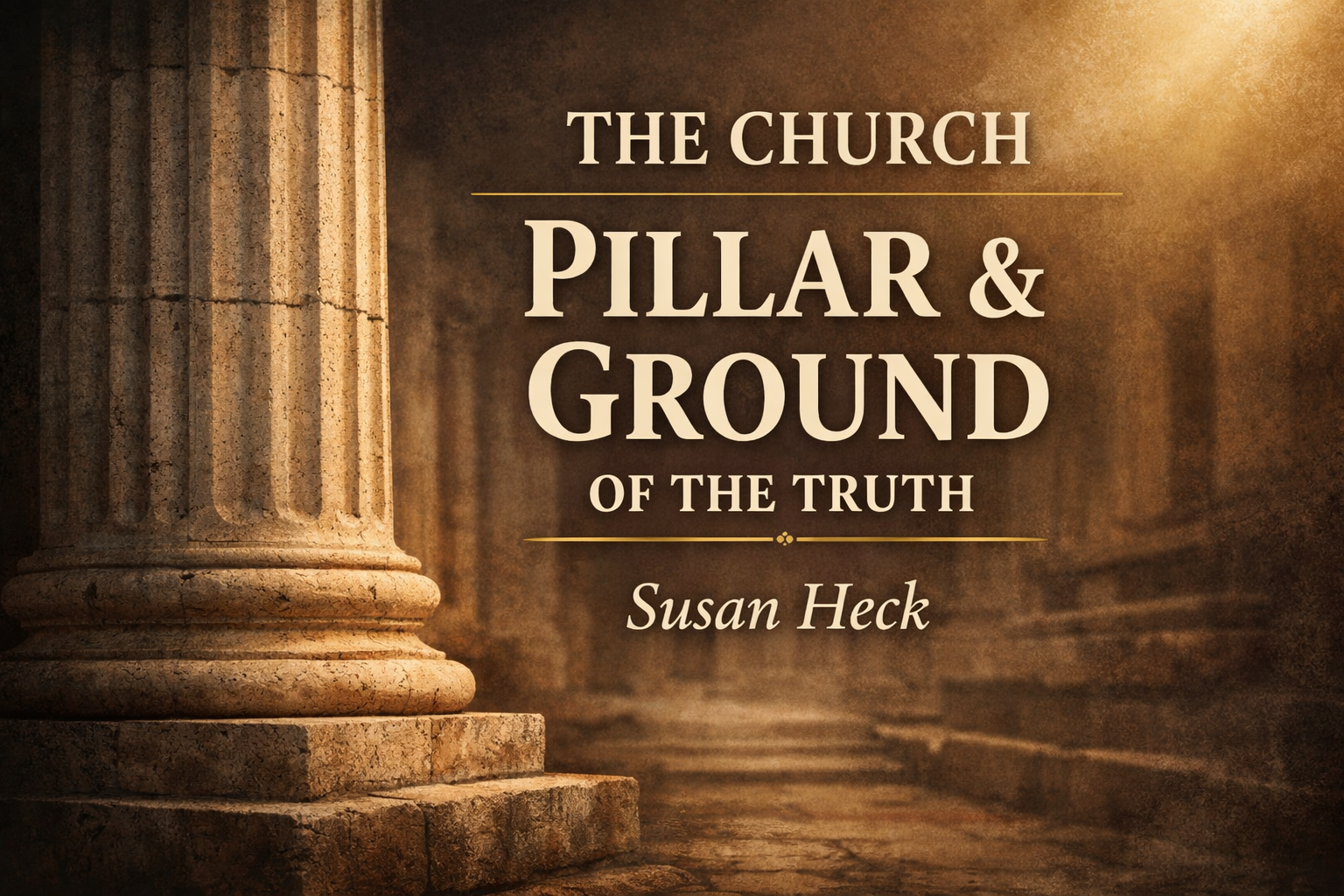
The Church as the Pillar and Ground of the Truth
By Susan Heck-Daniel
In recent years, many believers have watched with shock and sorrow as pastors have fallen—some morally, others doctrinally. These moments sober the church and force us to ask an important question: What has happened to the shepherds of the Lord’s flock? Have some forgotten the sacred calling entrusted to them—to faithfully shepherd Christ’s sheep?
Susan Heck-Daniel’s With the Master Shepherding the Sheep is a timely and necessary work for believers who desire a deeper understanding of the church and how God calls both shepherds and sheep to live within it.
Drawing from Paul’s instruction to Timothy, Heck reminds readers that Scripture clearly defines how believers are to conduct themselves within God’s household. She writes:
“Paul says he’s writing this letter to let Timothy, the church at Ephesus, and all of God’s children know how to conduct themselves in the house of God. So, what does conduct yourself in the house of God mean? It means that we should know how we should behave in the house of God.” (p. 115)
The word conduct refers to one’s manner of life—to how believers live and behave. Because the “house of God” refers to all believers collectively, obedience to God’s Word is not optional or reserved for leaders alone. Every member of Christ’s church is called to faithful submission to Scripture.
The Church: Pillar of the Truth
Proper conduct matters because of what the church truly is. Paul describes the church as “the pillar and ground of the truth” (1 Timothy 3:15). Heck explains:
“A pillar is a large column that holds something up, usually a roof or a building. The church at Ephesus would understand this terminology because the temple of Diana was held up by 127 pillars… In the case of Diana’s temple these pillars supported idolatry. But the House of the living God is supported by the pillar of the truth; that is, it upholds the truth. It supports the Word of God, which is the truth. Let me pause here and say that if you are not in a church that upholds the Word of God, then you need to prayerfully consider removing yourself from that church and getting into one that upholds God’s Word. Anything else is nothing more than sinking sand. The church today is a far cry from what Christ intended it to be.” (p. 117)
The contrast is striking. Pagan temples upheld false worship, but Christ’s church exists to uphold divine truth. The church does not create truth, reshape truth, or adapt truth to culture—it supports and proclaims the Word of God.
Where Scripture is neglected, minimized, or replaced, the church loses its very foundation. For this reason, believers must prayerfully evaluate whether their church faithfully upholds God’s Word. A church built on anything less ultimately rests on sinking sand.
The Church: Grounded in the Truth
Paul goes further, describing the church not only as a pillar but also as the ground of the truth. Heck writes:
“Paul goes on to say the church is not only the pillar but also the ground of the truth. The ground of the truth would indicate the truth is our foundation; it is fixed and cannot move. It is what Peter says in 1 Peter 2:6–7 about Christ being the chief cornerstone. It is interesting that both Peter and Paul referred to the body of Christ as a building where Christ is the foundation or chief cornerstone. Dear one, Christ is our solid rock and any other foundation is only sinking sand that will collapse and crumble.” (p. 117)
Both Peter and Paul employ building imagery to describe Christ’s church. Jesus Christ Himself is the cornerstone, and the truth revealed in Scripture forms the immovable foundation upon which believers stand.
When shepherds or congregations drift from biblical truth, compromise inevitably follows. Moral failure and doctrinal confusion often reveal a deeper issue: the abandonment of truth as the church’s foundation.
The Church of the Living God
Paul also reminds Timothy that believers belong not merely to a religious institution but to the church of the living God. Heck explains:
“Paul also reminds us that this is not the Church of just any god, but it is the Church of the living God. The living God is the stark contrast to the temple of Artemis, or Diana, which was so prominent in Ephesus. There was nothing living about that for sure! It was a dead, dumb idol! But we serve a living God, and in fact, we who are God’s children are referred to in 1 Peter 2:4–5 as living stones. And Hebrews 10:31 tells us that it’s a fearful thing to fall into the hands of the living God. Some give no thought to the fact He is living and that one day we will stand before Him but, my friend, this is the truth!” (p. 116)
This truth sharply contrasts with lifeless idols. Scripture reminds us that one day every believer will stand before the living God. That reality should shape how pastors shepherd, how churches function, and how believers live daily before His face.
Returning to the Great Shepherd
Perhaps the struggles facing many churches today stem from forgetting these foundational truths. The church belongs to Christ. It is built upon His truth. And both shepherds and sheep are accountable to Him.
If the church is to remain faithful, it must return again and again to the authority of God’s Word and the leadership of the Great Shepherd. Only when truth is upheld, Christ is honored, and Scripture governs the life of the church will believers flourish as God intended.
For more from Susan please visit here or at our YouTube.
Source & Permission:
Excerpts from Susan J. Heck, With the Master Shepherding the Sheep: A Ladies’ Bible Study of 1 Timothy, 1st edition (Three Sixteen Publishing, 2021). Used with permission. Find all of Susan’s published resources at 316publishing.com.
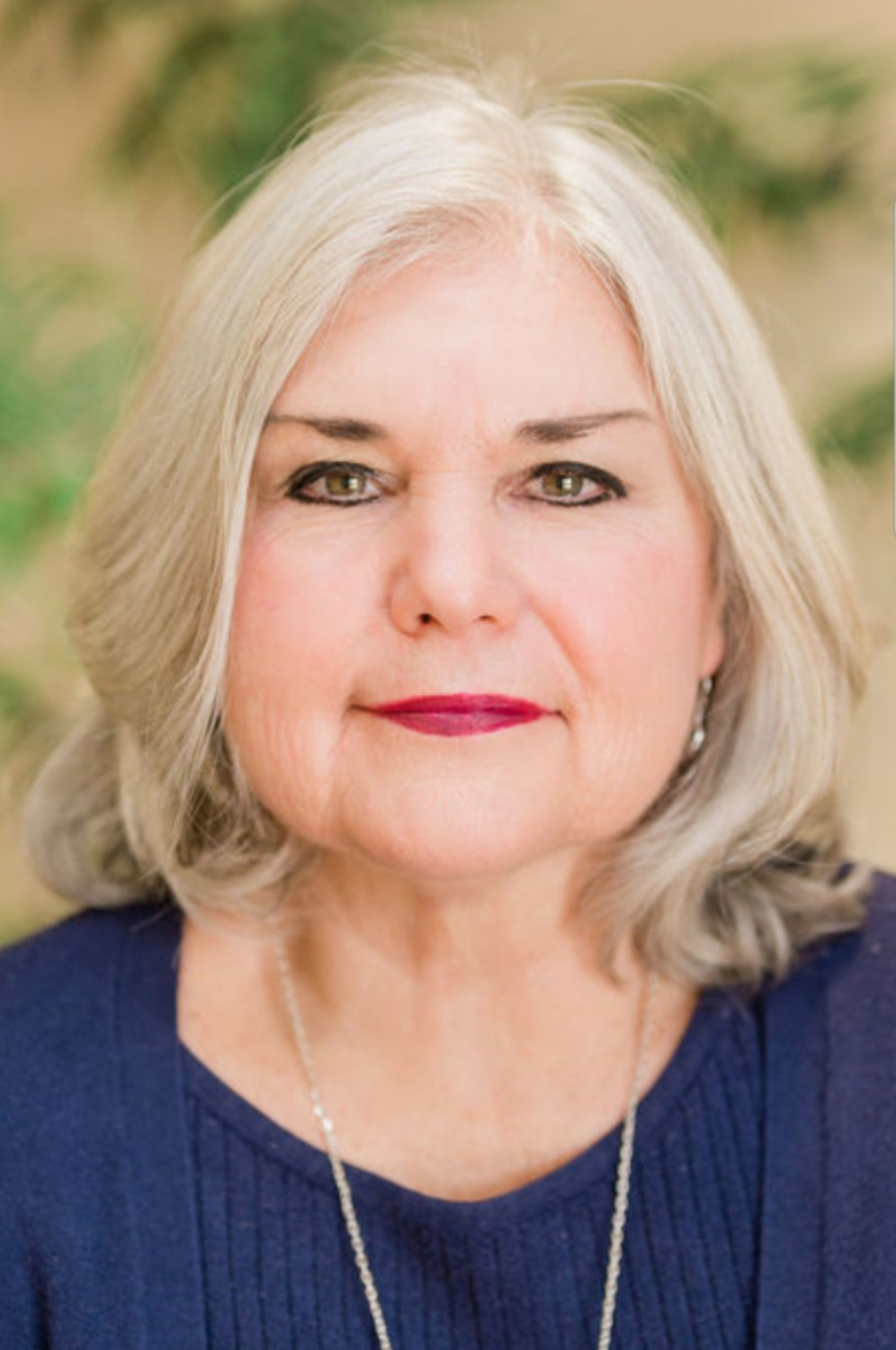
Susan J. Heck Daniel has been involved in women’s ministries for over 40 years teaching Bible studies, counseling, and speaking at conferences internationally. Susan is a seasoned pastor’s wife, having been married to her late husband Doug for 46 years, and is currently married to Dr. Curt Daniel. You can find her speaking schedule and learn more about her ministry at withthemaster.org.