⏱️ Estimated Reading Time: 18 min read
Old Truths for a New Age: Why the Church Still Needs Confessions
Dave Jenkins
The modern church lives in an age of theological amnesia. Many Christians know fragments of doctrine, pieces of Scripture, favorite verses, and familiar phrases, but they often lack a coherent framework for understanding the faith once for all delivered to the saints. They may affirm the authority of the Bible, love the Lord Jesus, and desire to grow in godliness, yet still struggle to explain what the church believes, why it matters, and how one doctrine relates to another.
This is not a small problem. A church that forgets its doctrine will eventually lose its stability. A Christian who lacks theological clarity becomes vulnerable to confusion, novelty, and drift. A family without doctrinal formation may pass on Christian language without passing on Christian conviction. A ministry without theological boundaries may appear vibrant for a season while quietly moving away from the truth.
In such an age, the church does not need something new. She needs to recover old truths.
Historic confessions, creeds, and catechisms are not replacements for Scripture. They are not equal to Scripture. They are not inspired, infallible, or final. Scripture alone is the Word of God. Scripture alone is the supreme authority for faith and practice. Yet faithful confessions serve the church by summarizing what Scripture teaches, clarifying doctrinal boundaries, preserving the gospel, and instructing believers in the whole counsel of God.
The Crisis of Doctrinal Amnesia
Every generation faces the temptation to think it stands at the beginning of Christian history. Many believers assume they can approach the Bible with no help from the past, no awareness of theological controversy, and no need for the wisdom of the church across the centuries. The result is not usually biblical faithfulness. More often, it is confusion disguised as simplicity.
Of course, every Christian should read the Bible directly. Every believer should search the Scriptures, test what is taught, and submit to the Word of God. The problem is not Bible reading. The problem is isolated Bible reading that ignores the fact that Christians have been confessing, defending, and teaching biblical truth for two thousand years.
Doctrinal amnesia makes Christians vulnerable in at least three ways.
First, it makes believers vulnerable to old errors in new packaging. Many modern false teachings are not new. They are ancient errors with updated language, better branding, and wider digital distribution. Errors concerning the deity of Christ, the Trinity, sin, salvation, Scripture, worship, and the Christian life have appeared repeatedly throughout church history. A church that does not know its doctrinal history is poorly equipped to recognize them.
Second, doctrinal amnesia weakens discipleship. If Christians cannot articulate the basic contours of the faith, they will struggle to teach it to others. Parents will struggle to disciple children. Pastors will struggle to catechize congregations. Churches will struggle to train new believers. The faith becomes reduced to impressions, experiences, and isolated teachings rather than a coherent body of truth.
Third, doctrinal amnesia encourages theological individualism. In a confused age, many people believe sincerity is enough. They assume that as long as someone uses Christian language, quotes Scripture, and speaks warmly about Jesus, doctrine must be sound. But Scripture repeatedly warns that false teaching often comes with persuasive words, spiritual language, and a form of godliness. Christians need more than personal impressions. They need doctrinal clarity.
This is where confessions help the church.
What Are Confessions, Creeds, and Catechisms?
A creed is a concise statement of Christian belief. The word “creed” comes from the Latin credo, meaning “I believe.” Creeds summarize foundational truths Christians confess together. The Apostles’ Creed and Nicene Creed are among the most well-known examples.
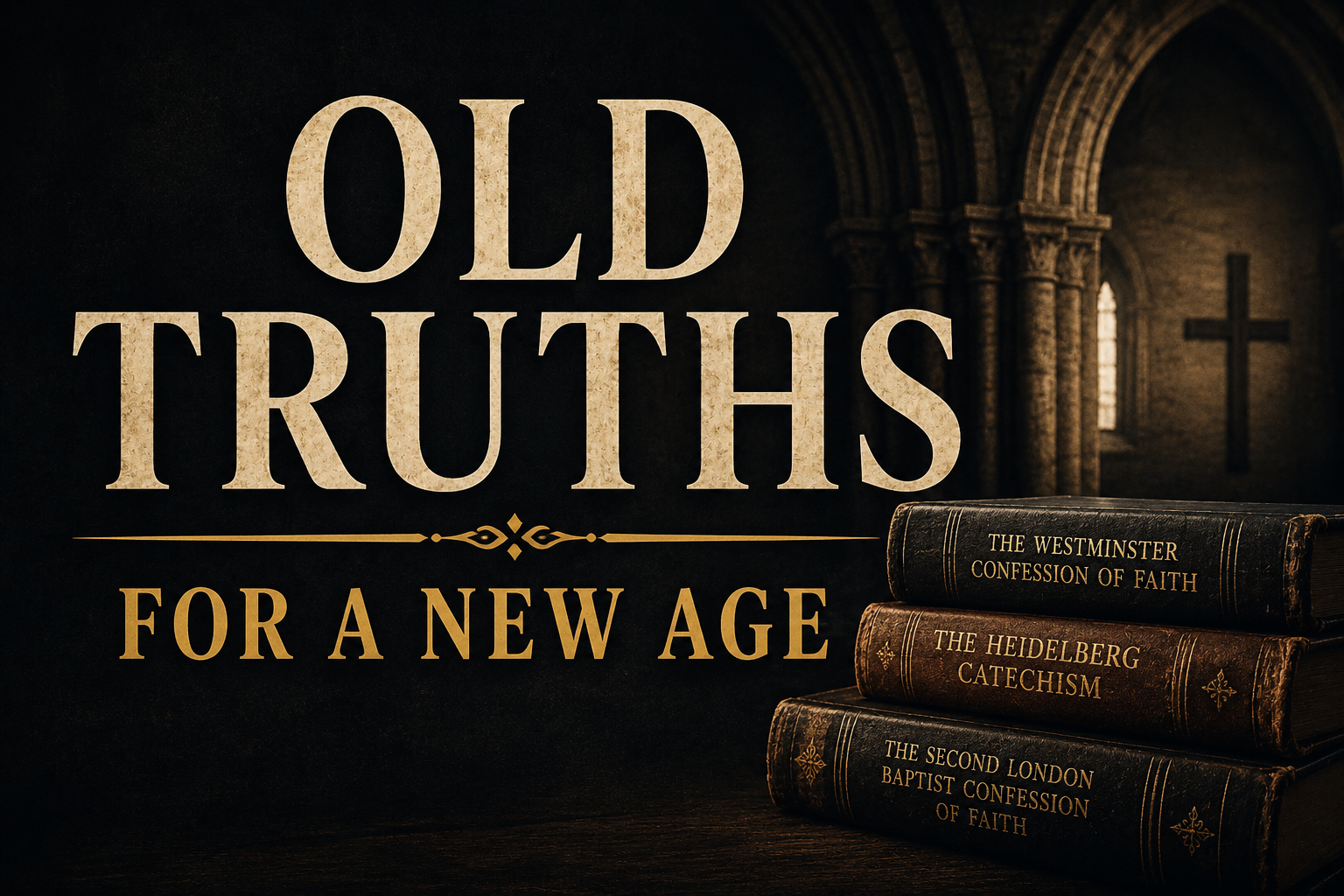
A confession is usually broader and more detailed. Confessions define doctrinal convictions on Scripture, God, Christ, salvation, the church, worship, the sacraments or ordinances, Christian living, and other major areas of theology. Examples include the Westminster Confession of Faith and the Second London Baptist Confession of Faith of 1689.
A catechism teaches doctrine through questions and answers. Catechisms are especially useful for discipleship because they help believers learn truth in an orderly and memorable way. The Heidelberg Catechism, Westminster Shorter Catechism, and Baptist Catechism are examples of this approach.
These documents differ in length, purpose, and tradition, but they share a common goal: to summarize biblical truth clearly so that God’s people may know what they believe.
A confession does not create truth. It receives, organizes, and declares truth from Scripture. A catechism does not replace Bible study. It trains believers to understand the Bible’s teaching more clearly. A creed does not stand above God’s Word. It bows beneath God’s Word and says, “This is what we believe Scripture teaches.”
The Biblical Case for Confessional Christianity
Some Christians object to confessions by saying, “No creed but the Bible.” The instinct behind that statement can be good. We should never place man-made documents above Scripture. We should never bind the conscience where Scripture does not bind it. We should never treat a confession as though it were inspired.
But “no creed but the Bible” often fails to recognize that every church and every Christian has a creed, whether written or unwritten. The moment someone says, “The Bible teaches this,” they are making a doctrinal statement. The question is not whether we will have doctrine. The question is whether our doctrine will be clear, faithful, tested, and accountable to Scripture.
The Bible itself contains summaries of truth. Israel confessed, “Hear, O Israel: The LORD our God, the LORD is one” (Deuteronomy 6:4). Paul summarizes the gospel he received and delivered in 1 Corinthians 15:3–4, declaring that Christ died for our sins according to the Scriptures, was buried, and was raised on the third day according to the Scriptures. In Philippians 2:6–11, we find a rich confession of Christ’s humiliation and exaltation. In 1 Timothy 3:16, Paul gives a concise summary of the mystery of godliness.
The New Testament also repeatedly calls Christians to guard, teach, and pass down sound doctrine. Paul exhorts Timothy to “follow the pattern of the sound words” he heard from him and to guard the good deposit entrusted to him by the Holy Spirit (2 Timothy 1:13–14). Jude calls believers to contend for the faith once for all delivered to the saints (Jude 3). Titus is told that elders must hold firm to the trustworthy word as taught, so that they may give instruction in sound doctrine and rebuke those who contradict it (Titus 1:9).
These passages show that Christianity is not merely a collection of spiritual experiences. It is a revealed faith with doctrinal content. The church is responsible to preserve, teach, defend, and transmit that truth.
Confessions help the church fulfill that responsibility.
Why the Church Developed Confessions
The church did not develop creeds and confessions because Christians were bored theologians looking for controversy. They developed them because truth was being challenged.
The early church faced serious errors concerning the nature of God and the person of Christ. Was Jesus truly God? Was He truly man? Was He a created being? How should Christians speak about the Trinity? These were not abstract academic questions. They struck at the heart of the gospel. If Christ is not truly God, He cannot save. If He is not truly man, He cannot represent us. If the Trinity is denied, the God of Scripture is denied.
The Nicene Creed arose in response to controversy over the deity of Christ. The Definition of Chalcedon clarified the church’s confession that Christ is one person in two natures, fully God and fully man. These statements did not invent doctrine. They defended what Scripture teaches against error.
Later, during the Reformation, confessions helped articulate the biblical gospel in contrast to serious doctrinal corruption. Questions about justification, grace, faith, Scripture, worship, the church, and the sacraments were not minor matters. They concerned the heart of salvation and the authority of God’s Word.
Confessions emerged because the church needed clarity.
The same is true today. When confusion increases, clarity becomes more urgent, not less. When theological language is manipulated, definitions matter. When Christians are told that doctrine divides, the church must remember that truth unites God’s people around Christ.
Confessions Preserve Doctrinal Clarity
One of the great strengths of confessions is that they help the church speak clearly.
Clarity matters because error often thrives in ambiguity. False teaching does not always begin with bold denial. It often begins with blurred categories, selective emphasis, and vague language. A teacher may affirm biblical words while pouring unbiblical meaning into them. Someone may speak of Jesus, grace, faith, love, justice, or the kingdom while redefining those terms in ways foreign to Scripture.
Confessions force clarity. They require churches to say what they mean.
- What do we believe about Scripture?
- What do we believe about God?
- What do we believe about Christ?
- What do we believe about sin?
- What do we believe about salvation?
- What do we believe about the church?
- What do we believe about worship?
- What do we believe about the Christian life?
These questions cannot be answered faithfully with slogans. They require doctrinal substance.
A church without a clear confession may still have beliefs, but those beliefs may remain assumed, inconsistent, or easily altered. Over time, what is assumed in one generation is often abandoned in the next. Confessions help prevent this by giving the church a public doctrinal standard.
This does not mean every confession is equally faithful or equally useful. All confessions must be tested by Scripture. But a faithful confession gives a church doctrinal stability. It tells members, leaders, families, and future generations where the church stands.
In a noisy world, that kind of clarity is not a burden. It is a gift.
Confessions Guard Against Drift
Doctrinal drift rarely happens all at once. Churches usually do not wake up one morning and abandon the faith. Drift tends to be gradual. A doctrine is neglected. A difficult truth is softened. A biblical word is redefined. A theological boundary is treated as unnecessary. A cultural concern becomes more central than a biblical one. Over time, the center shifts.
Confessions help the church recognize when that shift is happening.
A confession functions like a theological map. It does not replace the terrain of Scripture, but it helps the church see the contours of biblical truth. When someone begins teaching contrary to Scripture, a clear confession helps the church identify the problem. When leaders are tempted to downplay doctrine for the sake of growth, unity, or cultural respectability, a confession reminds them what has been entrusted to their care.
Paul’s command to elders in Titus 1:9 is especially important here. Elders must hold firm to the trustworthy word as taught, so that they may give instruction in sound doctrine and rebuke those who contradict it. This means pastoral ministry includes both positive instruction and protective correction. Confessions assist in both tasks.
They help pastors teach truth systematically. They help churches evaluate teaching carefully. They help members understand what their church believes. They help protect congregations from the subtle erosion of biblical conviction.
Without doctrinal boundaries, churches often mistake openness for faithfulness. But biblical love does not rejoice in confusion. It rejoices with the truth.
Confessions Serve Discipleship
Confessions and catechisms are not only for pastors, elders, theologians, or seminary students. They are for the whole church.
One reason many Christians struggle with doctrine is that they have never been taught the faith in an ordered way. They may receive sermons, podcasts, books, and devotionals, but they lack a doctrinal framework. A catechism helps remedy this by teaching truth through memorable questions and answers.
- What is our only hope in life and death?
- Who is God?
- What is sin?
- Who is Christ?
- What is justification?
- What is sanctification?
- What is the church?
- What is prayer?
These kinds of questions matter because discipleship requires more than inspiration. It requires instruction. Jesus commanded the church to make disciples, baptizing them and teaching them to observe all that He commanded (Matthew 28:18–20). Teaching is central to discipleship.
Catechisms help churches and families teach doctrine patiently over time. They give parents language for instructing children. They give new believers categories for understanding Scripture. They help mature believers review foundational truths. They help congregations develop shared theological vocabulary.
In this way, confessions and catechisms strengthen ordinary Christian living. They teach believers how to think biblically about suffering, worship, assurance, obedience, repentance, prayer, and hope. They show that doctrine is not separate from life. Doctrine is truth for life.
Confessions Strengthen Worship
What the church believes shapes how the church worships.
If a church has a shallow doctrine of God, worship will eventually become shallow. If a church has a weak doctrine of sin, confession and repentance will be minimized. If a church has a confused doctrine of Christ, the gospel will become vague. If a church has a low view of Scripture, worship will be driven more by preference than by divine revelation.
Confessions help the church worship with reverence and truth by keeping biblical doctrine before God’s people. They remind the church that worship is not built on mood, novelty, or entertainment. Worship is a response to the living God as He has revealed Himself in His Word.
The church’s worship should be Trinitarian, Christ-centered, Word-shaped, reverent, joyful, and ordered by biblical truth. Confessions help safeguard those priorities. They keep the church from treating worship as merely a matter of taste. They remind believers that the God we worship has spoken, and He must be worshiped according to His Word.
This does not mean every church that uses a confession will worship faithfully, nor does it mean a confession automatically produces reverence. But confessional clarity helps establish the theological foundation upon which faithful worship is built.
Confessions Connect Us to the Historic Church
One of the dangers of modern evangelicalism is the assumption that the present moment is wiser than the past. But the church today is not the first generation to read the Bible, face error, defend the gospel, or disciple believers. We belong to a much larger family.
Historic confessions remind us that we are not alone. We stand with believers who came before us, many of whom suffered greatly to preserve the truth. The creeds and confessions of the church are not perfect, but they are evidence of God’s faithfulness across generations.
This historical connection is humbling. It reminds us that we should be slow to assume we are the first to understand a doctrine rightly. It also encourages us. The church has faced confusion before. The church has faced heresy before. The church has faced cultural pressure before. Christ has preserved His people through His Word again and again.
Confessions help modern Christians learn from the past without idolizing it. They allow us to receive wisdom while continuing to test all things by Scripture. They teach us that doctrinal clarity is not a modern invention but a historic necessity.
In a culture obsessed with the new, confessions remind us that old truth is not stale truth. Biblical truth does not expire.
Answering Common Objections
Some believers worry that confessions undermine the authority of Scripture. That concern should be taken seriously. Anything that competes with Scripture must be rejected. But faithful confessions do not compete with Scripture. They summarize Scripture. Their authority is derivative and subordinate. They are useful only insofar as they faithfully reflect the teaching of God’s Word.
Others worry that confessions create division. It is true that doctrine divides truth from error. But that kind of division is not always sinful. The New Testament repeatedly calls the church to distinguish sound doctrine from false teaching. Unity that avoids truth is not biblical unity. True unity is unity in the truth.
Still others believe confessions are too restrictive. They fear that doctrinal standards will limit freedom or discourage honest questions. But clear boundaries do not hinder discipleship; they protect it. A church with no doctrinal boundaries is not more loving. It is less able to shepherd people faithfully.
Some object that confessions are too complicated for ordinary believers. But the answer to theological ignorance is not less doctrine. It is better teaching. Catechisms especially show that doctrine can be taught clearly, memorably, and pastorally. Children can learn doctrine. New believers can learn doctrine. Ordinary church members can learn doctrine because doctrine belongs to the whole church.
The problem is not that confessions are too old. The problem is that many churches have forgotten how useful they are.
Confessions and the Sufficiency of Scripture
A proper use of confessions actually strengthens confidence in the sufficiency of Scripture. Confessions do not add new revelation. They help the church organize and confess what Scripture already teaches.
The sufficiency of Scripture means that God’s Word contains all that is necessary for salvation, faith, and obedience. Confessions serve this doctrine by directing the church back to Scripture’s teaching. They help believers see how biblical truths fit together. They help churches avoid being driven by trends, personalities, or cultural pressure.
A faithful confession says, in effect, “We believe these things because Scripture teaches them.” That is why confessions should be filled with biblical references, biblical categories, and biblical priorities. When rightly used, they do not move attention away from the Bible. They help believers read the Bible with greater care and theological understanding.
The church must always reform its teaching according to Scripture. Confessions are not above correction. But without doctrinal summaries, churches often become vulnerable to confusion masquerading as biblical simplicity.
The goal is not confessionalism for its own sake. The goal is faithfulness to the Word of God.
Recovering Confessional Christianity Today
Recovering confessional Christianity does not require every church to become cold, rigid, or overly academic. That caricature misses the point. Confessional Christianity, at its best, is deeply pastoral. It gives God’s people truth to stand on, language to confess, doctrine to teach, and boundaries to protect the flock.
Pastors can use confessions to teach doctrine clearly and systematically. Churches can use confessions in membership, leadership training, discipleship, and worship. Families can use catechisms in the home to instruct children in the faith. Individual believers can use confessional documents to grow in theological understanding and biblical discernment.
This recovery must be patient. Many Christians have never been taught this way. They may hear the word “confession” and think of lifeless tradition. They may hear “catechism” and assume it belongs only to another branch of Christianity. Churches must therefore teach not only the content of confessions but also their purpose.
The goal is not to create prideful theologians. The goal is to form stable disciples.
A confessional church should be humble because it knows truth has been received, not invented. It should be worshipful because doctrine leads to doxology. It should be discerning because truth must be guarded. It should be disciple-making because sound doctrine must be passed on.
Old Truths for a New Age
We live in a new age of old confusion. The names change. The platforms change. The slogans change. But the church’s need remains the same. God’s people need the truth of God’s Word clearly taught, faithfully confessed, and carefully passed down.
Historic confessions and catechisms help the church do this work. They remind us that clarity is not arrogance. Boundaries are not unloving. Doctrine is not dead. The faith once for all delivered to the saints is not ours to reinvent.
The church does not need to chase every new wind of doctrine. She needs to be anchored in the truth. She needs pastors who teach sound doctrine, families who pass on the faith, churches that know what they believe, and believers who can discern truth from error.
Old truths are not enough if they remain on a shelf. They must be taught, confessed, loved, and lived. Confessions are useful only when they drive us back to Scripture, deepen our worship of Christ, strengthen the church, and help us walk in faithfulness.
In a noisy world, the church needs clarity. In a confused age, she needs conviction. In a generation tempted by novelty, she needs the old paths of biblical truth.
And what she confesses must be nothing less than the truth of God’s Word, for the glory of Christ, and for the good of His people.