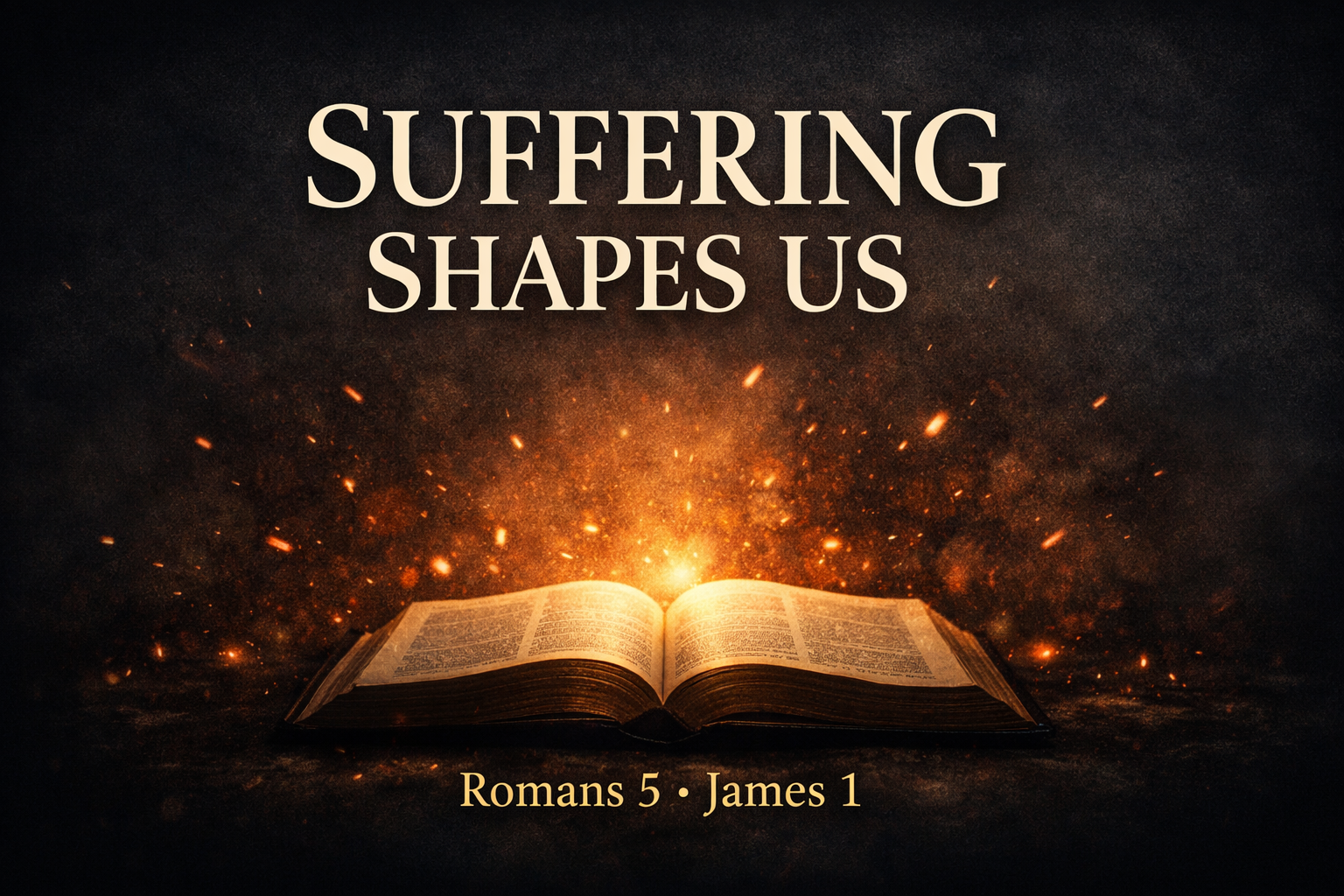
Suffering has a way of slowing life down and forcing questions we would rather avoid. When trials linger,
prayers seem unanswered, and burdens grow heavier instead of lighter, believers often wrestle with a deeply
personal tension: if God is good and sovereign, why does He allow His people to suffer?
Christians know the right answers. We confess that God is wise, loving, and faithful. Yet suffering presses
those truths from abstract doctrine into lived experience. In seasons of grief, disappointment, illness, or
spiritual exhaustion, faith is no longer merely confessed—it is tested. The heart begins to ask not only what
we believe about God, but whether we will trust Him when understanding fails.
Scripture does not avoid this struggle. Nor does it offer shallow reassurance. Instead, the Bible repeatedly
teaches that suffering is one of the primary means God uses to shape His people into the likeness of Christ.
Trials are not interruptions to the Christian life; they are instruments in the hands of a loving Father who
is committed to our sanctification.
James confronts believers with a command that sounds almost startling: “Count it all joy, my brothers, when you meet trials of various kinds” (James 1:2). James is not suggesting that pain itself is joyful or that Christians should deny sorrow. Rather, he calls believers to interpret suffering through the lens of God’s purpose. Trials test faith, and tested faith produces steadfastness. Over time, perseverance matures believers, forming spiritual stability that comfort alone could never produce (James 1:2–4).
Suffering exposes what ease often hides. When life is stable, it is easy to assume our confidence rests in God.
But hardship reveals how quickly the heart clings to security, control, or earthly comfort. In this way, trials
function like a refining fire. God is not destroying faith through suffering; He is strengthening and purifying it.
The apostle Paul describes this shaping work with remarkable clarity in Romans 5. “We rejoice in our sufferings,”
he writes, “knowing that suffering produces endurance, and endurance produces character, and character produces hope” (Romans 5:3–4). Paul does not deny the reality of suffering; he reframes it. Endurance grows as believers continue trusting God when relief does not immediately come. That endurance forms character—a proven faith that has been tested and sustained. From that tested faith emerges hope, not fragile optimism but settled confidence in God’s promises.
This hope is not self-generated. Paul reminds believers that God’s love has been poured into our hearts through the
Holy Spirit (Romans 5:5). Even when circumstances seem uncertain, the Spirit assures us that we belong to God.
Suffering may unsettle our plans, but it cannot overturn God’s covenant love.
One of the deepest fears believers experience during hardship is the suspicion that suffering signals divine rejection. Hebrews 12 addresses this fear directly, describing trials not as abandonment but as loving discipline. “For the Lord disciplines the one he loves” (Hebrews 12:6). Discipline is not punishment for sins already forgiven in Christ; it is the training of a Father who refuses to leave His children unchanged.
Like any loving parent, God’s aim is not immediate comfort but lasting maturity. Discipline is painful in the moment, yet it yields the peaceful fruit of righteousness (Hebrews 12:11). Seen through this lens, suffering becomes evidence not of God’s absence but of His active care. He is shaping His people for holiness, preparing them for eternity.
Peter adds another dimension when he compares suffering to the refining of gold. Believers, he writes, are grieved by various trials so that the genuineness of their faith may result in praise and glory at the revelation of Jesus Christ
(1 Peter 1:6–7). Fire does not destroy gold; it removes impurities. In the same way, trials refine faith, loosening our
grip on temporary hopes and redirecting our hearts toward eternal realities.
This biblical vision stands in sharp contrast to cultural expectations. Modern thinking often assumes that blessing means ease and that hardship signals failure. Even Christians can subtly absorb the idea that strong faith should produce a trouble-free life. Yet the New Testament consistently presents suffering as normal for followers of Christ. Jesus Himself warned His disciples that tribulation would come. The apostles endured hardship not because their faith was weak, but because they belonged to Christ.
The question, then, is not whether believers will suffer, but how they will respond when suffering comes. Scripture calls Christians to trust God’s character even when His purposes remain hidden. It invites honest lament rather than spiritual denial, encouraging believers to pour out their hearts before the Lord while anchoring their hope in His promises. And it directs sufferers toward the local church, where burdens are shared and truth is spoken in love when faith feels fragile.
At the center of the Christian understanding of suffering stands Jesus Christ Himself. Christianity does not offer abstract explanations detached from reality; it points to a Savior who entered suffering fully. Christ was rejected, betrayed, afflicted, and crucified according to God’s redemptive plan. Through His suffering, salvation was accomplished, and through His resurrection, suffering’s ultimate power was broken.
Because Christ suffered, believers are never alone in their pain. Because He rose, suffering is never final. Trials become part of God’s transforming work, conforming His people to the image of His Son.
For the Christian, then, suffering is never meaningless. God uses it to detach us from idols, deepen dependence upon Him, strengthen faith, and prepare us for eternal glory. The valley is not evidence that God has abandoned His people; often it is the very place where He is most faithfully shaping them.
And so believers endure—not because suffering is easy, but because God is faithful. The same Lord who walks with His people through the valley will one day bring them safely home, where suffering will give way to everlasting joy in His presence.
If you are in the valley today, do not interpret your pain as proof that God has forgotten you. Bring your grief honestly to the Lord. Open His Word when your thoughts feel loud and your strength feels small. Ask for help from faithful believers in your local church, and let them remind you of what is true when your heart is weary. Above all, look to Christ—the Man of Sorrows who bore our griefs, who understands our weakness, and who will never turn away from those who come to Him. The trial may be long, but your Savior is faithful. He will finish what He began, and He will carry you safely to the day when sorrow is no more.
For more from our latest series please visit here or at our YouTube.