⏱️ Estimated Reading Time: 9 min read
Clarity in Doctrine
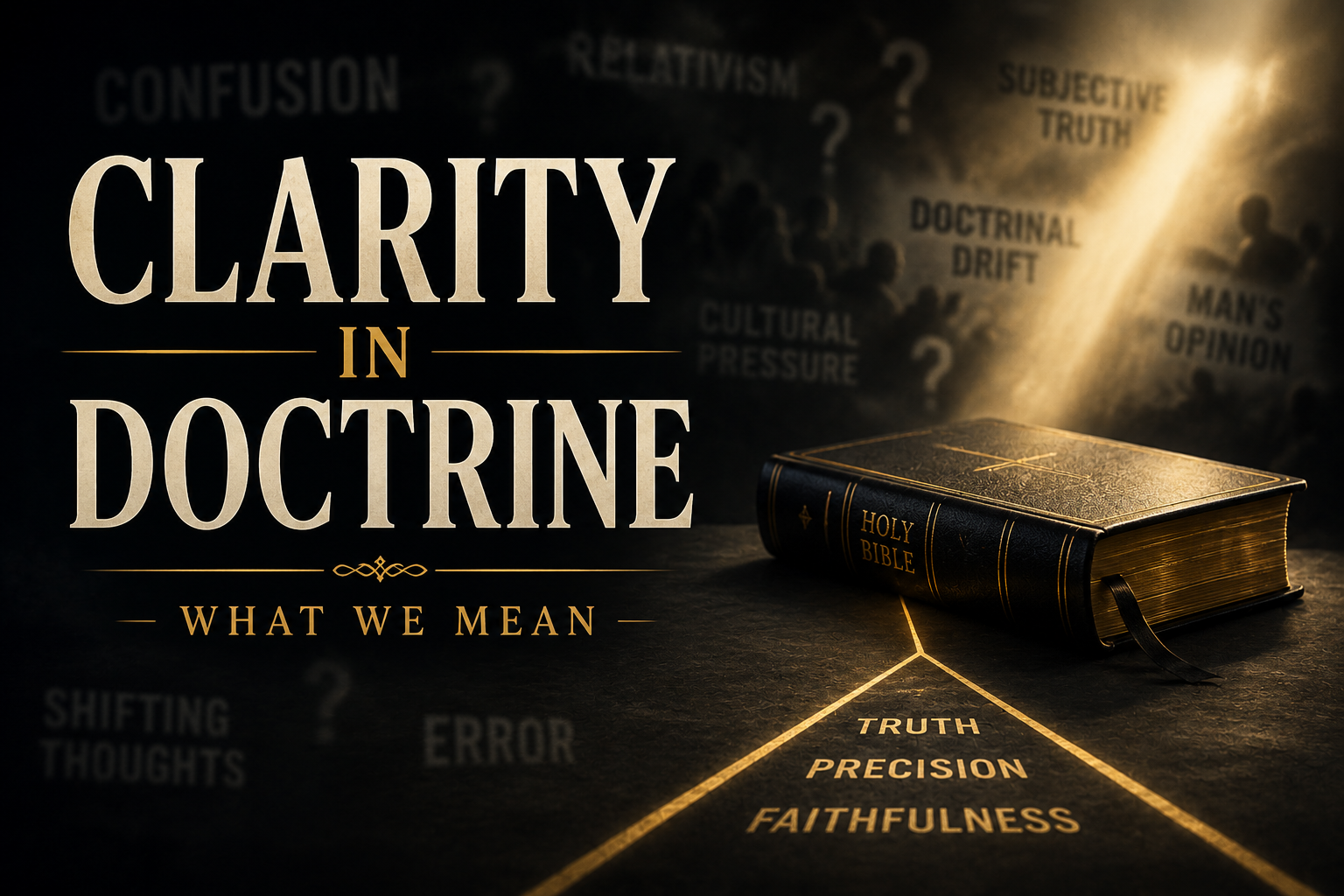
What We Mean by “Clarity in Doctrine”
Joshua Mills
Do you have a friend like Mr. A? Mr. A loves to teach the Word of God, yet his hearers are often left confused and puzzled at his teaching. He uses all the proper theological language you are familiar with, but he is not clear in communicating the truth. His lack of precision blurs all the lines together. Even worse, when Mr. A tries to communicate the truth to unbelievers in an age of confusion, they find themselves even more confused!
The need of the hour is to help Mr. A communicate biblical truth with theological precision and clarity in an age of confusion. To support this statement, the article will be divided into two major parts. First, we will seek to establish a definition of theological clarity and precision. Second, we will see how it serves the church in a time of confusion. The goal of this article is to whet your appetite and set the stage for the rest of the articles in this magazine.
Theological Clarity and Precision
To begin, we must consider theological clarity and precision because we live in an age of utter confusion. This generation does not know its right hand from the left. Evil is called good and good is called evil. How can we live well for Jesus Christ in a world that is rapidly changing? How can we testify to the Word of Truth amid all the chaos that we face on a daily basis?
The answer is found in learning how to communicate God’s Word with theological clarity and precision. Mr. A needs to learn this lesson, and so do each of us. Let us consider these vital subjects one by one.
Theological Clarity
If we are to clearly communicate the Scriptures, we must first understand the clarity of Scripture. When we catch a glimpse of the God who speaks in clarity to His people, we will then be able to speak clearly to others. But what is the clarity of Scripture?
In the Second London Baptist Confession of Faith, the clarity of Scripture is defined as follows:
“All things in Scripture are not alike plain in themselves, nor alike clear unto all; yet those things which are necessary to be known, believed, and observed for salvation, are so clearly propounded and opened in some place of Scripture or other.”
For example, in 2 Timothy 3:14–15, we read:
“But as for you, continue in what you have learned and have firmly believed, knowing from whom you learned it and how from childhood you have been acquainted with the sacred writings, which are able to make you wise for salvation through faith in Christ Jesus.”
The Scriptures are abundantly clear on how a sinner is made right with a holy God. It is through the salvation accomplished by Christ alone. It is received by grace alone, through faith alone, in Christ alone.
In our inclusive age of chaos, we must be firmly resolved to proclaim the exclusive, clear message of the gospel. It is that message alone that is the power of God unto salvation for all who believe (Romans 1:16).
Theological Precision
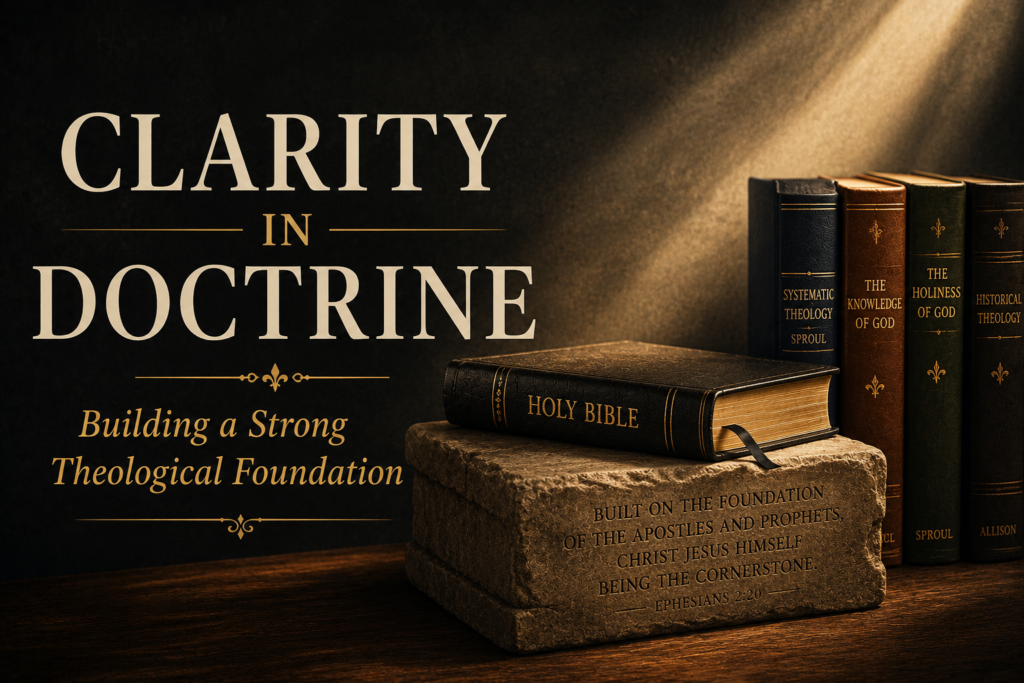
What do we mean by precision? It is “a method of doing theology that sets out to achieve theological precision through the exegesis of Scripture.” J. V. Fesko argues that it entails defining doctrines carefully and accurately through disciplined exegesis, exact terminology, logical distinctions, and confessional consistency.
In other words, you are not like Mr. A, who always blurs the theological lines through a lack of clarity and accuracy. The Scriptures are abundantly clear that we must communicate God’s Word with precision. Paul’s letters to Timothy outline this need:
- 1 Timothy 4:16: “Keep a close watch on yourself and on the teaching. Persist in this, for by so doing you will save both yourself and your hearers.”
- 2 Timothy 2:15: “Do your best to present yourself to God as one approved, a worker who has no need to be ashamed, rightly handling the word of truth.”
- 2 Timothy 3:16–17: “All Scripture is breathed out by God and profitable for teaching, for reproof, for correction, and for training in righteousness, that the man of God may be complete, equipped for every good work.”
We need to be theologically clear and precise because we live in an age of utter confusion. There are many notable examples of this in Scripture. Nehemiah 8:8 tells us that they “read from the book, from the Law of God, clearly, and they gave the sense, so that the people understood the reading.”
The believers in Berea also “received the word with all eagerness, examining the Scriptures daily to see if these things were so” (Acts 17:11).
We must be resolved to work hard at communicating God’s Word with crystal clarity and razor-sharp precision. However, it is not ultimately up to us. We need God the Holy Spirit to bring the clear and precise meaning of Scripture to light by His illuminating power.
We need God the Holy Spirit to open our minds to understand spiritual truths (1 Corinthians 2:12–14). Apart from Him, we cannot discern the spiritual realities found in Scripture. We are all by nature born spiritually blind.
Therefore, our task is not to add light and clarity to Scripture. We must proclaim Scripture and pray that God the Holy Spirit would powerfully use it in the hearts and minds of sinners.
“The Bible is not a dark and cloudy book to which men must add light and clarity. The Bible is God’s light that shines into the darkness of men’s ignorance of God.”
Theological Service in the Church
Having seen the need for theological clarity and precision in an age of confusion, we will now consider how it serves the church. A brief survey of the New Testament brings to the surface three church-serving realities of theological clarity and precision.
Clarity and Precision Guard the Truth
First, theological clarity and precision guard the truth from error in the church. If the truth is not guarded in this generation, it will be lost in the next. We do not have to look far to see that reality all around us.
Unfortunately, many church buildings in the West have become coffee shops or places of pagan worship. What happened? The truth was slowly chipped away and attacked over generations. The New Testament is full of exhortations to guard the truth, even when doing so is costly:
- 1 Timothy 6:20: “O Timothy, guard the deposit entrusted to you. Avoid the irreverent babble and contradictions of what is falsely called knowledge.”
- 2 Timothy 1:13–14: “Follow the pattern of the sound words that you have heard from me, in the faith and love that are in Christ Jesus. By the Holy Spirit who dwells within us, guard the good deposit entrusted to you.”
Clarity and Precision Refute Error
Second, theological clarity and precision refute error in the church. Nothing is new under the sun. The enemy uses similar tactics and lies to infiltrate the church.
In the New Testament, the primary responsibility to refute error in the church falls upon the elders. However, when elders are properly shepherding the flock, church members will be equipped to detect and refute error when it creeps in through YouTube or ordinary conversation.
- 2 Corinthians 10:5: “We destroy arguments and every lofty opinion raised against the knowledge of God, and take every thought captive to obey Christ.”
- 2 Timothy 4:2–4: “Preach the word; be ready in season and out of season; reprove, rebuke, and exhort, with complete patience and teaching.”
- Titus 1:9: “He must hold firm to the trustworthy word as taught, so that he may be able to give instruction in sound doctrine and also to rebuke those who contradict it.”
Clarity and Precision Preserve the Gospel
Third, theological clarity and precision preserve the gospel in the church and therefore edify the church. The gospel is not only to be preached to unbelievers; it must also be preached to believers.
When the gospel is proclaimed in all its crystal clarity and piercing precision, the message is preserved and God’s people are edified. We never outgrow the daily need for meditation on the gospel.
The gospel is not simply a message, but a person. Jesus Christ is the gospel, and the message is all about His person and His work on behalf of unworthy sinners. In Romans 1:15, Paul declared, “So I am eager to preach the gospel to you also who are in Rome.”
- In Galatia, the church was warned about losing the message of the gospel: “If anyone is preaching to you a gospel contrary to the one you received, let him be accursed” (Galatians 1:8–9).
- In Corinth, Paul reminded the divided church about the gospel that unites unworthy sinners to Jesus Christ: “I would remind you of the gospel I preached to you… by which you are being saved, if you hold fast to the word I preached” (1 Corinthians 15:1–2).
- In Colossae, Paul preached the gospel to build up the church: “Him we proclaim, warning everyone and teaching everyone… that we may present everyone mature in Christ” (Colossians 1:28).
Conclusion
Do you have a friend like Mr. A? Or have you been behaving like Mr. A? Mr. A loves to teach the Word of God, yet his hearers are often left confused and puzzled by his teaching.
The need of the hour is to communicate biblical truth with theological precision and clarity in an age of confusion. The rest of the articles in this magazine will teach you how to communicate with clarity and precision.
This article has sought to define theological clarity and precision and show how they serve the church in a time of confusion. The goal is to help you live well for Jesus Christ in a world that is rapidly changing.
Clarity in Doctrine: Sound Doctrine in a Noisy World

Joshua J. Mills is married to his beloved Kyla and they have two children: Isaac and Lydia. Outside of the home, Joshua has the privilege of serving as pastor at Trinity Baptist Church (Burlington, Ontario) and as a guest lecturer through Carey International University of Theology.