⏱️ Estimated Reading Time: 2 min read
The Purpose of Creeds and Confessions
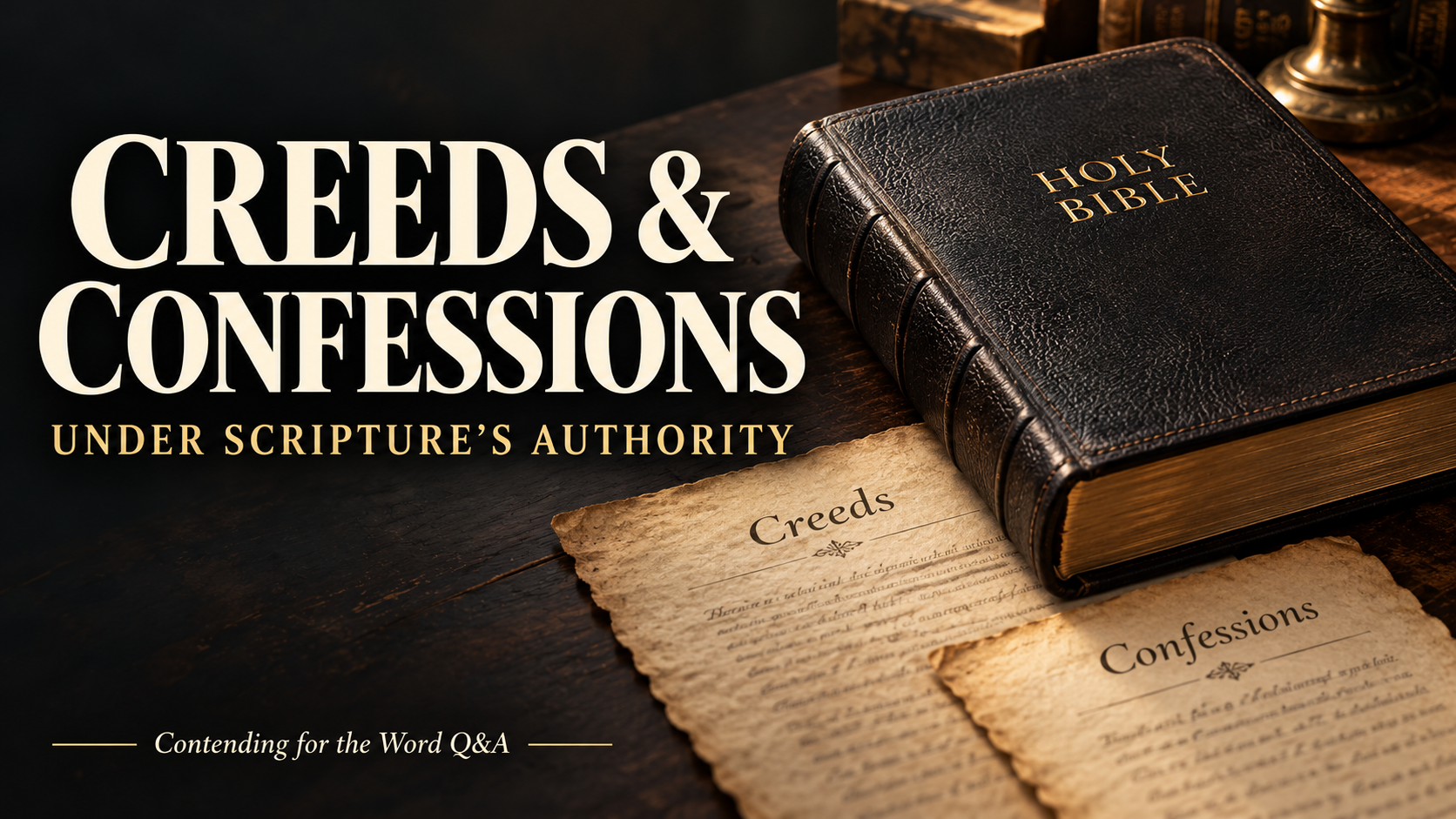
Creeds and confessions help the church clearly confess what the Bible teaches. They summarize biblical doctrine, guard against error, and provide a shared foundation for teaching and discipleship. Their usefulness, however, depends entirely on their faithfulness to God’s Word.
In this episode of Contending for the Word Q&A, Dave Jenkins explains the purpose of these historic doctrinal summaries and why Scripture alone remains our final authority.
Listen or Watch
Key Scriptures
- 2 Timothy 1:13–14
- Titus 1:9
Summarizing Biblical Truth
Faithful creeds and confessions organize and summarize the teaching of Scripture. They help Christians express what they believe about essential doctrines, including the Trinity, the person of Christ, salvation, and biblical authority. They serve the church as tools for understanding and confessing the truth.
Guarding Against False Teaching
Paul instructed Timothy to follow the pattern of sound words he had received. He also taught that elders must hold firmly to trustworthy doctrine so they can encourage believers and refute those who contradict it. Faithful doctrinal summaries help churches identify error and teach biblical truth clearly.
Strengthening Unity in Sound Doctrine
Christian unity rests on the truth of God’s Word. Creeds and confessions help churches articulate their beliefs and pass sound doctrine to future generations. They provide clarity for pastors, elders, and church members as they learn and serve together.
Keeping Scripture as the Final Authority
Every creed, confession, and teaching must be tested by Scripture. These documents serve the church faithfully when they direct believers back to the Bible and accurately summarize its teaching.
Putting This into Practice
- Recognize that creeds and confessions summarize Scripture.
- Appreciate their role in guarding the church against false teaching.
- Use faithful doctrinal summaries to strengthen your understanding of biblical truth.
- Measure every confession and teaching by God’s Word.
Faithful creeds and confessions can strengthen teaching, discipleship, and discernment. As we use them, our confidence must remain in the inspired Word of God and the Christ it reveals.
Dave Jenkins is happily married to his wife, Sarah, and lives in beautiful Southern Oregon. He is a writer, editor, and speaker who loves Christ, His people, the Church, and sound theology.
Dave serves as the Executive Director of Servants of Grace Ministries and the Executive Editor of Theology for Life Magazine. He is the Host and Producer of the Equipping You in Grace Podcast and a contributor to and producer of Contending for the Word.
He is the author of The War of Worldviews: Truth, Lies, and the Battle for the Christian Mind (Theology for Life, 2026), Contentment: The Journey of a Lifetime (Theology for Life, 2024), The Word Matters: Defending Biblical Authority Against the Spirit of the Age and The Word Explored: The Problem of Biblical Illiteracy and What To Do About It (House to House, 2021).
You can connect with Dave on Facebook, X (Twitter), Instagram, YouTube, or subscribe to his newsletter.
When he is not engaged in ministry work, Dave enjoys spending time with his wife, going to movies, sharing a meal at a favorite restaurant, or playing a round of golf with friends. He is also a voracious reader, particularly of Reformed theology and the Puritans, and is often found working through a stack of new books from a wide range of Christian publishers.
Dave earned his M.A.R. and M.Div. from Liberty Baptist Theological Seminary.