Episode Summary
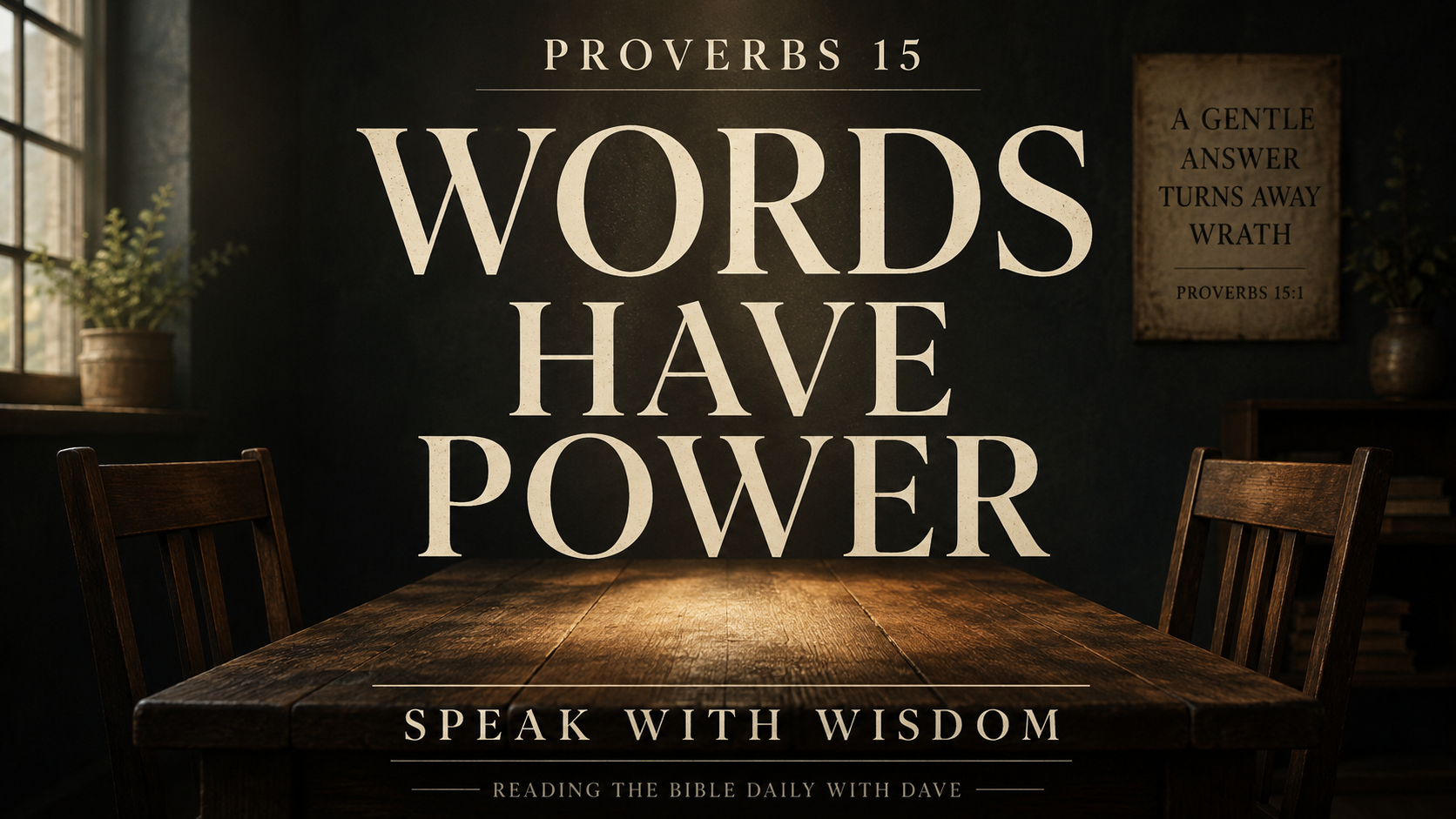
Proverbs 15 teaches that our words reveal our hearts and have the power to bring peace or cause harm. A soft answer can calm conflict, while harsh words stir up anger. Wise speech brings life, spreads knowledge, and builds others up, but foolish speech produces division and destruction.In this episode of
Reading the Bible Daily with Dave, Dave Jenkins explains why gentle words bring peace, how God sees the heart behind our speech, why the wise receive correction, and how humility and the fear of the Lord shape a godly life.Proverbs 15 ultimately points us to Jesus Christ. Jesus spoke with perfect wisdom, truth, and grace. Where we have spoken harshly, misused our words, or failed to encourage others, Christ obeyed perfectly. Through faith in Him, our sins are forgiven, our hearts are changed, and our speech is increasingly transformed.
Listen and Watch
Audio Player:Video Player:Episode Highlights
- A soft answer can calm conflict, while harsh words stir up anger.
- Wise speech brings knowledge, encouragement, and life to others.
- Our words reveal what is taking place within our hearts.
- The Lord sees what we say and knows why we say it.
- Wise people receive correction and grow in understanding.
- Foolish people reject instruction and remain unchanged.
- Humility and the fear of the Lord are essential to biblical wisdom.
- Jesus Christ spoke with perfect truth, wisdom, and grace.
Gentle Words Bring Peace
Proverbs 15:1 says, “A soft answer turns away wrath, but a harsh word stirs up anger.” Our words can defuse conflict or escalate tension. Biblical wisdom is not merely knowing the right thing to say. It also involves speaking truth with patience, gentleness, self-control, and grace.A gentle response is not weakness or compromise. It is speech governed by wisdom. The wise person understands that the manner in which truth is communicated can either promote peace or make an already difficult situation worse.
God Sees the Heart Behind Our Words
Proverbs 15:3 reminds us that the eyes of the Lord are in every place. God sees what we say, hears how we speak, and knows the motives behind our words. Our speech is not merely a horizontal matter between us and other people. We are accountable to the Lord for how we use our tongues.Because our words flow from our hearts, lasting change requires more than learning better communication techniques. We need hearts transformed by the grace of God and shaped by the truth of Scripture.
The Wise Receive Instruction
Proverbs 15 repeatedly contrasts the wise person who receives correction with the fool who rejects it. The wise recognize that they still need to learn. They listen to godly counsel, accept biblical correction, and grow in understanding.The fool despises instruction because pride refuses to admit error. Wisdom, however, is marked by humility. A person who listens to life-giving correction places himself among the wise.
Humility Comes Before Honor
Proverbs 15:33 says, “The fear of the Lord is instruction in wisdom, and humility comes before honor.” True wisdom begins with reverence for God. It recognizes His authority, submits to His Word, and willingly receives His correction.The wise person does not seek honor through pride or self-promotion. He walks humbly before the Lord, knowing that every good gift, every opportunity for growth, and every measure of wisdom comes from God.
Memory Verse
“A soft answer turns away wrath, but a harsh word stirs up anger.”Proverbs 15:1
Related Scripture
- Psalm 19:14: Our words and the meditation of our hearts should be pleasing to the Lord.
- Matthew 12:36–37: Everyone will give an account for careless words.
- Luke 6:45: The mouth speaks from the abundance of the heart.
- Ephesians 4:29: Christians should speak words that build others up and give grace.
- James 1:19: Believers should be quick to hear, slow to speak, and slow to anger.
Daily Takeaways
- Speak gently and wisely, especially during conflict.
- Remember that your words can either build up or tear down.
- Guard your heart because your speech flows from it.
- Recognize that God sees both your words and your motives.
- Be willing to receive biblical instruction and correction.
- Use your words to encourage, strengthen, and give grace to others.
- Walk humbly before God and grow in the fear of the Lord.
Continue Growing in God’s Word
Continue studying the Bible one chapter at a time with
Reading the Bible Daily with Dave. Each episode provides a clear explanation of Scripture, practical application for the Christian life, and gospel-centered encouragement to help you grow in the grace and knowledge of Jesus Christ.
Listen to more episodes:
Reading the Bible Daily with Dave on Servants of GraceWatch the full playlist on YouTube:
Reading the Bible Daily with Dave YouTube PlaylistFollow Reading the Bible Daily with Dave
Be sure to subscribe to
Reading the Bible Daily with Dave and rate the show wherever you listen to podcasts. You can also like, subscribe to, and follow Servants of Grace on Facebook, Instagram, and YouTube for more biblical teaching and discipleship resources.Thank you for listening to or watching today’s episode. Please share it with someone who would benefit from the wisdom of Proverbs 15 and its teaching on the power of our words.