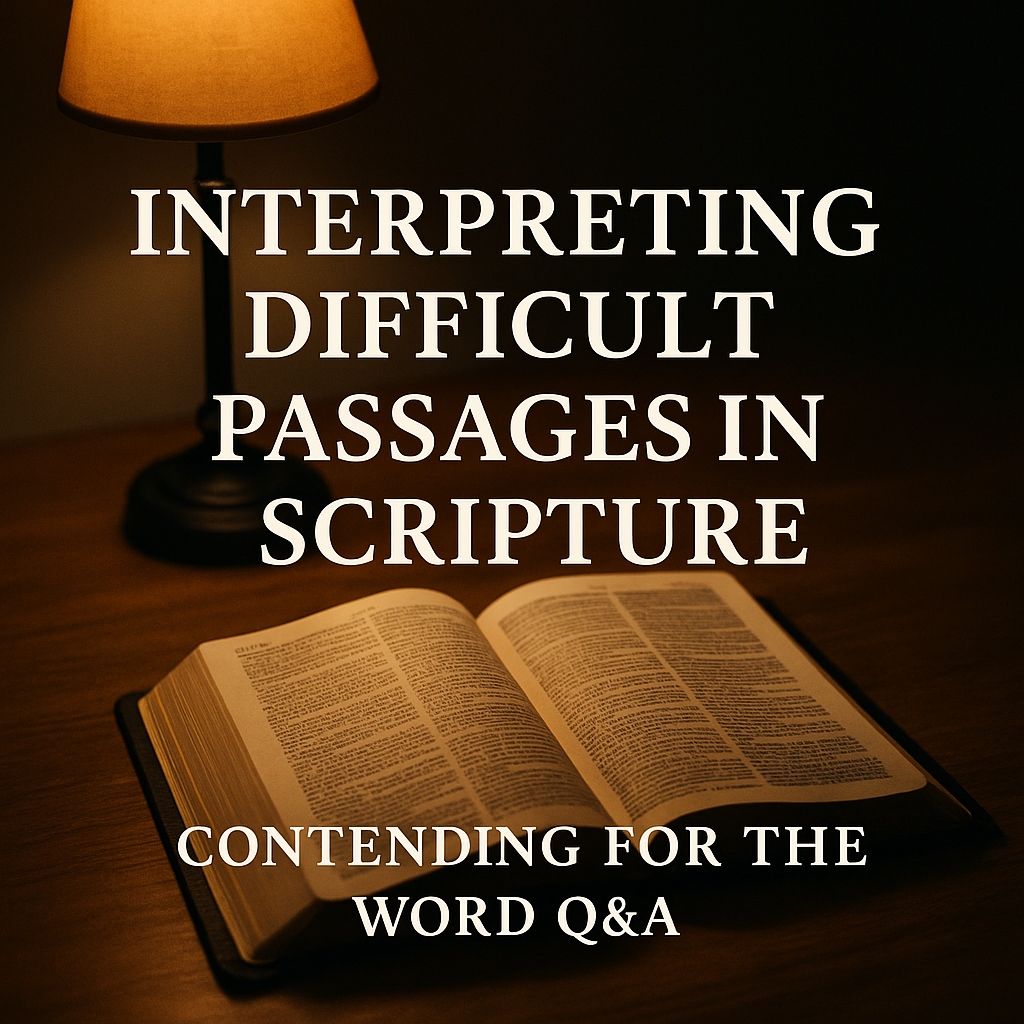
Question: How should Christians interpret difficult passages in the Bible?
Introduction
Every believer will encounter passages that are hard to understand, whether in prophecy, wisdom literature, or the New Testament letters. The issue is not if we will face challenges, it is how we will approach them in a way that honors the Lord and remains faithful to His Word.
Start with Humility
We begin with humility. God’s Word is perfect, our understanding is limited. The problem is never with Scripture, it is with our sin, our lack of knowledge, or our limited perspective. We ask God for wisdom because He gives generously to those who ask in faith.
James 1:5: “If any of you lacks wisdom, let him ask God, who gives generously to all without reproach, and it will be given him.” Prayer is our first step when we face a difficult passage.
Let Scripture Interpret Scripture
Scripture is the best interpreter of Scripture. Clear passages help us interpret passages that are less clear. When we read Revelation, we remember what the rest of the Bible teaches about God’s sovereignty, the return of Christ, and His victory over evil. This keeps us anchored in the whole counsel of God, not in isolated verses.
The Reformers summarized this well with the claim that Scripture is its own interpreter. This principle shapes faithful study and guards us from speculation.
Pay Attention to Context
Context clarifies meaning. We ask what the surrounding passage teaches, who the author is, who the audience is, and what the historical and cultural setting is. We slow down, we read larger sections, we trace the argument, and many difficulties become clearer in light of the whole.
Use Sound Tools
God has given the church faithful teachers and helpful resources. We use commentaries, study Bibles, Bible dictionaries, and sermons as aids, not as replacements for Scripture. Good tools point us back to the text and to Christ. We benefit from the wisdom of the church across the centuries, and we study with the communion of saints in view.
Submit to God’s Word
Some questions may remain after careful study. When this happens, we submit to the authority of God’s Word, we do not force our conclusions onto the text. We trust what God has revealed, and we entrust the secret things to Him.
Deuteronomy 29:29: “The secret things belong to the Lord our God, but the things that are revealed belong to us and to our children forever.” God has given us everything we need to know Him, to love Him, and to obey Him. Where we lack full clarity, we trust His wisdom and goodness.
Conclusion
So how should Christians interpret difficult passages? With humility and prayer, by comparing Scripture with Scripture, by paying careful attention to context, by using sound tools with discernment, and by submitting to the authority of God’s Word. Our goal is not only knowledge, it is growth in Christlikeness. As we study, we seek to understand the Word and to live in joyful obedience to it.
Dave Jenkins is happily married to his wife, Sarah, and lives in beautiful Southern Oregon. He is a writer, editor, and speaker who loves Christ, His people, the Church, and sound theology.
When he is not engaged in ministry work, Dave enjoys spending time with his wife, going to movies, sharing a meal at a favorite restaurant, or playing a round of golf with friends. He is also a voracious reader, particularly of Reformed theology and the Puritans, and is often found working through a stack of new books from a wide range of Christian publishers.
Dave earned his M.A.R. and M.Div. from Liberty Baptist Theological Seminary.
Continue Growing in Biblical Truth
If this article served you, continue growing with biblical articles, podcast episodes, books, and resources from Servants of Grace and Theology for Life Publishing.
Biblical Truth Delivered Weekly
Join thousands of Christians receiving weekly articles, podcast episodes, and discernment resources grounded in Scripture to help you think clearly, grow in grace, and stand firm in a confused age.