Christians have never had access to more biblical resources, yet they have also never been exposed to so many competing voices. Podcasts, YouTube channels, social media accounts, livestreams, and online ministries can spread teaching around the world almost instantly. Some of that teaching is faithful to Scripture, while some of it leads Christians away from biblical truth.In this episode of
The Weekly Watch, part of
Contending for the Word, Dave Jenkins examines how false teaching spreads in the digital age and how Christians can remain grounded in the truth of God’s Word.Digital technology itself is not the problem. The same internet that can spread error can also be used to proclaim biblical truth. The real issue is whether Christians are exercising discernment and evaluating the voices they hear according to Scripture.
Listen or Watch
Influence Is Not the Same as Faithfulness
Anyone can start a podcast, launch a YouTube channel, or build a social media following. While that access can be used for great good, influence and qualification are not the same thing.A large audience does not automatically make someone a faithful teacher. Followers do not prove trustworthiness, and millions of views do not establish biblical truth. Christians must learn to evaluate teachers by their faithfulness to the Word of God rather than by their digital success.
Why False Teaching Spreads So Quickly
False teaching often spreads because it promises something sensational, new, dramatic, or supposedly hidden. Secret knowledge, shocking predictions, controversy, and claims of special revelation naturally attract attention.Social media algorithms can amplify this problem because they reward engagement rather than truth. Algorithms do not evaluate theology or test doctrine. They reward clicks, comments, shares, views, and watch time.
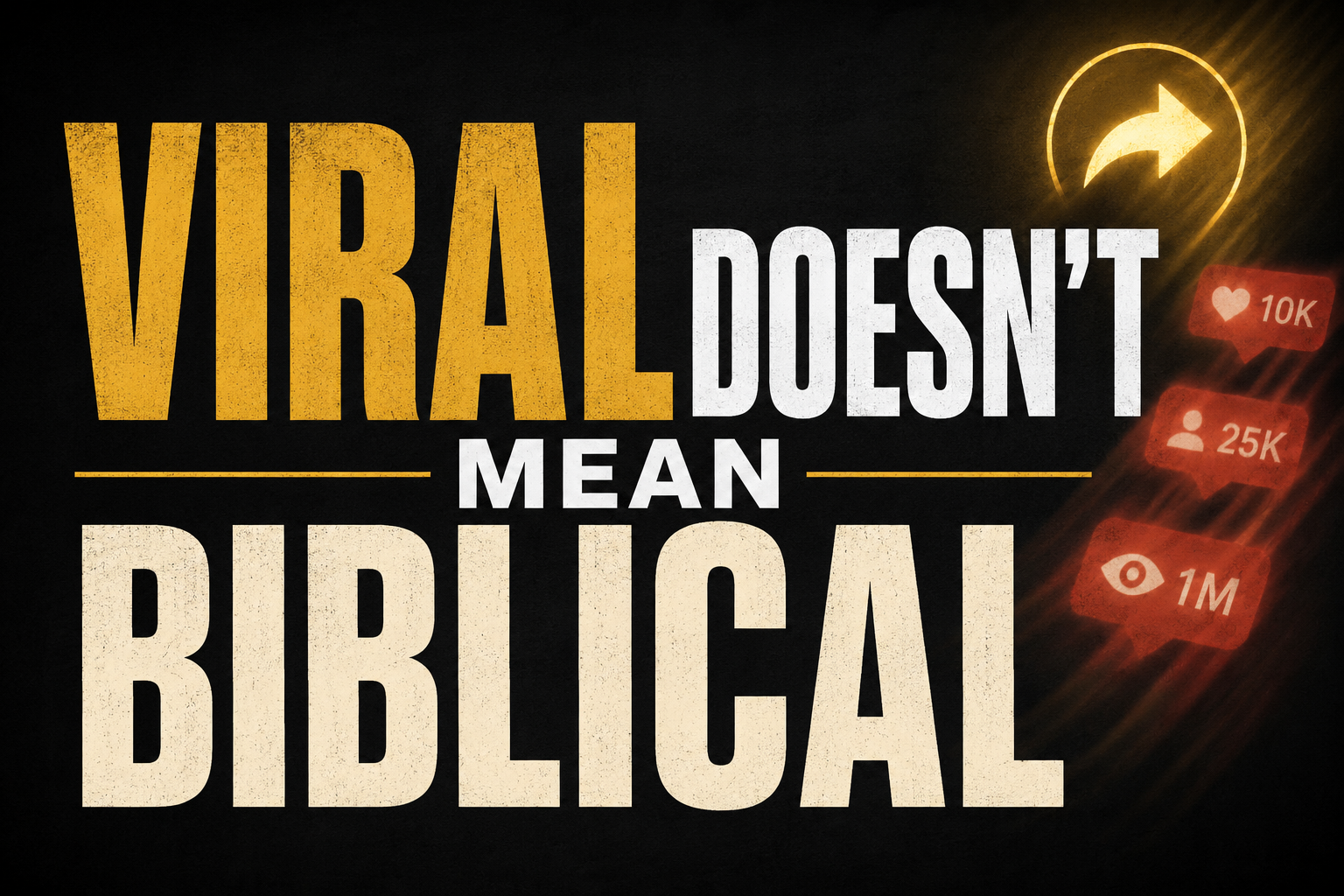
Just because something is viral does not mean it is biblical.The Christian’s responsibility is not to follow the crowd but to follow Christ and test every message by the Word of God.
Online Content Cannot Replace the Local Church
Podcasts, videos, articles, and other online resources can be valuable tools for Christian growth, but they were never intended to replace the local church.God designed Christians to live in fellowship with other believers under the care of faithful, biblically qualified shepherds. Online teachers cannot truly know your life, provide meaningful accountability, exercise church discipline, or walk alongside you through every season.
The internet can be helpful. The church is essential.Faithful online resources should supplement involvement in a healthy local church, not become a substitute for it.
The Danger of Clip Culture
Christians are increasingly shaped by short videos, reels, clips, and soundbites. Short-form content is not inherently wrong and can sometimes point people toward deeper study. The danger is that theology requires context.A sermon can be edited, a statement isolated, and a conversation shortened until the original context disappears. Christians should therefore be slow to form strong conclusions based only on brief clips.Biblical discernment requires patience, careful listening, prayer, reflection, and serious study of Scripture. Spiritual maturity is not developed through endless scrolling.
Test Every Teacher by Scripture
Acts 17 presents the Bereans as an example for Christians today. They listened carefully and examined the Scriptures daily to determine whether what they were hearing was true.Christians should ask questions such as:
- Is this teaching biblical?
- Does it align with the Word of God?
- Is it consistent with sound doctrine?
- Is this teacher accountable to a local church?
- Does this ministry point people toward Christ or toward a personality?
The goal is not to find impressive personalities. The goal is to benefit from faithful teachers who faithfully handle the Word of God.
Confidence in Christ in a Noisy Digital World
False teaching is not new. The apostles dealt with it, the early church dealt with it, the Reformers dealt with it, and Christians continue to face it today.But believers do not need to live in fear. Christ has not abandoned His Church. Scripture remains sufficient, the gospel remains powerful, and Christ remains King.No algorithm can change that. No cultural trend can change that. No movement can overturn the truth of God’s Word.Christians must not measure truth by views, followers, popularity, or virality. We must measure truth by the Word of God, remain committed to the local church, and keep our eyes fixed on Christ.
Listen to Contending for the Word
Explore more episodes of Contending for the Word designed to help Christians think biblically, resist deception, and remain grounded in Scripture in a confused age.
Contending for the Word Podcast
Watch on YouTube