⏱️ Estimated Reading Time: 3 min read
Contending for the Word
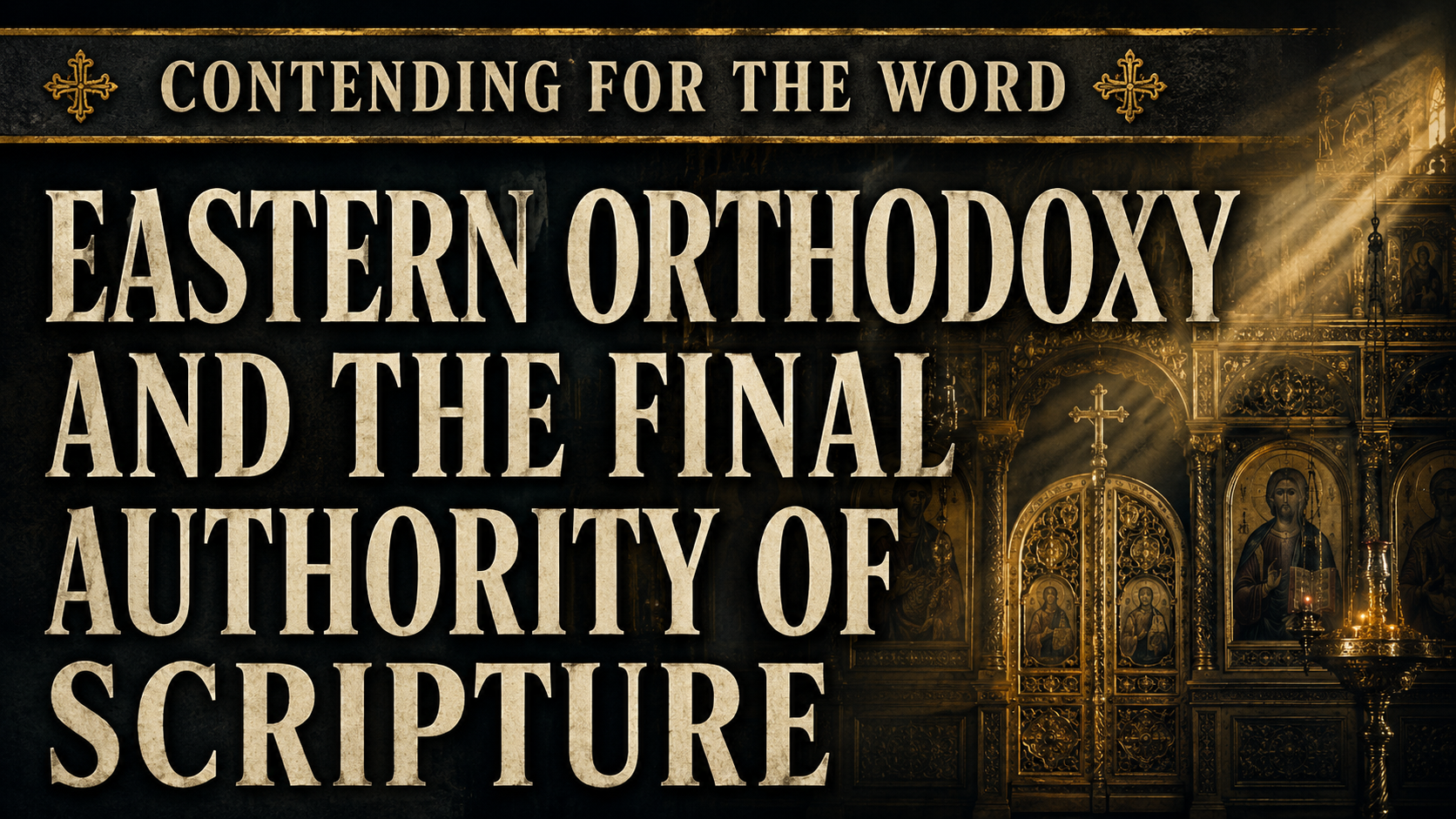
Eastern Orthodoxy and the Final Authority of Scripture
With Dave Jenkins and Samuel Farag
What Is the Final Authority for the Christian Faith?
Eastern Orthodoxy is attracting a growing number of evangelicals through its claims of ancient continuity, historic liturgy, beauty, and tradition. Beneath those attractions, however, is a foundational question: When Scripture and tradition conflict, which one has the final word?
In this episode of Contending for the Word, Dave Jenkins is joined by Samuel Farag, author of Eastern Orthodoxy Through the Lens of Sola Scriptura. Together, they examine the beliefs and theological structure of Eastern Orthodoxy according to the standard of the Word of God.
Dave and Samuel discuss the Orthodox understanding of Holy Tradition, church authority, ecumenical councils, icon veneration, monasticism, salvation, and the gospel. They also explain why Christians should value church history without placing any tradition, council, confession, or human authority above Scripture.
Listen or Watch
In This Episode
- Why Eastern Orthodoxy attracts some evangelicals
- The Orthodox understanding of Holy Tradition
- The sufficiency and final authority of Scripture
- The difference between Sola Scriptura and Bible-onlyism
- The authority claimed for councils and church interpretations
- Icon veneration, Mary, monasticism, and Orthodox practice
- The relationship between doctrine and spiritual fruit
- How church history supports the Protestant doctrine of Scripture
- Why Christians must define theological terms carefully
- How to engage friends and family exploring Eastern Orthodoxy
Scripture, Tradition, and Church History
Sola Scriptura does not mean Christians should ignore church history, reject faithful tradition, or refuse to learn from historic creeds and councils. It means that Scripture alone is the inspired, inerrant, infallible, clear, sufficient, and final authority for Christian faith and practice.
Church history can help Christians understand and defend biblical truth, but every teacher, tradition, confession, council, and theological system must be tested by the Word of God. The church does not stand above Scripture. The church is called to submit to, proclaim, and defend the truth God has revealed in His Word.
About Samuel Farag
Samuel Farag is a contributor to Servants of Grace and Theology for Life and the author of Eastern Orthodoxy Through the Lens of Sola Scriptura. His work examines the official claims, theological teachings, and practices of Eastern Orthodoxy according to Scripture while drawing thoughtfully from church history and primary Orthodox sources.
Continue Listening to Contending for the Word
Explore more biblical teaching and Christian discernment resources designed to help you stand firm on the truth of Scripture and contend earnestly for the faith once delivered to the saints.
Watch on YouTube