⏱️ Estimated Reading Time: 6 min read
Podcast: Play in new window | Download | Embed
Subscribe Apple Podcasts | Spotify | Amazon Music | Pandora | Email
Conviction vs. Condemnation: Freedom from Guilt in Christ
Have you ever confessed your sin to God and still felt as though He was finished with you? Maybe the guilt would not lift. Maybe you wondered whether you had finally gone too far or somehow reached the limit of God’s grace.
Many Christians struggle to distinguish between the Holy Spirit’s conviction and crushing condemnation. They can feel similar in the moment, but they are not the same. One leads believers toward Christ, repentance, and hope. The other drives them toward despair, isolation, and hopelessness.
In this episode of Anchored in the Word with Dave Jenkins, we look at what Scripture teaches about conviction, condemnation, guilt, forgiveness, and the believer’s assurance in the finished work of Jesus Christ.
Listen or Watch
There Is No Condemnation in Christ
Romans 8:1 provides the foundation for understanding the difference between conviction and condemnation:
“There is therefore now no condemnation for those who are in Christ Jesus.”
Paul does not say there is less condemnation for those who are in Christ. He does not say condemnation remains only for our worst sins. He says there is no condemnation.
For the Christian, the verdict has already been rendered. Because of the perfect righteousness of Jesus Christ and His finished work on the cross, believers no longer stand condemned before God.
What Condemnation Sounds Like
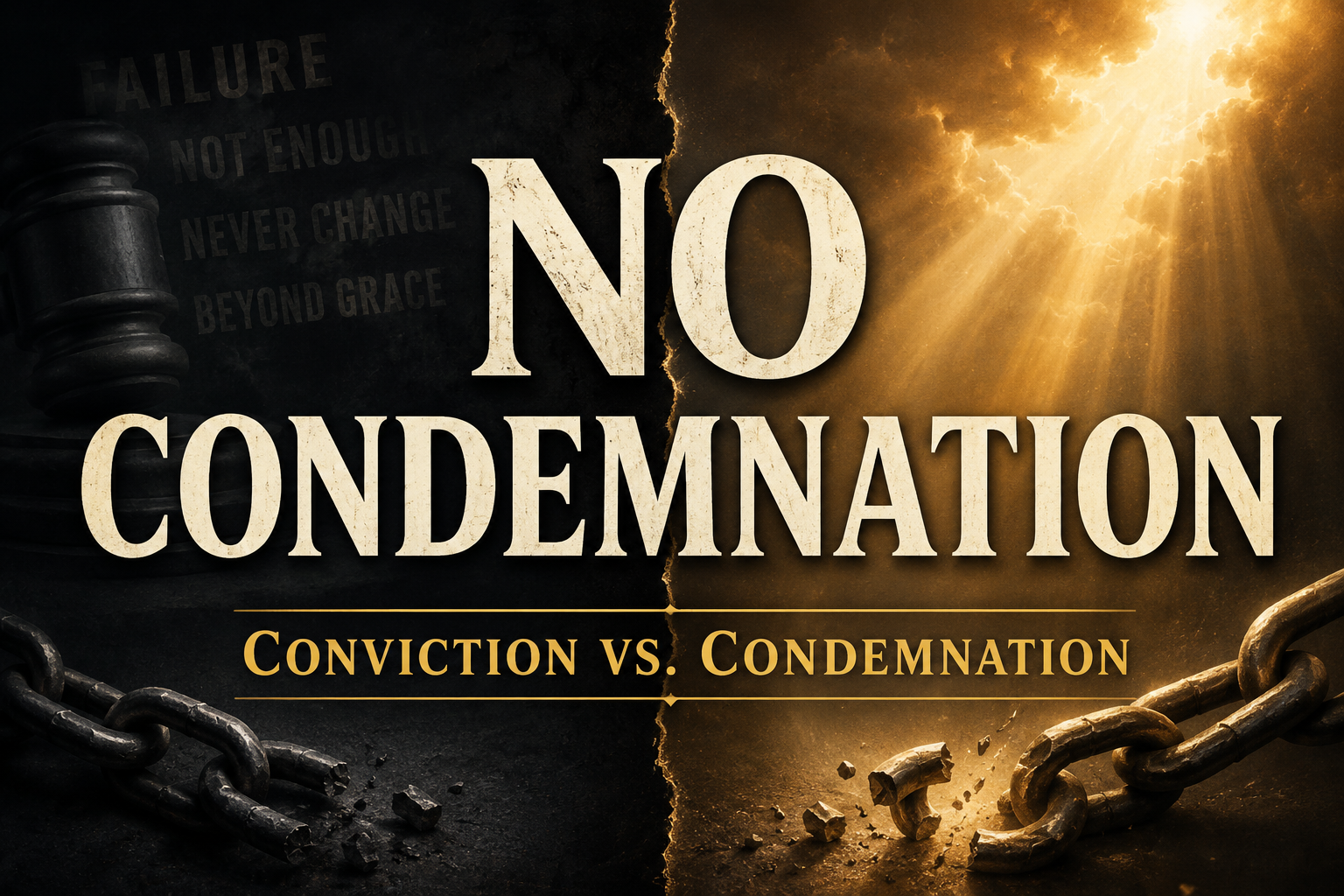
Condemnation speaks the language of hopelessness. It says:
- You are a failure.
- God is finished with you.
- You will never change.
- Your sin is too great.
- You are beyond the reach of grace.
Condemnation attempts to make believers believe that their sin is greater than God’s grace. Yet Romans 8:1 declares that condemnation has been removed because Jesus bore the judgment our sins deserved.
What Biblical Conviction Does
The Holy Spirit’s conviction is entirely different. He exposes sin not to destroy God’s people but to restore them.
Jesus says in John 16:8 that the Holy Spirit convicts concerning sin, righteousness, and judgment. For believers, conviction reveals sin so that they will confess it, repent of it, and return to Christ in faith and obedience.
Put simply, condemnation pushes you toward despair, while conviction leads you toward repentance and hope.
The Answer to a Guilty Conscience
Martin Luther understood the crushing weight of guilt. Before grasping the doctrine of justification by faith alone in Christ alone, Luther was tormented by his conscience. He confessed for hours, fasted, and pursued religious effort, yet still found no peace.
As he studied Romans and came to understand the righteousness of God revealed in the gospel, everything changed.
The lesson remains essential for Christians today: the answer to a guilty conscience is not endless introspection, greater religious effort, or punishing yourself for sins Christ has already paid for.
The answer is to look to Jesus Christ and trust His righteousness credited to you through faith.
The Gospel Takes Sin Seriously and Offers Real Hope
Our culture often handles guilt in one of two ways. Either guilt is denied altogether, or people are left drowning in shame without any real solution.
The gospel rejects both approaches.
Scripture takes sin seriously. Sin is real, destructive, and offensive to a holy God. Yet the gospel never leaves guilty sinners without hope.
Jesus Christ came precisely for guilty sinners. At the cross, He bore the judgment His people deserved. Through His resurrection, He demonstrated the sufficiency and victory of His saving work.
The world offers denial or despair. The gospel offers redemption.
Self-Condemnation Is Not Repentance
Some Christians begin to believe that the worse they feel about themselves, the more seriously they must be taking their sin. But ongoing self-condemnation is not the same thing as biblical repentance.
Repentance leads you toward Christ. Self-condemnation keeps you focused inward, continually rehearsing your failure instead of resting in the forgiveness Jesus has secured.
First John 1:9 reminds believers:
“If we confess our sins, he is faithful and just to forgive us our sins and to cleanse us from all unrighteousness.”
Christians should confess sin honestly, repent sincerely, and then receive the forgiveness Christ has won for them.
Three Questions to Distinguish Conviction from Condemnation
1. Where Is This Leading Me?
Conviction points you toward Jesus Christ. If an awareness of sin is leading you to confession, repentance, prayer, and renewed trust in Christ, that reflects the Spirit’s sanctifying work.
If it is driving you toward despair, isolation, hopelessness, or the belief that you are beyond grace, it does not reflect the promises God has given His people in Scripture.
2. Does This Agree with God’s Word?
Our emotions are real, but they are not always reliable. Christians must bring their feelings into the light of Scripture.
Romans 8:1 does not say that believers are occasionally free from condemnation. It declares that there is now no condemnation for those who are in Christ Jesus.
3. Am I Responding to Conviction or Simply Continuing to Suffer?
Biblical conviction calls for a response: confession, repentance, trust, and renewed obedience.
If you have confessed your sin and repented, yet continue punishing yourself, you may have moved from genuine conviction into self-focused condemnation.
Respond quickly to conviction, then receive God’s grace fully.
Jesus Was Condemned in Your Place
The reason Christians are free from condemnation is not because their sin is insignificant. It is because Jesus Christ was condemned in their place.
The full weight of God’s righteous judgment against sin fell upon Christ at the cross. He bore the penalty His people deserved and secured their forgiveness, justification, and peace with God through His death and resurrection.
Because of what Christ has done, Christians can face their sin honestly without terror, despair, or hiding.
In Christ, you are not condemned. You are forgiven. You belong to Him.
Bring Your Guilt to Christ
When guilt rises in your heart, ask whether you are listening to the Spirit’s conviction as revealed in God’s Word or carrying condemnation that Jesus already bore at the cross.
Bring your sin to Christ. Bring your guilt to Christ. Bring your fear to Christ.
Conviction points you to the grace of Jesus Christ. Condemnation tries to make you forget that grace exists.
Anchored in the Word with Dave Jenkins
Anchored in the Word is a weekly segment of the Servants of Grace podcast devoted to helping Christians understand, apply, and stand firmly on the truth of God’s Word.
Explore more episodes and biblical resources from Anchored in the Word: