⏱️ Estimated Reading Time: 2 min read
July 2026 Editorial
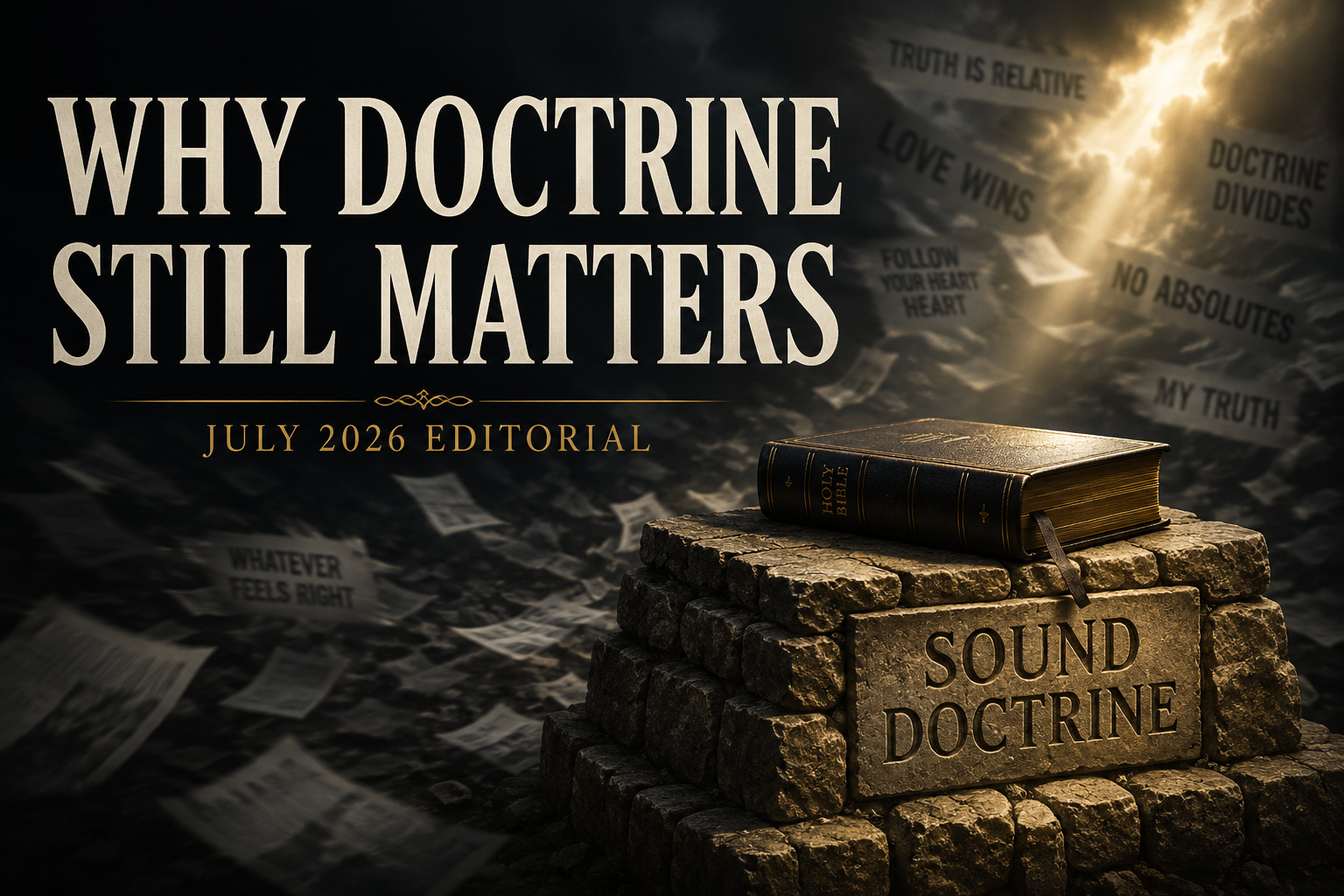
Why Doctrine Still Matters
Dave Jenkins
Executive Editor, Theology for Life Magazine
“But as for you, teach what accords with sound doctrine.”
In every generation, the church faces pressure to soften, redefine, or neglect biblical doctrine. In our own day, many Christians are told that doctrine is divisive, impractical, or secondary to unity and personal experience. Yet Scripture presents a very different picture. Throughout the New Testament, believers are repeatedly called to hold fast to sound doctrine, guard the truth entrusted to them, and teach what accords with godliness.
Doctrine is not a cold academic exercise reserved for pastors, theologians, or seminary classrooms. It is the foundation of faithful Christian living. What we believe about God, His Word, salvation, the church, and the Christian life inevitably shapes how we worship, disciple others, engage culture, endure suffering, and persevere in faith. When doctrine is neglected, confusion follows. When doctrine is distorted, the church drifts. When doctrine is clearly taught and faithfully applied, God’s people are strengthened, equipped, and anchored in the truth.
That conviction lies at the heart of this issue of Theology for Life. Clarity in Doctrine: Sound Doctrine in a Noisy World explores why theological clarity remains essential for the life and witness of the church. Our contributors examine the authority of Scripture, the value of historic confessions, the dangers of doctrinal drift, the importance of discernment, the necessity of intentional discipleship, and the responsibility of churches and families to pass the faith on to the next generation.
Clarity in doctrine is not an act of arrogance but an act of love. In a noisy age marked by theological ambiguity, doctrinal compromise, and competing voices, Christians need confidence that God’s truth is knowable, trustworthy, and sufficient. My prayer is that this issue will encourage you to pursue biblical clarity with humility, conviction, and faithfulness, recognizing that sound doctrine is not merely essential for healthy churches but ultimately serves the glory of Christ, the good of His people, and the advance of His gospel.