⏱️ Estimated Reading Time: 16 min read
We Are Not Our Own: Living in Light of God’s Ownership
By Dave Jenkins
Summary: Because God created us and Christ redeemed us, everything we are and all we have belongs to the Lord. This article considers how God’s ownership changes our identity, reshapes our stewardship, comforts us in suffering, and equips us to live humbly and faithfully in every season. Rooted in Scripture, supported by church history, and directed toward everyday discipleship, this reflection invites believers to rest in the security of belonging to Christ and live for His glory.
Few truths confront our desire for independence as directly as the declaration that we are not our own. The world tells us that freedom means belonging to no one, answering to no authority, and determining the meaning of our lives for ourselves. Scripture gives us a very different understanding of freedom. We were created by God, redeemed by Christ, indwelt by the Holy Spirit, and called to live for the glory of the One to whom we belong.
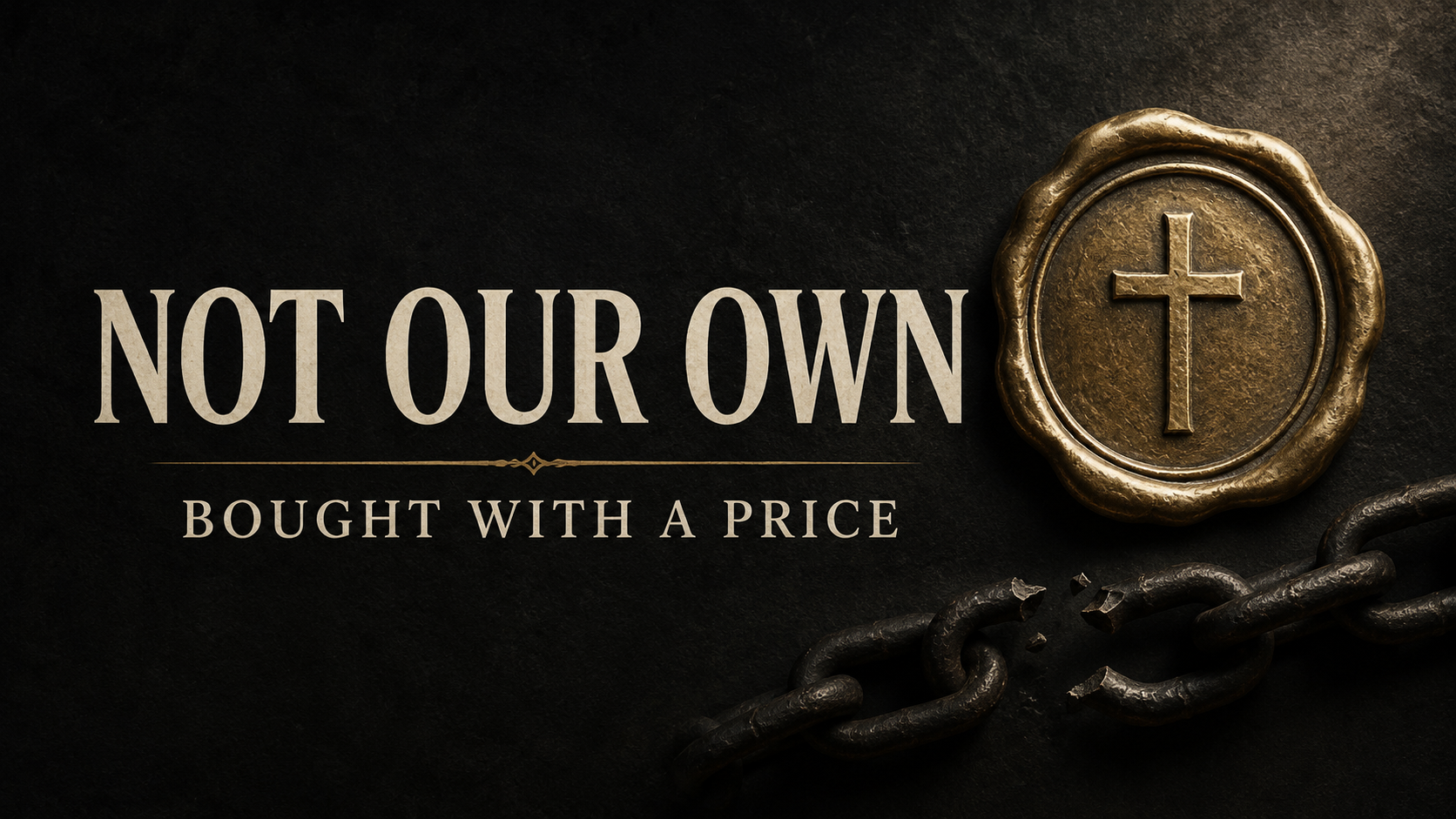
“You are not your own, for you were bought with a price. So glorify God in your body.” (1 Corinthians 6:19–20)
These words are not intended to crush the Christian under an unbearable burden. They are words of holiness, freedom, identity, and comfort. We are not left to create ourselves, save ourselves, or carry ourselves through life. We belong to Jesus Christ, who loved us and gave Himself for us.
We are not our own, but this is not bad news. We belong to a faithful Savior.
Created by God and Purchased by Christ
God’s ownership begins with creation. Psalm 24:1 declares, “The earth is the Lord’s and the fullness thereof, the world and those who dwell therein.” Every person lives in God’s world, depends upon His sustaining power, and remains accountable to Him. Our bodies, abilities, opportunities, and possessions ultimately come from His hand.
For the Christian, however, God’s ownership also includes redemption. Paul tells the Corinthians that they were “bought with a price.” The immediate context concerns sexual immorality and the proper use of the body. Because the believer’s body is a temple of the Holy Spirit, the Christian cannot treat the body as though it were spiritually unimportant or available for whatever desire demands. Christ’s lordship reaches our physical lives, our relationships, and our pursuit of holiness.
The price of our redemption was not silver, gold, good works, or religious achievement. Peter explains that believers were ransomed “with the precious blood of Christ, like that of a lamb without blemish or spot” (1 Peter 1:18–19). Jesus willingly gave Himself to rescue sinners from guilt, condemnation, and slavery to sin. We belong to Him because He purchased us through His atoning death and raised us to new life through His resurrection.
This ownership is neither cold nor oppressive. The Lord who owns us is the Savior who died for us, the Shepherd who cares for us, and the Father who has adopted us. His authority and His love are never in conflict.
Because Christ purchased us, no human being has the right to take His place. Paul writes, “You were bought with a price; do not become bondservants of men” (1 Corinthians 7:23). Belonging to Jesus frees us from slavery to human approval, worldly ambition, and the endless demand to prove our worth.
Belonging to Christ Is Our Comfort
Christians sometimes speak about surrender as though belonging to God only means giving things up. It certainly requires self-denial, obedience, and sacrifice, but it also provides profound security. If we belong to Christ, then our lives are held by One who is infinitely wiser, stronger, and more faithful than we are.
The Heidelberg Catechism expresses this comfort beautifully:
“That I am not my own, but belong—body and soul, in life and in death—to my faithful Savior, Jesus Christ.”
(Heidelberg Catechism, Lord’s Day 1, Question and Answer 1)
The catechism connects belonging to Christ with the forgiveness of sins, freedom from the devil’s tyranny, the Father’s providential care, the assurance of eternal life, and the Holy Spirit’s work within us. God’s ownership does not erase our personhood. It restores us to the purpose for which we were created and places our identity in the hands of the One who cannot fail.
Paul makes the same connection in Romans 14:7–9. Whether we live or die, we are the Lord’s because Christ died and rose again. Our circumstances may change. Our strength may diminish. Our responsibilities and relationships may enter difficult seasons. Yet the believer’s deepest identity remains secure: we belong to the Lord.
Because you belong to Christ, your body is not disposable, your work is not invisible, your suffering is not meaningless, and your future is not outside His sovereign care.
The Call to Humble Stewardship
When you realize your life is not your own, your posture shifts from ownership to stewardship. Your time, talents, money, influence, relationships, and opportunities have been entrusted to you by God.
“What do you have that you did not receive?” (1 Corinthians 4:7)
That question exposes pride at its root. Whatever gifts we possess came from God. Whatever opportunities we enjoy are governed by His providence. Even the strength with which we labor is sustained by His kindness. We may work diligently, develop our abilities, make plans, and exercise wisdom, but we never become self-made people.
You do not exist to build your brand or make your platform spiritually ultimate. You exist to glorify God and serve others with what He has entrusted to you.
Romans 12:1 calls believers to present their bodies as living sacrifices, holy and acceptable to God. This is not theoretical. It means saying, “Lord, my life is Yours. Teach me to use it according to Your will.” Biblical stewardship does not begin with how much money we give. It begins with who we are. Our whole lives are offerings of grateful worship.
Stewardship also requires wisdom. Belonging to God does not mean saying yes to every request, pursuing every opportunity, or accepting every burden placed upon us by others. Faithful stewards must discern the responsibilities God has actually assigned to them. We serve generously, but we also recognize our creaturely limitations and entrust needs beyond our capacity to the Lord.
Living as Those Who Belong to Jesus
Union with Christ changes everything. The believer is not ultimately defined by past sins, painful experiences, present performance, or the opinions of others. Through faith, we are clothed in Christ’s righteousness, united to Him in His death and resurrection, adopted into God’s family, and given a new identity that our past and performance cannot overturn.
“I have been crucified with Christ. It is no longer I who live, but Christ who lives in me.” (Galatians 2:20)
Paul is not saying that his personality or individual responsibility disappeared. He is saying that the controlling center of his life had changed. The old life under the dominion of sin had been judged with Christ at the cross. Paul now lived by faith in the Son of God, who loved him and gave Himself for him.
Belonging to Jesus frees you from the exhausting need to prove yourself.
You can confess sin without pretending you have none. You can receive correction without believing your entire identity has collapsed. You can serve without demanding recognition. You can rest without feeling that everything depends upon you. Your acceptance before God rests upon Christ’s righteousness rather than your performance.
This truth changes how you parent, work, rest, suffer, use money, make decisions, and relate to your local church. Colossians 3:23–24 tells us to work heartily as for the Lord, knowing that we serve the Lord Christ. Whether you are washing dishes, caring for a child, counseling a hurting person, preparing a sermon, working at a job, or serving an unseen need, your labor matters because it is offered to Him.
God’s Ownership in Work, Rest, and Suffering
God’s ownership gives dignity to ordinary work. A task does not need to be public, impressive, or explicitly connected to vocational ministry to matter. If God has entrusted it to us, we can perform it with gratitude, integrity, and love for our neighbor.
God’s ownership also teaches us to rest. We are creatures, not the Creator. We need sleep, worship, fellowship, and seasons in which we step away from our ordinary labor. Rest acknowledges that God continues to govern the world when we stop working. It reminds us that our value does not increase with our productivity or disappear when our strength is limited.
This truth becomes especially precious in suffering. Belonging to Christ does not mean Christians will avoid grief, illness, disappointment, persecution, or loss. It means none of those things can separate us from His love. We may not understand what God is doing, but we can entrust ourselves to Him while continuing to do good, just as 1 Peter 4:19 instructs.
God’s ownership does not require us to call evil good or pretend that pain does not hurt. It allows us to grieve honestly without surrendering hope. The Lord has not lost control of our story, and He will not waste the suffering of those who belong to Him.
Witnesses to Whole-Life Devotion
Throughout church history, Christians have recognized that the heart finds rest only when it belongs wholly to God. Augustine opened his Confessions by praying, “You have made us for Yourself, and our heart is restless until it rests in You.” Augustine understood that human beings cannot find lasting satisfaction by living as though they were independent of their Creator.
(Augustine, Confessions, Book I, Chapter 1)
John Calvin’s personal motto expressed the same posture of surrender: “My heart I offer to You, O Lord, promptly and sincerely.” That sentence does not describe reluctant submission. It describes a heart made willing by grace to belong openly and wholeheartedly to God.
Jonathan Edwards resolved, “That I will live so, as I shall wish I had done when I come to die.” His words remind us to evaluate the present in light of eternity. A life entrusted to God is not wasted, even when much of its faithfulness remains hidden from the world.
(Jonathan Edwards, Resolutions, Resolution 17)
None of these men earned salvation through devotion. Their devotion was a response to grace. Because Christ had claimed them, they desired to live wholly for Him.
Encouragement for Pastors, Counselors, and Ministry Leaders
Ministry leaders need the truth of God’s ownership as much as anyone. You do not carry your ministry in your own strength. Your calling, gifts, opportunities, labor, and any lasting fruit are all gifts from God.
“Come to me, all who labor and are heavy laden, and I will give you rest.” (Matthew 11:28)
Pastors and ministry leaders can quietly begin to act as though the health of Christ’s church depends entirely upon them. They may carry responsibility for every person, measure faithfulness by visible results, or treat rest as evidence of laziness. But Jesus did not call His servants to become saviors. Christ alone builds His church.
We are called to abide in Christ and labor faithfully while trusting God with the measure and timing of the fruit. Jesus said, “Apart from me you can do nothing” (John 15:5). Fruit comes through dependence upon Christ, the power of the Holy Spirit, the truth of God’s Word, persistent prayer, and ordinary faithfulness.
Your ministry is not yours to bear alone. Christ provides His people with the local church, fellow leaders, trusted friends, and the mutual care of the body. Asking for help is not a denial of faith. Receiving care is one way we acknowledge that God ordinarily supplies our needs through His people.
When you are weary or wondering whether your labor matters, remember that you belong to the Lord. Your identity does not rise and fall with attendance, statistics, recognition, responses, or apparent success. Serve diligently, evaluate your work honestly, receive correction humbly, and entrust the results to God.
Five Ways to Live Like It Is All His
- Begin the day in surrender. Pray, “Lord, this day belongs to You. Help me use my time, words, strength, and opportunities for Your glory.”
- Receive interruptions as possible opportunities to love. God rules your schedule, but wisdom is still necessary. Not every request requires a yes. Ask whether an interruption provides an opportunity to serve without neglecting responsibilities God has already given you.
- Hold your plans loosely. Make thoughtful plans, work diligently, and remember Proverbs 16:9: “The heart of man plans his way, but the Lord establishes his steps.”
- Give generously. Your possessions are entrusted to you, not given as a foundation for pride or security. Use them to provide for legitimate responsibilities, support gospel ministry, care for people in need, and serve your neighbor.
- Repent quickly and rejoice freely. Do not protect your pride by hiding sin. Confess it, turn from it, receive God’s forgiveness, and continue pursuing holiness while resting in Christ’s finished work.
Reflection Questions
- What are you clinging to as though it ultimately belonged to you rather than the Lord?
- How does knowing that you belong to Christ change your understanding of work, rest, and suffering?
- Where have you allowed performance or the approval of others to define your identity?
- What responsibility has God entrusted to you that needs more faithful attention?
- How can you use your time, abilities, influence, or possessions to serve someone else this week?
Our Lives Belong to a Faithful Savior
The truth that we are not our own reaches every part of discipleship. It calls us away from self-rule, pride, and the illusion of control. It teaches us to receive every gift with gratitude, carry every responsibility with humility, and submit every ambition to the lordship of Christ.
Yet this truth does more than command us to surrender. It gives us somewhere safe to rest. We belong to the Savior who purchased us with His blood, covers us with His righteousness, intercedes for us, preserves us by His power, and promises to bring us safely home.
The Christian life is not the desperate attempt to make ourselves worthy of belonging to God. It is the grateful response of those who already belong to Christ by grace.
A Short Prayer
Lord, everything I am and all that I have belongs to You. Thank You that I am not my own, but belong in body and soul, in life and in death, to Jesus Christ. Help me walk humbly, serve faithfully, and rest joyfully in Your care. Teach me to steward this life with reverence and gratitude, remembering that I was bought with a price. Guard me from pride, fear, and the need for human approval. May Christ be magnified in me today and always. Amen.
Frequently Asked Questions
The following answers offer biblical and pastoral guidance for living in light of God’s ownership.
How does this truth help when I feel anxious or overwhelmed?
Remembering that you belong to Christ reminds you that your circumstances and burdens are not yours to carry independently. First Peter 5:6–7 connects casting our anxieties upon God with humbling ourselves under His mighty hand. We release our illusion of control because He cares for us.
This does not mean ignoring responsibilities or pretending that painful circumstances are easy. It means prayerfully doing what faithfulness requires today while entrusting what you cannot control to the Lord. A mother worried about her child’s future can pray, seek wisdom, offer faithful care, and remember that her child is never outside God’s sovereign rule.
Key Scriptures: Matthew 6:25–34; Philippians 4:6–7; 1 Peter 5:6–7.
Does belonging to God mean that my choices and plans do not matter?
No. God’s sovereignty does not make human decisions meaningless. It gives them their proper setting. Scripture calls us to seek wisdom, make plans, work diligently, and accept responsibility for our choices. At the same time, we acknowledge that God establishes our steps and may redirect our plans according to His perfect wisdom.
Belonging to God is not passive fatalism. Faithful stewardship means acting obediently with the knowledge available to us while remaining willing to be corrected and redirected by God’s Word and providence.
Key Scriptures: Proverbs 16:9; James 4:13–17; Colossians 3:17.
How should God’s ownership shape the way I use money and possessions?
Money and possessions are entrusted to us for stewardship. Christians should provide responsibly for their households, avoid greed, give generously, care for those in need, support the work of the gospel, and refuse to make wealth the source of their identity or security.
Generosity is not an attempt to purchase God’s favor. It is a response to the grace we have already received. Because Christ became poor for our sake, believers can hold earthly possessions with gratitude and open hands.
Key Scriptures: Matthew 6:19–24; 2 Corinthians 8:9; 2 Corinthians 9:6–8; 1 Timothy 6:17–19.
How does belonging to Christ change the way I respond to suffering?
Belonging to Christ does not eliminate suffering, but it changes suffering’s ultimate meaning and outcome. The believer can grieve honestly while knowing that nothing can separate God’s people from the love of Christ. We may not understand why a particular trial has come, but we know the character of the One who holds us.
In suffering, Christians are called to pray, seek help, receive the care of the church, use appropriate means of relief, and continue entrusting themselves to their faithful Creator. We do not need to minimize pain to demonstrate trust in God.
Key Scriptures: Romans 8:31–39; 2 Corinthians 4:16–18; 1 Peter 4:19.
How can ministry leaders serve faithfully without taking responsibility for every result?
Ministry leaders are responsible to teach the truth, shepherd God’s people, pray, model godly character, and carry out their calling with diligence. They are not responsible for changing hearts, producing conversions, or controlling every outcome. Only God gives spiritual growth.
Leaders should evaluate their ministries honestly and remain open to correction, but visible results are not the final measure of faithfulness. They can work hard, depend upon the Holy Spirit, share burdens with qualified fellow leaders, and trust Christ to build His church.
Key Scriptures: John 15:5; 1 Corinthians 3:5–7; 1 Peter 5:1–4.
For more from our latest series, visit Following Christ: The Call, the Cost, and the Character of Discipleship or our Servants of Grace YouTube channel.

Dave Jenkins is happily married to his wife, Sarah, and lives in beautiful Southern Oregon. He is a writer, editor, and speaker who loves Christ, His people, the Church, and sound theology.
Dave serves as the Executive Director of Servants of Grace Ministries and the Executive Editor of Theology for Life Magazine. He is the Host and Producer of the Equipping You in Grace Podcast and a contributor to and producer of Contending for the Word.
He is the author of The War of Worldviews: Truth, Lies, and the Battle for the Christian Mind (Theology for Life, 2026), Contentment: The Journey of a Lifetime (Theology for Life, 2024), The Word Matters: Defending Biblical Authority Against the Spirit of the Age and The Word Explored: The Problem of Biblical Illiteracy and What To Do About It (House to House, 2021).
You can connect with Dave on Facebook, X (Twitter), Instagram, YouTube, or subscribe to his newsletter.
When he is not engaged in ministry work, Dave enjoys spending time with his wife, going to movies, sharing a meal at a favorite restaurant, or playing a round of golf with friends. He is also a voracious reader, particularly of Reformed theology and the Puritans, and is often found working through a stack of new books from a wide range of Christian publishers.
Dave earned his M.A.R. and M.Div. from Liberty Baptist Theological Seminary.