⏱️ Estimated Reading Time: 4 min read
In the year 381 AD, a council of men came together, what we now know as the First Council of Constantinople. This council built on the First Council of Nicea’s meeting in 325 AD and sought to outline the essential confessions of what Christian orthodoxy is. In this meeting, a key phrase was added: The Church is “one, holy, catholic, and apostolic.” Centuries later, we are still finding ourselves, as the Body of Christ, the global ekklesia, adhering to these four qualifiers. This is what makes us, truly, an orthodox Church. But what does it look like to have these four qualities? How did we get here, based on church history and the developments over the centuries we have seen?
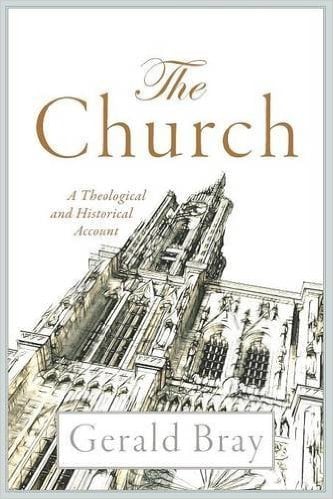
J.I. Packer calls Gerald Bray’s The Church a “superlative survey” of these questions. Bray is a distinguished and well-respected professor, author, and historian. There is no one more fit for the task of unpacking how these “one, holy, catholic, and apostolic” have fleshed themselves out ecclesiologically than Bray. Bray continually reminds us, through The Church, that ecclesiology deeply matters, and in order for us to best understand what the Church is (chapter 6) and what the Church should be (chapter 7), we have to return to our roots (chapters 1-5).
Here’s what The Church does so well. Bray does a wonderful job of highlighting the major movements, while also getting to the ground level and taking us into the timeline, seeing how theology and culture developed along the way as time went on. He uses a chronological survey of the development of the church, from the Old and New Testaments, through the Protestant Reformation and into our context, to build us into the big crescendo of “now what?”
Throughout the book, we find helpful analysis and made distinctions of key components of Church matters, which Bray articulates well. For example, on page 114, Bray examines the difference between schism and heresy, and how each affected the imperial church. There is a discussion of the medieval church, the Eastern Orthodox movement, Aristotle’s influence, the development of the Episcopate, and many more topics. All this to say, this book is chock full of a variety of talking points, almost working like a historical and systematic textbook to help us get a solid survey of the Church historical.
My main critique of The Church is found in the first two chapters, Bray’s analysis of the Old and New Testament Church. Bray, on numerous occasions, is found expressing mystery, continually following up points with “we do not know.” I had dozens of marks where Bray uses a phrase to the effect of “we do not know.” While I appreciate Bray’s commitment to avoiding eisegesis and avoiding “endless speculations” about details simply not in Scripture, I wished Bray would have used his historical and theological prowess to make a few more assertions in his book. At multiple points, it felt as if Bray simply did not have an opinion on the matter. Some make the mistake of having too many extra-biblical opinions, but I also think standing for some interpretations matters as well. As the book progressed, this critique lessened and lessened. I don’t find it to be a major issue, for what it’s worth.
The Church is important because if we are ever to learn more about where we are going, we should keep one eye on where we have been. As in all of life, our past as a culture, as a people, can help us avoid mistakes along the way, and help us not fall into the traps our ancestors did. Bray, an Anglican himself, helps us think through ecumenicalism, becoming a Nicene-like “one, holy, catholic, apostolic” Church who is united in doctrine and purpose. [bctt tweet=”This book helps us mightily, and will be beneficial to church history students, pastors, and laymen alike.” username=”servantsofgrace”]

Zach Barnhart currently serves as a church planting resident with Fellowship Church and is pursuing pastoral ministry. He is a college graduate from Middle Tennessee State University and lives in Knoxville with his wife, Hannah.